Articles
Get the Fragletter
New fragrance stories and picks in your inbox. Unsubscribe anytime.
New fragrance stories and picks in your inbox. Unsubscribe anytime.
New fragrance stories and picks in your inbox. Unsubscribe anytime.
New fragrance stories and picks in your inbox. Unsubscribe anytime.
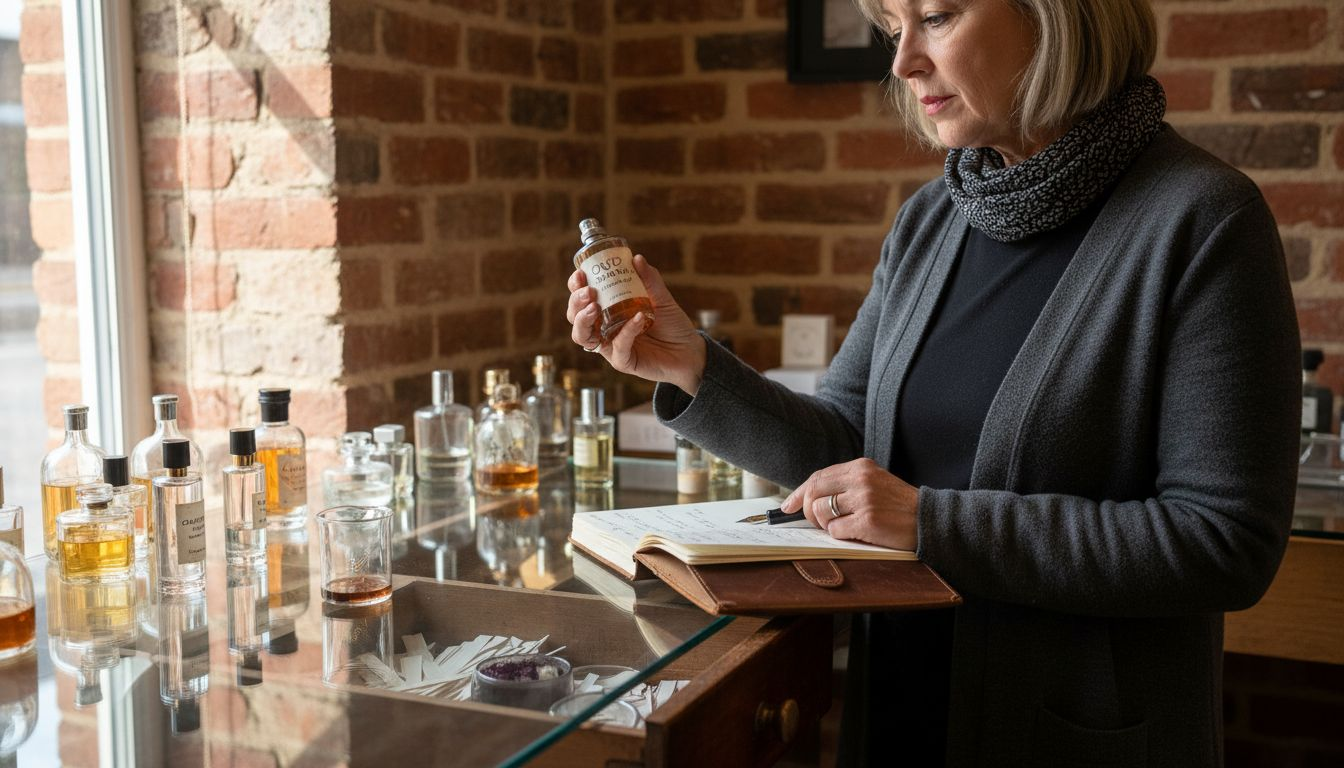
Choosing a signature scent is rarely as simple as picking a favourite bottle. For fragrance lovers around the world, understanding the story each perfume tells offers a deeper, more meaningful connection to their collection. A scent journey is much more than a fleeting aroma; it is an exploration of memory, mood, and cultural identity that unfolds with every application. This guide reveals how these journeys shape your emotional landscape and transform the way you experience scent.
A scent journey transcends traditional fragrance experiences, representing an immersive exploration of emotions, memories, and personal narrative through olfactory sensations. Far more than simply applying perfume, it is a profound psychological and sensorial expedition that connects individuals with deeper aspects of their identity and emotional landscape.
Understanding scent journeys requires recognising how fragrances interact with human consciousness. Exploring fragrance's neurological impact reveals that scents do not merely stimulate the nose, but trigger complex emotional and memory centres in the brain. Each fragrance becomes a conduit for transporting individuals through time and personal experience, activating dormant memories and evoking powerful psychological responses.
The multidimensional nature of scent journeys emerges from their ability to transcend simple sensory perception. According to interdisciplinary research, these journeys are intricate narratives that weave together cultural, personal, and emotional threads. Transformative power of olfactory experiences demonstrates how fragrances can represent individual stories, cultural heritage, and profound personal transformations.
Pro tip: Keep a fragrance journal to document your personal scent journey, recording not just the perfumes you experience, but the emotions, memories, and associations each scent evokes.
Scent journeys in perfumery represent complex, multifaceted experiences that go far beyond traditional fragrance selections. These immersive olfactory expeditions can be categorised into distinct types that reflect personal identity, cultural background, and emotional landscape. Contemporary fragrance market trends reveal fascinating developments in how individuals approach and experience fragrances.
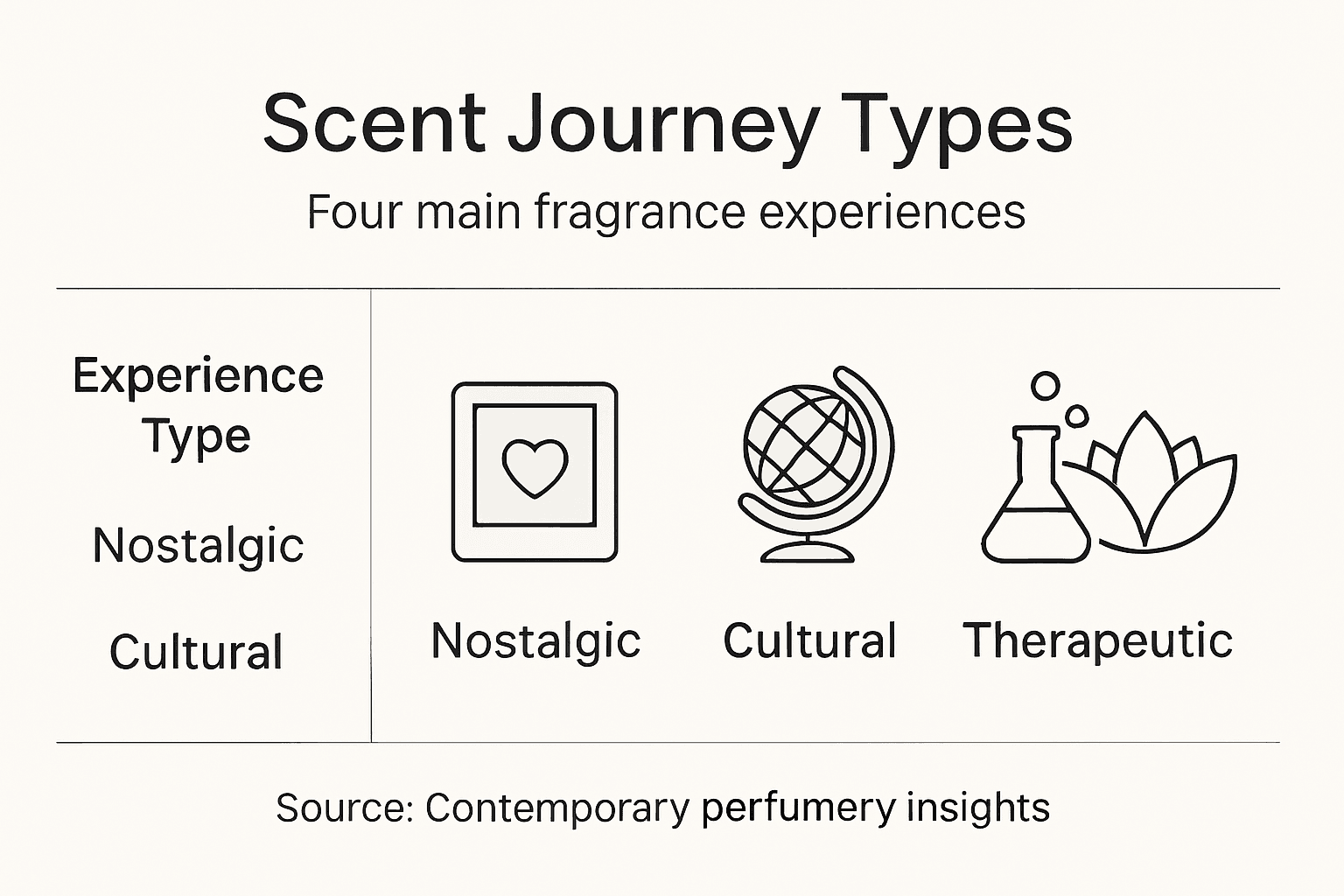
Four primary types of scent journeys emerge within contemporary perfumery. Nostalgic journeys connect individuals with personal memories, using fragrances that evoke specific moments or emotional states. Cultural journeys explore olfactory narratives rooted in specific geographical or ethnic traditions, allowing individuals to experience sensory connections to heritage and identity. Experimental journeys push boundaries by challenging conventional fragrance norms, often involving unconventional note combinations or avant-garde composition techniques. Therapeutic journeys focus on fragrances designed to elicit specific psychological or emotional responses, leveraging scent's profound impact on mood and mental well-being.
These scent journey types are not mutually exclusive but often intersect and overlap. A single fragrance might simultaneously trigger nostalgia, represent cultural heritage, and provide emotional therapeutic benefits. Unisex fragrance collections further demonstrate how contemporary perfumery transcends traditional categorisations, offering more fluid and personalised olfactory experiences that reflect individual complexity.
Here is a summary of key scent journey types and their unique characteristics:
Pro tip: Explore different scent journey types by intentionally sampling fragrances from diverse cultural traditions and emotional contexts, expanding your olfactory understanding and personal sensory palette.
A scent journey is a dynamic, temporal experience that transforms dramatically from the moment of initial application. Fragrance chemistry reveals a sophisticated choreography of molecular interactions that create a complex, evolving sensory narrative.
The unfolding of a scent journey typically follows a precisely engineered progression through three distinct layers. Top notes represent the initial burst of fragrance, providing the first olfactory impression and lasting approximately 15-30 minutes. These volatile molecules create an immediate sensory impact, often characterised by light, fresh, and crisp aromas like citrus or herbal notes. Heart notes emerge next, representing the core emotional landscape of the fragrance and lasting 3-5 hours. These middle notes form the fragrance's central character, blending and softening the initial top notes while preparing the transition to deeper, more persistent aromas. Base notes constitute the final stage, providing depth, longevity, and emotional resonance that can persist for 6-12 hours, featuring rich, complex molecules like woods, musks, and oriental elements.
Olfactory perception techniques demonstrate that individual body chemistry significantly influences how a scent journey develops. Factors such as skin temperature, humidity, personal pH levels, and even diet can subtly alter the fragrance's progression, making each scent experience uniquely personal and dynamically interactive.
The following table compares fragrance note stages during a scent journey:
| Fragrance Layer | Duration | Sensory Impression |
|---|---|---|
| Top Notes | 15-30 minutes | Fresh, light, initial impact |
| Heart Notes | 3-5 hours |
Pro tip: Apply fragrances to pulse points like wrists and neck, where body heat helps naturally reveal the scent's complete evolutionary journey.
Neurological research on fragrance reveals that scents are far more than simple sensory experiences. They represent profound emotional conduits capable of instantaneously transforming psychological states, triggering memories, and modulating complex human emotions with extraordinary precision.
Fragrances function as powerful emotional repositories, connecting individuals to deeply personal narratives and cultural experiences. Emotional memory plays a critical role in this process, with specific scents capable of instantly transporting individuals across time and space. A lavender fragrance might evoke childhood memories of a grandmother's garden, while a marine-inspired scent could reconnect someone with a transformative seaside holiday. These olfactory experiences transcend mere sensory perception, functioning as intricate emotional languages that communicate complex psychological landscapes.
Cultural significance of fragrances demonstrates how scent experiences are profoundly shaped by individual and collective identity. Different cultures interpret fragrance meanings uniquely, with some viewing specific scents as spiritual conduits, others as social markers, and many as intimate expressions of personal character. The emotional resonance of a fragrance depends not just on its molecular composition, but on the rich tapestry of personal and cultural associations an individual brings to the olfactory experience.
Pro tip: Keep a fragrance journal documenting the emotions and memories each scent evokes, helping you develop a more nuanced understanding of your personal olfactory landscape.
Navigating the world of scent journeys requires understanding and dispelling several common misconceptions that can significantly impact one's fragrance experience. Fragrance selection is not a one-size-fits-all endeavour, and blindly following trends or recommendations without considering personal chemistry can lead to disappointing olfactory encounters.
One prevalent misconception is the belief that more expensive fragrances automatically guarantee a superior scent journey. Price does not inherently correlate with quality or personal compatibility. Some individuals mistakenly assume that a fragrance worn by a celebrity or trending on social media will work identically for them. In reality, eau de parfum variations demonstrate that individual body chemistry, skin type, and personal pH levels dramatically influence how a fragrance develops and performs.
Another critical pitfall involves neglecting the importance of proper fragrance application and storage. Many enthusiasts unknowingly compromise their scent journeys by exposing fragrances to direct sunlight, extreme temperatures, or humidity. Improper storage can degrade molecular structures, altering the fragrance's intended composition and reducing its longevity. Perfume trend insights highlight the growing sophistication of fragrance enthusiasts who understand that preservation is as crucial as selection.
Pro tip: Always test a fragrance on your skin and allow it to develop for at least 30 minutes before making a purchase, as initial impressions can be misleading.
Embarking on a scent journey is a deeply personal experience that unfolds through emotional memories, cultural heritage, and evolving fragrance layers. If you want to explore and document these meaningful olfactory stories, Fragplace.com offers the perfect platform to deepen your understanding and elevate your fragrance experience. Here you can connect with a passionate community, uncover detailed insights about fragrance notes and perfumers, and find expert reviews tailored to your personal scent journey needs.
Start transforming your fragrance experience today by joining Fragplace. Immerse yourself in the world of perfumes through authentic discussions and comprehensive data that help you select fragrances perfectly matched to your unique preferences and body chemistry. Don’t wait to capture your emotional and sensory discoveries with your own fragrance journal and engage with fellow enthusiasts at Fragplace.com. Begin your scent journey now and enrich your collection with confidence.
A scent journey is an immersive exploration of emotions, memories, and identity through fragrances, transcending the traditional experience of simply wearing perfume.
Fragrances activate complex emotional and memory centres in the brain, allowing scents to trigger past experiences and emotional responses, creating a deep psychological connection.
The four primary types of scent journeys are nostalgic, cultural, experimental, and therapeutic, each offering unique experiences tied to memories, heritage, innovation, or emotional well-being.
A scent journey evolves through three stages: top notes create an initial impression, heart notes reveal the fragrance's emotional core, and base notes provide depth and longevity, each lasting varying amounts of time.
| Point | Details |
|---|
| Understanding Scent Journeys | Scent journeys are immersive experiences that connect fragrances to personal narratives and emotions, influencing identity and psychological states. |
| Types of Scent Journeys | Four primary types include Nostalgic, Cultural, Experimental, and Therapeutic journeys, each serving distinct emotional and sensory purposes. |
| Fragrance Evolution | A scent journey evolves through top, heart, and base notes, each offering unique sensory impressions that interact dynamically with individual body chemistry. |
| Common Misconceptions | The quality of a fragrance is not determined solely by price or popularity; personal chemistry and proper application play crucial roles in the overall experience. |
| Scent Journey Type | Main Purpose | Typical Fragrance Profile |
|---|
| Nostalgic | Evoke memories and past emotions | Warm, familiar or comforting notes |
| Cultural | Explore heritage or tradition | Region-specific, historic scents |
| Experimental | Challenge norms, innovation | Unusual, avant-garde combinations |
| Therapeutic | Influence mood and well-being | Soothing, uplifting, calming notes |
| Fuller, emotional core |
| Base Notes | 6-12 hours | Deep, lasting, resonant aroma |