Articles
Get the Fragletter
New fragrance stories and picks in your inbox. Unsubscribe anytime.
New fragrance stories and picks in your inbox. Unsubscribe anytime.
New fragrance stories and picks in your inbox. Unsubscribe anytime.
New fragrance stories and picks in your inbox. Unsubscribe anytime.
The "nose" is the most romanticised job in fragrance and the most misunderstood. More than 1,500 British perfumers shape global fragrance trends, and a great deal of that work happens inside constraints — chemistry, regulation, a brief written by someone in marketing. Here's what the profession actually asks of a person, and why it changes what ends up on the shelf.
| Point | Details |
|---|---|
| Role of a Perfumer | Perfumers blend artistry and scientific precision, requiring extensive knowledge in chemistry and sensory perception to create compelling fragrances. |
| Career Paths | Opportunities range from corporate positions in large fragrance houses to independent consultancy roles, with career progression leading to specialised or leadership positions. |
| Creative Process | Successful perfumery demands a balance of technical skills, emotional intelligence, and collaboration, transforming abstract concepts into tangible fragrances. |
| Ethical Responsibilities | Perfumers must navigate complex legal and ethical standards, focusing on consumer safety, sustainable ingredient sourcing, and transparent communication. |
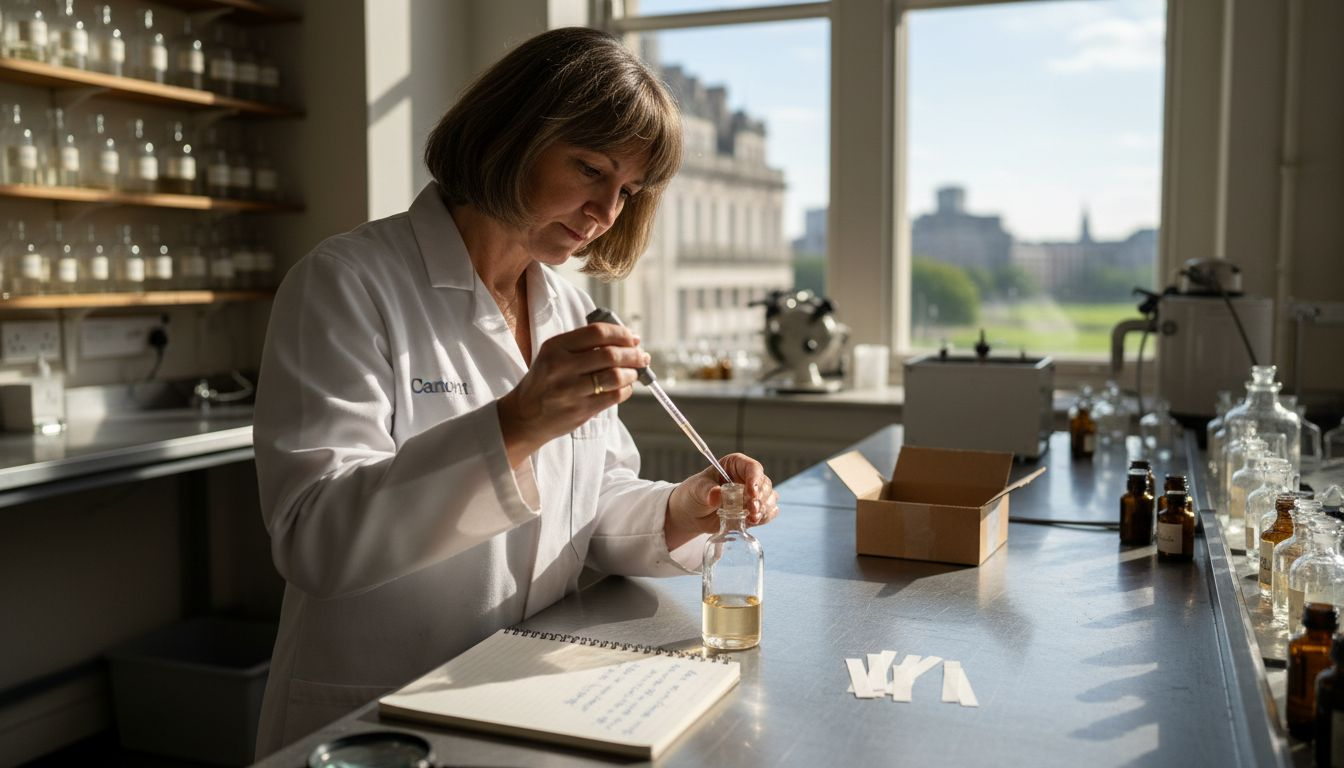
Call someone a "nose" and you make the job sound like a party trick. It isn't. A perfumer works at the join between artistry and scientific precision, using extraordinary olfactory capability to turn abstract emotions and sensory experiences into aromatic compositions that hold together — which takes a working grasp of ingredients, chemical interactions and sensory perception, not just good taste.
The mixing-pleasant-scents caricature does the profession no favours. Chemistry is the entry requirement, because you can't predict how aromatic compounds interact and evolve over time without it. The rest of the week is less romantic: developing formulations, evaluating product tests, sitting with marketing teams to work out whether a scent will land with the people it's aimed at. Training usually runs through a specialised fragrance school or an apprenticeship inside a large fragrance corporation, where technical skill and artistic expression get taught as the same subject rather than opposing ones.
Where perfumers do this varies — multinational fragrance houses at one end, independent studios at the other. The remit stays broadly the same: research ingredients in detail, experiment with novel combinations, track global fragrance trends, and stay compliant with safety and regulatory standards. That final item never makes it into the brand story, and it shapes more finished perfumes than inspiration ever will. Few other roles ask for creativity, technical command and sensory sensitivity in one person.
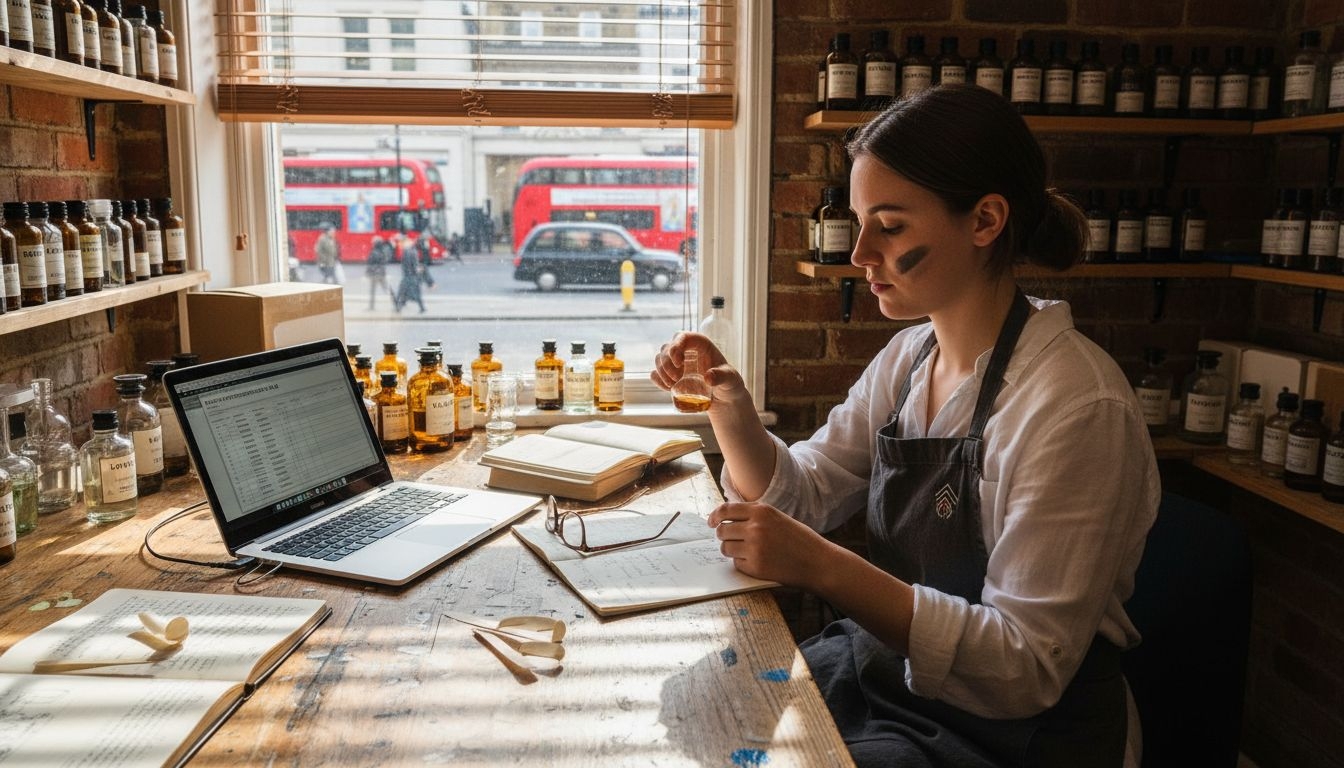
Pro tip: Sample systematically and write it down. Track how individual notes interact and transform over the hours — that record teaches you far more than any single spectacular bottle.
There's no single ladder here, and the version people imagine — talent spotted, genius follows — barely exists. Most routes start with specialised training, often a demanding programme in chemistry, biology, or a dedicated perfumery career path. Then you pick your trade-off: corporate structure, or the entrepreneurial approach.
Corporate perfumers sit inside large fragrance houses or multinational cosmetic companies, building signature scents for established brands. The technical bar is high and the diplomatic one is higher, because the work is translating a complex marketing brief into something that smells like an idea. Independent perfumers swap that security for creative freedom, running niche brands or consulting for several clients at once. Others specialise — fine fragrances, functional perfumery for household products, therapeutic scent compositions. Nobody warns you at the start that functional work is where a lot of the hardest technical craft actually lives.
Progression is hierarchical: junior roles first, then senior perfumer, then head perfumer, fragrance creative director or technical research. Sideways moves are just as viable, and often smarter — fragrance evaluation, ingredient research, technical sales, academic positions in olfactory sciences. The professionals who go furthest pair scientific precision with a genuine point of view about complex aromatic compositions. One without the other stalls.
The following table summarises typical career paths and work environments for different types of perfumers:
| Type of Perfumer | Primary Workplace | Creative Freedom Level | Common Responsibilities |
|---|---|---|---|
| Corporate Perfumer | Large fragrance house or brand | Moderate | Develop brand scents, follow briefs |
| Independent Perfumer | Personal studio or consultancy | High | Create niche fragrances, client work |
| Technical Perfumer | Research lab or manufacturer | Low to Moderate | Ingredient testing, safety analysis |
| Niche Perfumer | Small boutique or own company | Highest | Innovate unique compositions |
Pro tip: Build a reference library and treat it like a lab notebook — collect scent samples, then document their chemical compositions and sensory characteristics rather than trusting memory.
Inspiration is the smallest part of this. Perfume creation runs on a deep understanding of raw materials — what each one does, how it behaves beside the others, how it shifts — and only then becomes emotional storytelling. Skip the materials and you get a lovely concept that smells like nothing.
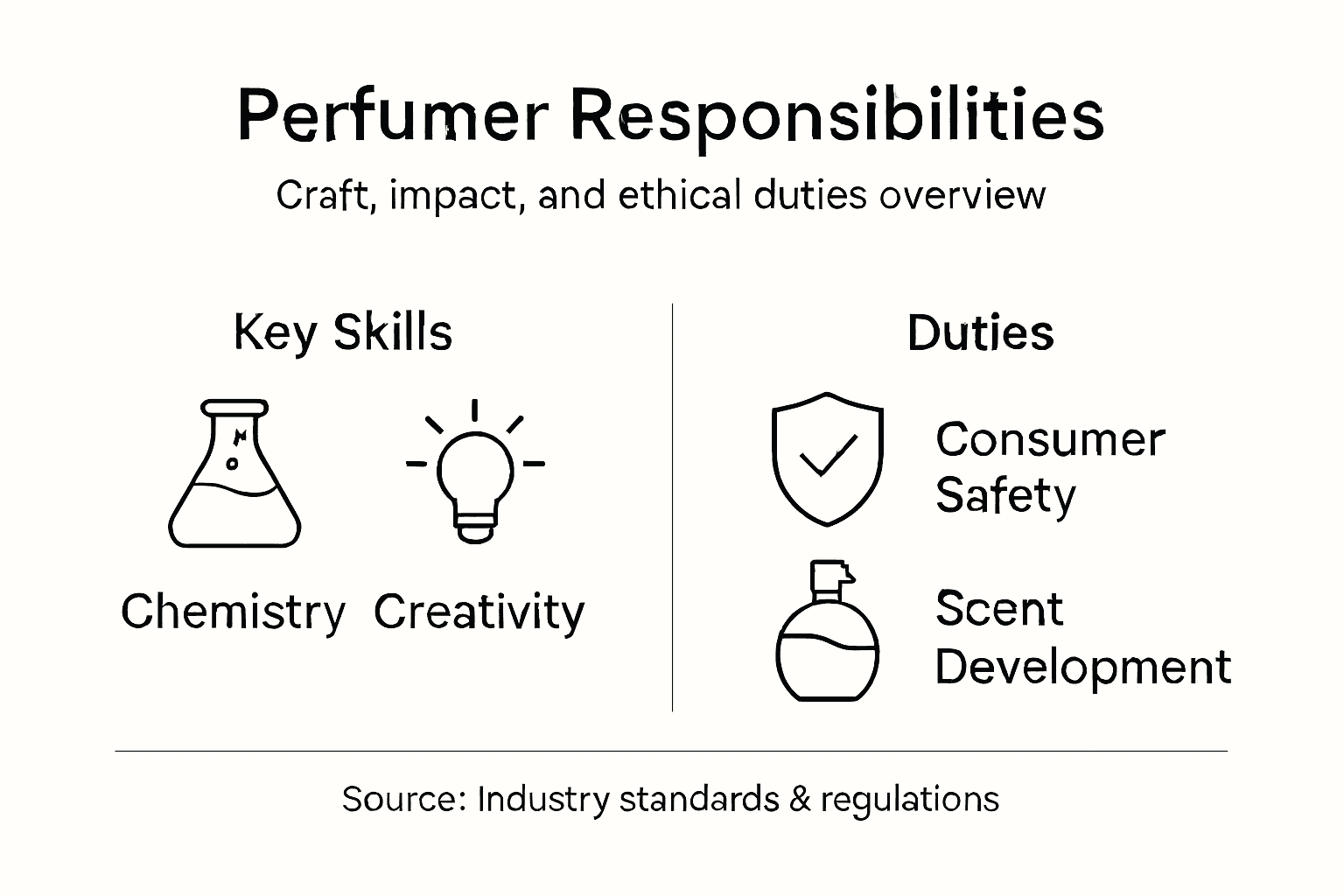
Chemistry is non-negotiable, because stable, harmonious formulations depend on understanding molecular interactions. Emotional intelligence carries equal weight: the brief is usually a memory, a mood or a cultural narrative, and someone has to convert that into precise aromatic quantities. Creativity here is permanently tempered by regulatory knowledge, and if you find that depressing, this isn't the profession for you. The artistic vision has to survive contact with safety requirements, not the reverse.
Then there's the part that gets left out of the flattering profiles: collaboration. Perfumers work with marketing teams, researchers and clients, and a composition can be reworked again and again because those parties want different things. Communication and adaptability aren't soft extras in that room — they decide whose vision survives. The strongest perfumers hold the technical knowledge and the human read at the same time, and it's the second one that tends to be missing.
Pro tip: Build your sensory vocabulary deliberately — explore and document fragrance notes until your olfactory memory starts to recognise subtle nuances and combinations on its own.
This is the least glamorous part of the job and arguably the most consequential. Perfumers operate inside a dense framework of legal and regulatory requirements spanning product safety, intellectual property protection, environmental sustainability and consumer protection. Responsible fragrance development means all of it, not the aesthetic bit with the compliance stapled on afterwards.
Intellectual property is where ethics gets genuinely awkward. Fragrance compositions need careful documentation and potentially patent protection, and professionals have to draw a line between an innovative formulation and a derivative one — a line the market has never been keen to draw sharply. Ethical sourcing has moved from press-release language to expectation, with the industry pushing towards sustainable procurement, transparent supply chains and environmentally responsible material selection. That brings stringent rules on natural ingredient extraction, synthetic compound development and full traceability of fragrance components.
Consumer safety outranks everything else. Rigorous testing protocols, comprehensive labelling requirements and strict adherence to international safety standards are non-negotiable, full stop. Perfumers have to watch for potential allergenic compounds, get ingredient concentration levels exactly right, and be transparent about what's in the bottle. Cruelty-free production, responsible environmental practices and honest communication about ingredients and manufacturing are now demanded proactively rather than requested politely — and the brands that treated all this as a marketing problem are the ones now scrambling.
Here is an overview of major ethical and regulatory considerations impacting the perfume industry:
| Responsibility Area | Key Focus | Business Impact |
|---|---|---|
| Ingredient Sourcing | Ethical and sustainable supply | Reputation and long-term market trust |
| Intellectual Property | Fragrance formula protection | Prevents imitation, secures brand exclusivity |
| Consumer Safety | Allergen control, labelling | Legal compliance, reduces recall risk |
| Environmental Standards | Eco-friendly production | Ensures global market access, reduces footprint |
Pro tip: Keep a documentation system that tracks ingredient origins, safety certifications and ethical compliance for every composition you develop. Retrofitting that paperwork later is misery.
The pressures on perfumers today are structural, not creative. Sustainable supply chain management has become the defining concern, and the environmental and economic squeeze is rewriting production methods that went unquestioned for decades. Creative ambition, commercial viability and environmental responsibility now have to be reconciled in the same formula.
Consumer expectations have shifted hard, and the job has widened accordingly. Cultural diversity, changing marketing landscapes and fast-moving preferences all demand adaptability that older career models never asked for. Intellectual property protection has grown more tangled too, since formulations need safeguarding while the brand chases global market dynamics. Digital channels have added reach and noise in equal measure — more ways to speak to buyers, more ways to be copied.
Environmental sustainability is the biggest of these, and the one with the fewest easy answers. Sourcing responsibly, cutting ecological impact and keeping supply chains transparent are now baseline expectations. Perfumers are being asked to understand global environmental standards, back innovative sustainable technologies, and explain their commitments credibly — which is a different skill again. It takes a view of fragrance development that accounts for long-term ecological and social consequences, and plenty of the industry is still catching up.
Pro tip: Build a sustainability framework for your own compositions — document each ingredient's environmental footprint and map alternative sourcing before you're forced to.
Here's the honest verdict: perfumery rewards patience over flair. If you're drawn to the craft, study the materials and the constraints — the ingredient sourcing, the safety work, the briefs — because that's where the interesting decisions get made, and it's what separates a signature scent from a competent one.
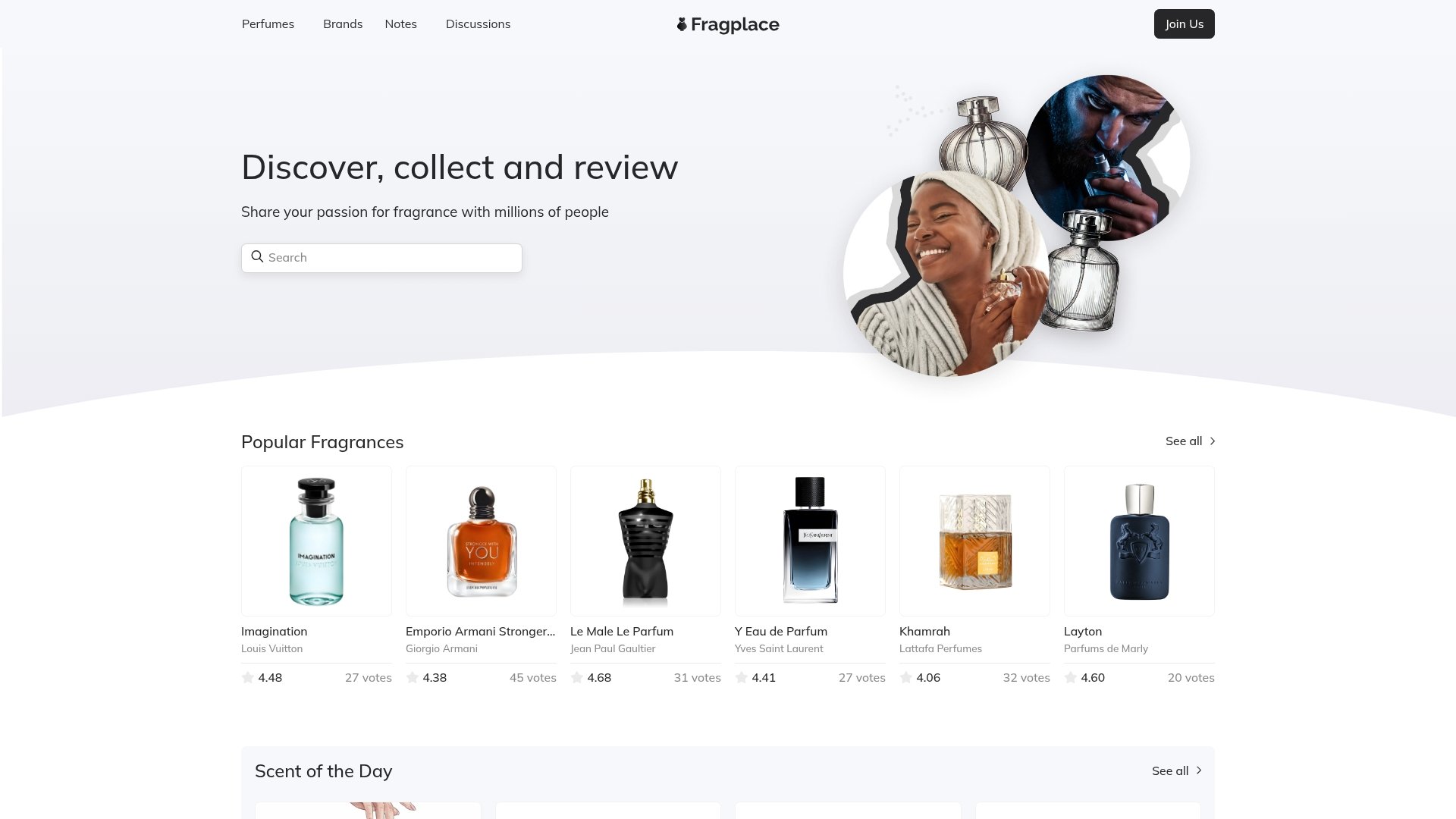
Start on Fragplace with the fragrances you already own — read their notes, read the reviews, and build the vocabulary before you buy anything else. Then work through Perfumers and follow the names behind the bottles you keep coming back to. You'll spot the house style quickly, and your buying will get sharper for it.
Creating aromatic compositions that evoke emotions and sensory experiences. That takes artistic inspiration and scientific knowledge together — neither half works alone.
Technical proficiency in chemistry comes first. Then emotional intelligence, creativity, and the collaboration and communication skills to survive everyone else attached to the project.
By following rigorous testing protocols, comprehensive labelling requirements and international safety standards, all aimed at controlling potential allergens and giving accurate ingredient information. It's unglamorous work with almost no room for improvisation.
Sustainable supply chain management, shifting consumer expectations, safeguarding intellectual property, and environmental sustainability across the development process. Sourcing is the one that will define the next decade.