Articles
Get the Fragletter
New fragrance stories and picks in your inbox. Unsubscribe anytime.
New fragrance stories and picks in your inbox. Unsubscribe anytime.
New fragrance stories and picks in your inbox. Unsubscribe anytime.
New fragrance stories and picks in your inbox. Unsubscribe anytime.
Parfum isn't a luxury badge stuck on the pricier bottle. It's a concentration, and the word comes from the Latin per fumum, "through smoke" — a reminder that the category began as ritual rather than retail. Learn what the label actually promises and you'll stop paying extrait money for a strength you never wanted.
Per fumum. Through smoke. Before anyone sprayed anything, fragrance was something you burned, and that origin still explains more about perfumery than most brand copy manages to.
Scent had a job to do. Ancient Egyptian priests and nobility used perfumes in religious ceremonies and burial rituals, and as a symbol of divine connection — closer to liturgy than to grooming. Mesopotamian cultures folded aromatic substances into their spiritual and medicinal practices, treating smell as a channel between the human and the divine. Each region built its own techniques and its own philosophy of scent creation, which is why perfumery has never had one clean tradition to inherit.
The useful part isn't the trivia. It's that fragrance has always carried identity and status alongside pleasure, and a modern parfum is still trading on exactly that. You're buying meaning as much as material, and it helps to know when you're doing it.
Expert Tip: Treat a brand's ancient-ritual origin story as context, not as proof of quality — a house can invoke thousands of years of history and still sell you a thin formula.
The difference is concentration of fragrance oils, and everything else follows from it. Parfum, also known as extrait de parfum, is the most concentrated form, typically 20-40% pure perfume essence. Eau de parfum sits at roughly 15-20%.
Here's where people get it wrong: more oil doesn't mean more volume. Parfum tends to stay close to the skin and open slowly, revealing its layers over several hours. Eau de parfum pushes harder and reads more immediately, with slightly shorter longevity — which is precisely why it works for daily wear. If you want a room to register you from the doorway, the extrait can be the wrong tool.
So choose on intent rather than prestige. Slow development and closeness, or reach and immediacy. Your skin chemistry and the setting decide the rest.
Expert Tip: If you already own the eau de parfum, treat the extrait as a different wear rather than a straight upgrade — you're trading projection for intimacy.
Concentration is the biggest single lever on how a fragrance performs. The percentage of fragrance oils drives how long and how intensely a perfume holds on skin, and the ladder runs from the lightest cologne up to the most intense parfum.
Concentration levels are typically organised as follows: cologne (2-4% fragrance oils), eau de toilette (5-15% fragrance oils), eau de parfum (15-20% fragrance oils), and parfum/extrait (20-40% fragrance oils). Intensity, complexity and duration all climb as you go up.
Read the number as a spec, though, not a promise. Ingredient quality, molecular composition and your own skin chemistry all pull on the result, and the interaction between fragrance molecules and your skin's natural oils gives every wearer a slightly different signature. Two people in the same concentration can get markedly different wear times and projection. A carefully built eau de toilette will embarrass a lazy eau de parfum.
Here is a comparison of main fragrance concentrations and their typical performance:
Expert Tip: Never buy a concentration blind on the strength of the number alone — put it on your skin and watch it move over several hours before you commit.
Most collections fail from over-buying, not under-buying. Five bottles you reach for beat twenty you rotate out of guilt.
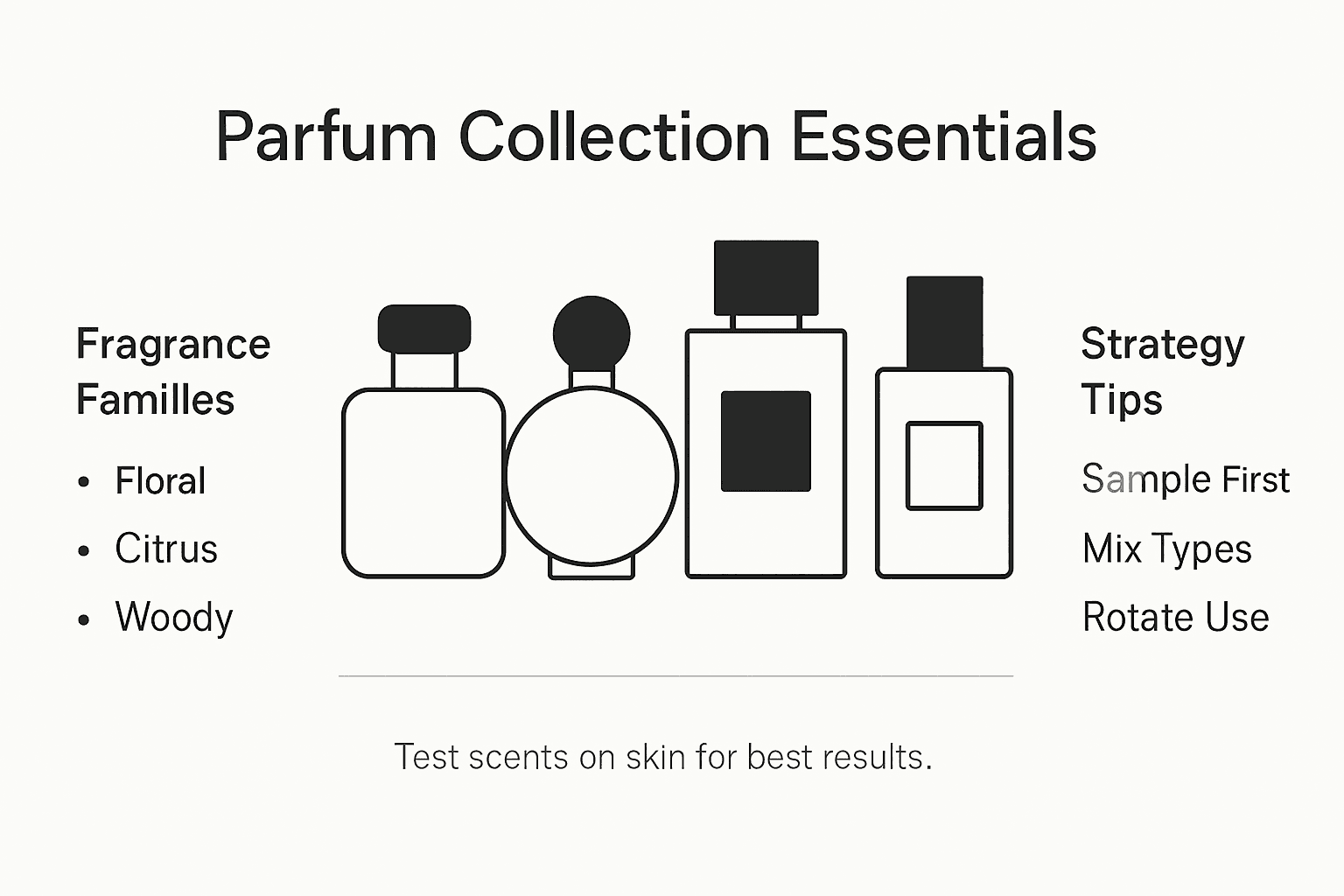
Work outward through the fragrance families first, then through concentrations. Oriental, woody, floral, fresh and gourmand each behave differently on you, and knowing which one you keep returning to saves more money than any discount code. Occasion, season and mood do the rest of the filtering.
A wardrobe wants range, not repetition. Keep something that carries an intimate evening event and something that behaves itself in a professional daytime setting, and resist buying three variations on the scent you already wear. If your shelf is five near-identical ambers, you don't have a collection — you have a habit.
Expert Tip: Buy samples or travel sizes before full bottles. It's the cheapest way to find out that the parfum you were sure about does nothing for you.
A few myths about parfum survive purely because they're flattering to believe.
The first is that a higher price means better quality. It doesn't — parfum performance depends on formulation technique far more than on what the bottle cost. The second is that natural ingredients are automatically safer or more effective than synthetics. Expertly crafted synthetic molecules can be more stable, more consistent and potentially safer than their natural counterparts, and pretending otherwise is marketing rather than chemistry.
The most stubborn myth is universality: the idea that a fragrance smells the same on everyone. Body chemistry, skin pH, diet and even ambient temperature change how a parfum develops and projects. The bottle your friend can't stop recommending may land somewhere else entirely on you, which is why blind buying on someone else's rave is a gamble.
This table highlights common myths about parfum and the factual reality behind them:
| Myth |
|---|
Expert Tip: Don't judge a parfum on its opening blast. Wear it on skin for a few hours before you decide — the first ten minutes are the least honest part of any fragrance.
For most people on most days, eau de parfum is the better buy of the two: it projects more, costs less, and asks less of the occasion. Reach for parfum when you want a scent that sits close and unfolds slowly, and when the setting rewards that kind of restraint. Anything you're told beyond that — about price signalling quality, or naturals beating synthetics, or a bottle smelling identical on everyone — you can safely ignore.
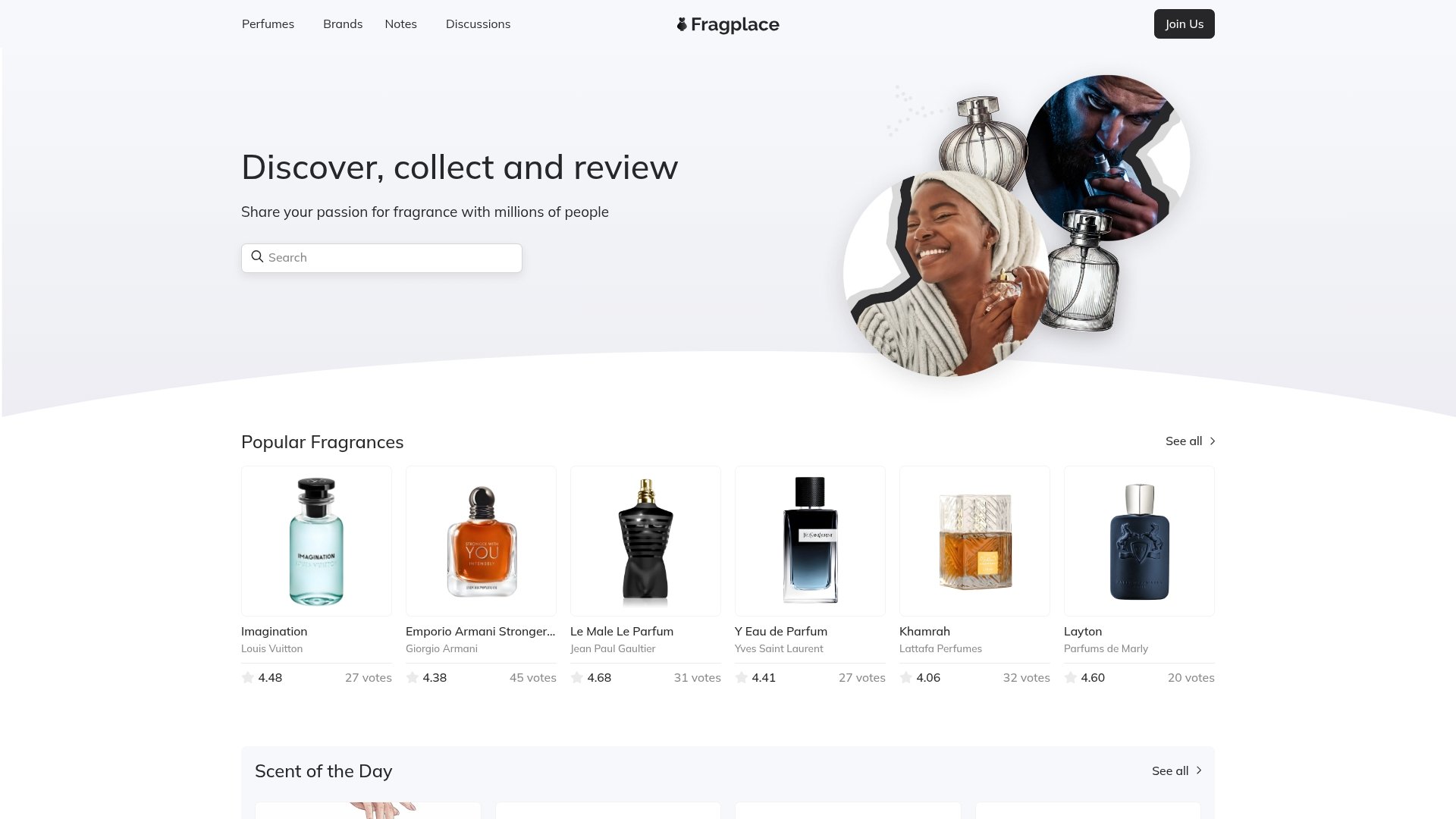
Start with the concentration one rung down and read What is an Eau de Parfum? Understanding Fragrance Layers to see how the layers build before you spend extrait money. Then bring your shortlist to Fragplace, where notes, reviews and the arguments that come with them will tell you more about a bottle than the label ever will.
The term 'parfum' comes from the Latin phrase 'per fumum', meaning 'through smoke', reflecting its historical connection to aromatic rituals in various civilisations.
Parfum is a more concentrated fragrance form, containing 20-40% pure perfume essence, while eau de parfum has a concentration of 15-20%. Parfum lasts longer and develops more complex notes over time, but it also sits closer to the skin, so eau de parfum is often the more practical pick for daily wear.
Fragrance concentrations are organised as follows: Cologne (2-4% fragrance oils, up to 2 hours longevity), Eau de Toilette (5-15%, 2-5 hours), Eau de Parfum (15-20%, 4-8 hours), and Parfum (20-40%, 6-12 hours). Treat those windows as guidance, not guarantees — your skin has a vote.
Explore different fragrance families first, then narrow by occasion, season and mood. Include scents that move between settings, and stop buying near-duplicates of the one you already wear.
| Point | Details |
|---|
| Historical Significance of Parfum | Parfum has deep cultural roots, serving as a medium for communication and spiritual practices across ancient civilisations. |
| Concentration Differences | Parfum contains a higher concentration of fragrance oils compared to eau de parfum, influencing longevity and sensory experience. |
| Building a Fragrance Collection | Curating a diverse perfume collection requires understanding scent profiles and personal preferences based on occasion and mood. |
| Perfume Myths | Many myths about parfum, such as price equating to quality, are debunked by the importance of formulation and individual body chemistry in fragrance performance. |
| Fragrance Type | Oil Concentration | Longevity on Skin | Typical Use |
|---|
| Cologne | 2-4% | Up to 2 hours | Refreshing, casual |
| Eau de toilette | 5-15% | 2-5 hours | Everyday, lighter wear |
| Eau de parfum | 15-20% | 4-8 hours | Daily or evening use |
| Parfum (Extrait) | 20-40% | 6-12 hours | Special occasions |
| Reality |
|---|
| Higher price means better quality | Quality relies on formulation, not cost |
| Natural ingredients are always safer | Synthetics can be safer and more stable |
| Scent is the same for everyone | Fragrance alters with each person's skin |
| Only women wear parfum | Parfum is genderless and unisex |
| Stronger scents suit all occasions | Intensity should match the environment |