Articles
Get the Fragletter
New fragrance stories and picks in your inbox. Unsubscribe anytime.
New fragrance stories and picks in your inbox. Unsubscribe anytime.
New fragrance stories and picks in your inbox. Unsubscribe anytime.
New fragrance stories and picks in your inbox. Unsubscribe anytime.
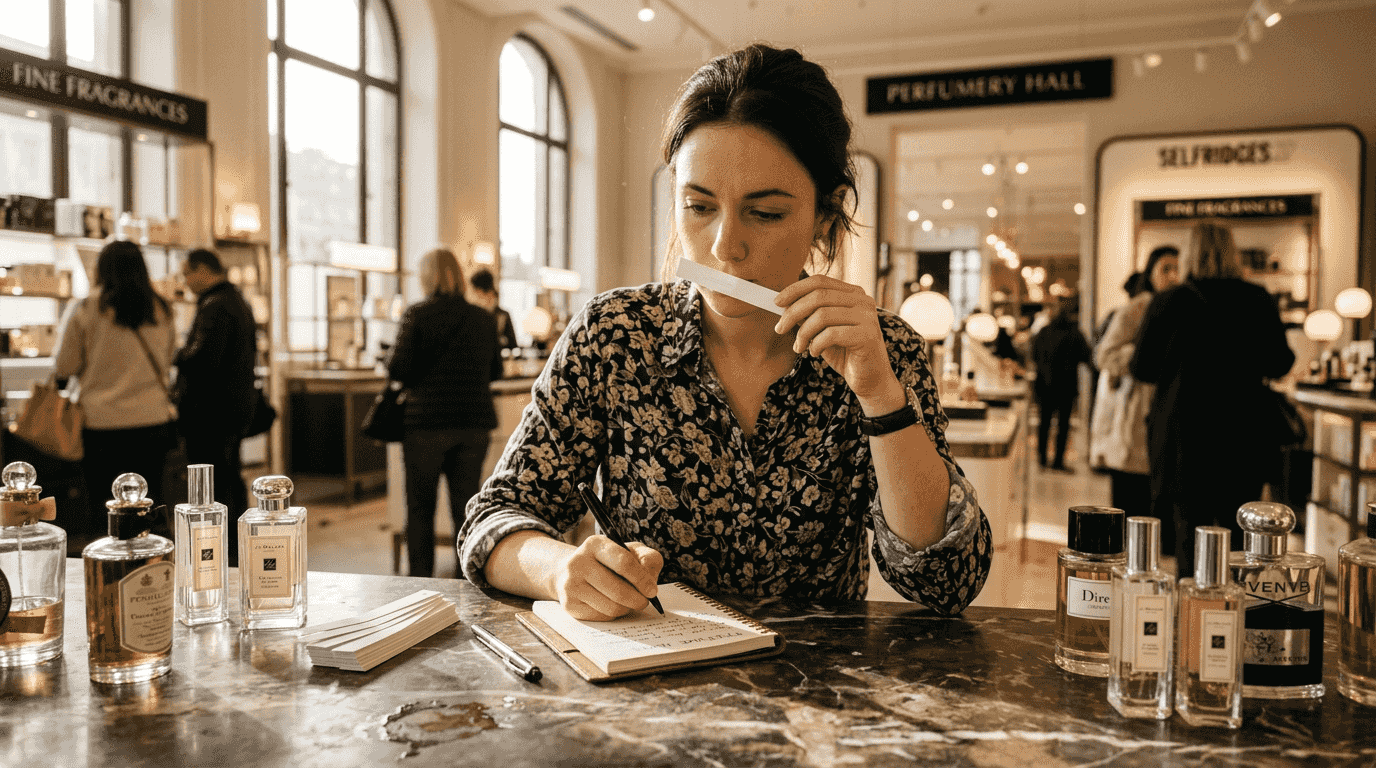
Most bad fragrance purchases happen at the counter, under hot lights, off a paper strip, in the time it takes to say yes. The bottle that charms you at the till often isn't the one you're wearing three hours later. Learn how notes behave across a full wear and the expensive mistakes mostly stop.
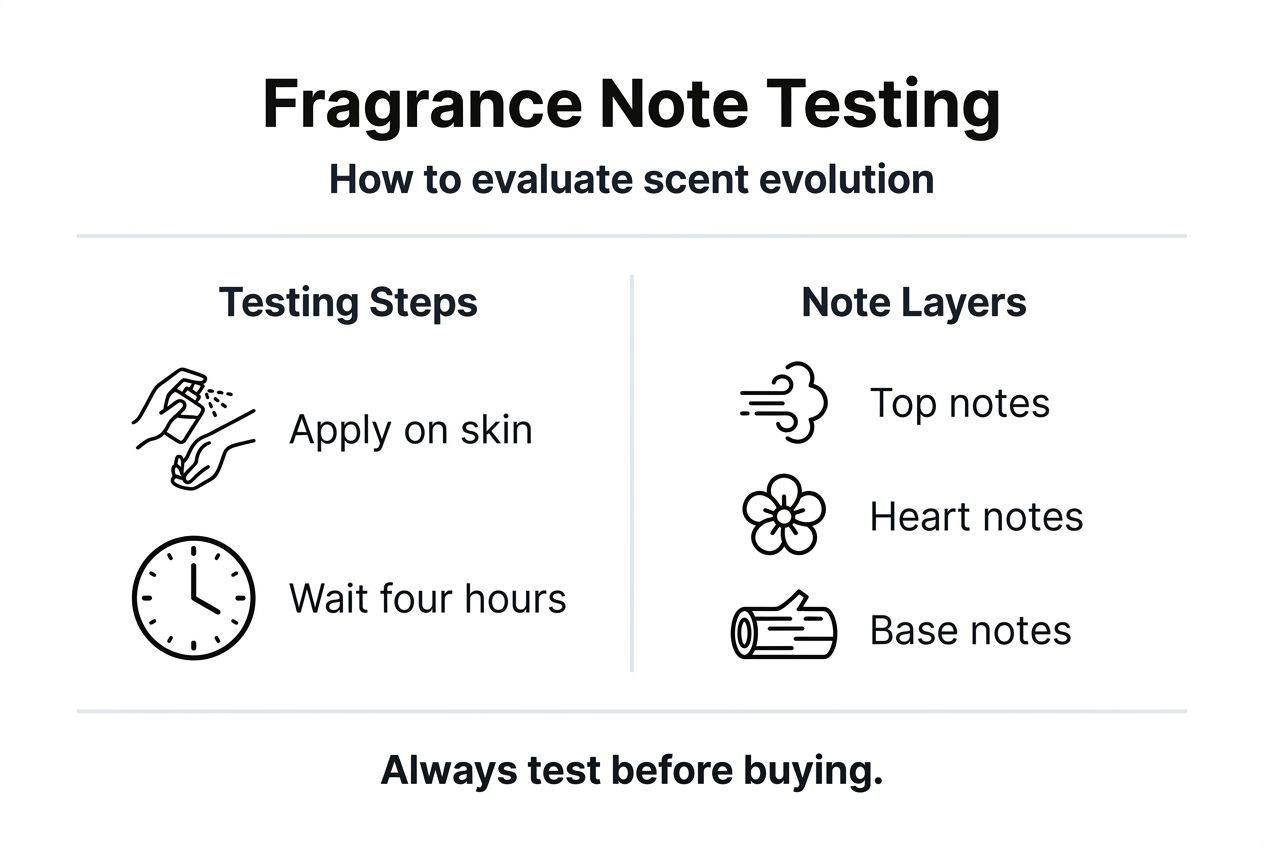
A perfume isn't a smell. It's a schedule. The olfactory pyramid model runs on three tiers that unfold in order, and it's the reason something you adored on a paper strip can feel like a stranger by lunchtime.
Top notes are the sales pitch. Bright, volatile molecules do the talking: citrus oils like bergamot, herbal accents such as basil, light florals like neroli. They're gone in roughly 15 to 30 minutes, which makes them the worst possible basis for a decision.
Heart notes are where the perfume actually lives. Floral bouquets, warming spices and fruit accords anchor this middle layer, and they hold for several hours, bridging the fresh opening with the foundation underneath.
Base notes do the heavy lifting. Sandalwood and cedar, animalic musks, sweet vanilla, amber resins — heavy molecules that cling to skin for six hours or more. That's the part people around you actually get to know, and it's the part most buyers never smell before paying.
Once you can hear that progression coming, you can predict whether a scent suits your life. A perfume smelling divine in-store might transform completely after two hours. Building your fragrance wardrobe essentials means reading those shifts before the card goes in the machine.
Note type characteristics:
The real work happens long before the checkout. Get the preparation right and your collection stops being a shelf of half-used mistakes.
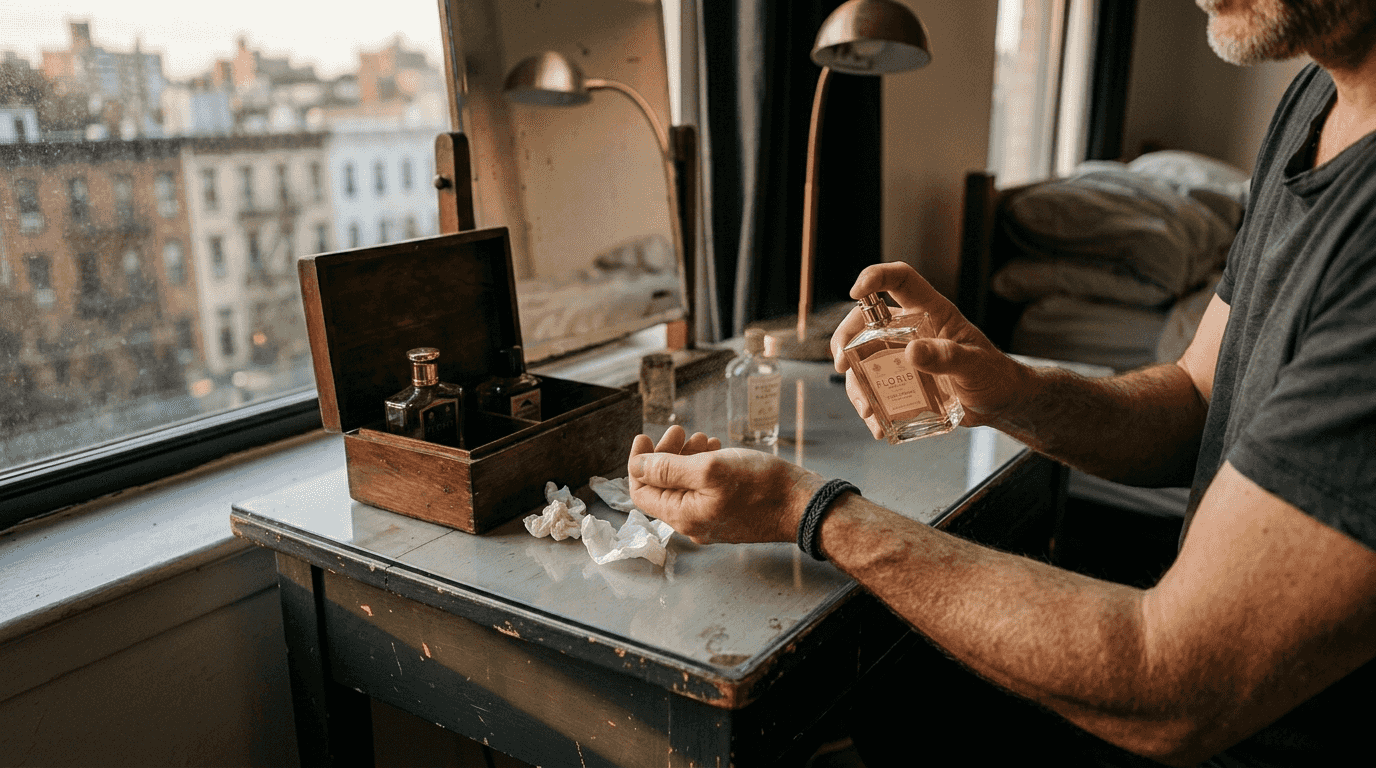
Sampling isn't negotiable. Paper gives you a sketch. Skin gives you the truth, because body heat, pH and your own oils rewrite a formula into something slightly personal. Ask for samples, or buy a discovery set, before you commit to a full bottle.
Two things wreck more collections than bad taste: impulse and dodgy sellers. Grey-market bargains often hide diluted formulas, expired stock or outright fakes. Batch code verification tools let you confirm production dates and authenticity through manufacturer databases, and they take about a minute to use.
Concentration is where the value argument gets interesting. Prioritising extrait or parfum formulations buys you longer-lasting signature scents with more refined olfactory profiles. Eau de toilette looks cheaper on the shelf, but its lighter concentration wants reapplication, and that can cost you more in the long run.
Essential pre-purchase checklist:
Pro Tip: Apply fragrance to pulse points, then wait at least four hours before judging. Set phone reminders to check scent evolution at 30 minutes, two hours, and four hours. That tells you whether the dry-down earns the money, rather than whether the opening flirted well.
Mastering fragrance assessment techniques and following expert evaluation tips sharpens your ability to tell a properly built formula from a cheap one wearing nice packaging.
Browsing is how you end up with shelf regret. Here's the method instead.
Research candidate fragrances by reading note pyramids and reviewing community feedback. Create a shortlist of 3 to 5 perfumes matching your style preferences.
Obtain samples through discovery programmes, department store requests, or sample services. Never purchase full bottles untested.
Test one fragrance per day on clean skin. Apply to wrist or inner elbow, avoiding other scented products.
Document initial impressions immediately after application. Note the top notes you detect and your emotional response.
Reassess at 30-minute intervals throughout the day. Watching the note evolution tells you how it'll behave at work, at dinner, on a train.
Record heart note impressions after two hours, once the fragrance's true character has arrived.
Evaluate base note performance after four to six hours. Ask the honest question: does the dry-down appeal as much as the opening?
Compare your documented impressions across multiple wearing occasions. Fragrances perform differently in varying temperatures and humidity levels.
Match concentration types to intended occasions. Extrait works beautifully for special events, whilst eau de parfum suits daily wear.
Purchase only after testing reveals consistent enjoyment across all note stages.
Pro Tip: Maintain a fragrance journal using apps or notebooks to track testing impressions. Include date, weather conditions, wearing duration, and overall rating. Memory flatters perfumes; notes don't.
Developing strong fragrance review skills and learning effective review writing makes you better at naming what you like, which is the whole game.
Experience doesn't protect you here. Long-time collectors fall into the same traps as beginners, usually with more expensive bottles.
Frequent buying errors:
When a fragrance disappoints, it's often fixable rather than fatal. A scent that reads weak might just need a higher concentration. Performance that swings day to day can reflect hormonal changes, diet shifts or medication affecting your skin chemistry. Applying to moisturised skin extends longevity significantly compared to dry application.
Identifying fragrance notes requires patience and attention to how scents change over time.
Authenticity worries deserve action, not hope. Compare packaging details, spray mechanisms and liquid colour against verified authentic bottles. Batch codes should match manufacturer records exactly. If doubt sticks around, contact brand customer service with photos and purchase details.
Counterfeits can open convincingly, then collapse. They lack complexity and longevity. If projection drops off a cliff within an hour, or the scent smells flat and one-dimensional, treat that as evidence rather than bad luck.
Staying current with top perfume trends helps you separate releases worth chasing from the ones everyone quietly resells six months later.
All this gets easier with decent research behind it, and with other people's experience to argue against.
The platform lets you discover, review, and track fragrances systematically whilst learning from fellow collectors' experiences. Detailed note breakdowns, perfumer profiles and community discussions give your shortlist something firmer than a shop assistant's enthusiasm.
Browse all fragrances to explore thousands of scent profiles with complete pyramid information, longevity data, and authentic user reviews. When you're weighing up candidates, explore perfumers to understand their signature styles and find the noses whose taste keeps matching yours. Follow a perfumer you trust and your hit rate climbs.
Test on skin, not just paper. Your chemistry interacts uniquely with scent molecules, and paper can't reproduce the result.
Give all three layers time to arrive before you decide anything. Top notes fade within 30 minutes, revealing the heart notes that define a fragrance's true character. Base notes appear after several hours, and they're the ones you live with.
Don't sniff your way down a whole counter. Olfactory fatigue sets in fast and your judgement goes with it. Two fragrances maximum per day.
Think about where you'll wear it. Heavy orientals overwhelm in summer heat, whilst light citruses disappear quickly in winter cold.
Buy from authorised retailers, official brand websites, or established department stores with verified supplier relationships. A grey-market discount is a story about sourcing, and rarely a good one.
Verify batch codes using manufacturer databases before you pay. Legitimate products feature codes matching production records exactly. A mismatch means counterfeit or diverted stock.
Be ruthless about prices that fall well below standard market rates. Authentic luxury fragrances hold consistent pricing across authorised channels, so a dramatic discount usually indicates a problem.
Research seller reputation through independent reviews and community forums. Fragrance communities identify dodgy vendors quickly, and they're not shy about it.
Extrait and parfum concentrations carry a much higher percentage of fragrance oil than eau de toilette or eau de parfum. That difference shows up in wear, not just on the label.
Expect substantially longer wear, typically six hours or more on skin. Some extraits keep going for 12-plus hours with minimal fading.
The profiles tend to be richer and more complex too. Higher oil content gives perfumers room for precious materials and more nuanced compositions.
If you want a signature rather than a mood, this is the tier to shop in. One application lasting a full day changes the maths on the price.
Give a candidate at least three separate wearing occasions before you buy the bottle. A single test can't show you the variation caused by weather, hormones or diet.
Each wearing should run a minimum of four hours so the full development happens. Top notes mislead constantly, smelling appealing right up until the heart and base let you down.
Document impressions immediately after application, then again at two hours and four hours. Written notes beat memory every time when you're choosing between two similar scents.
Seasonal testing matters most for the fragrances you plan to wear year-round. Something that behaves beautifully in autumn might overwhelm in summer heat or vanish in winter cold.
If you only take one thing from this: buy the dry-down, not the opening. That single habit kills most regret purchases, and it's why extrait and parfum concentrations usually deserve your money more than a discounted eau de toilette from a seller you can't verify. Start by shortlisting properly — Browse all fragrances to compare pyramids and reviews, then explore perfumers to work out whose style you keep coming back to.
| Point | Details |
|---|
| Fragrance pyramid structure | Top, heart, and base notes unfold sequentially over hours, creating evolving scent experiences. |
| Sample before committing | Testing fragrances on skin over time reveals true character and prevents costly impulse mistakes. |
| Concentration matters | Extrait and parfum formulations deliver richer, longer-lasting scents worth the premium price. |
| Verify authenticity | Checking batch codes and buying from authorised retailers protects against counterfeit products. |
| Track your impressions | Maintaining fragrance notes helps compare scents objectively and refine personal preferences. |
| Note Type | Duration | Common Examples | Characteristics |
|---|
| Top | 15-30 mins | Bergamot, lemon, basil | Light, volatile, immediate impact |
| Heart | 2-4 hours | Rose, cinnamon, peach | Full-bodied, defines character |
| Base | 6+ hours | Sandalwood, musk, vanilla | Heavy, persistent, anchors scent |