Articles
Get the Fragletter
New fragrance stories and picks in your inbox. Unsubscribe anytime.
New fragrance stories and picks in your inbox. Unsubscribe anytime.
New fragrance stories and picks in your inbox. Unsubscribe anytime.
New fragrance stories and picks in your inbox. Unsubscribe anytime.
Most people don't have a bad nose. They have a bad room, no reference points and no patience. Recognising scent notes is a trainable skill, and the training is duller — and far more effective — than the internet usually admits.
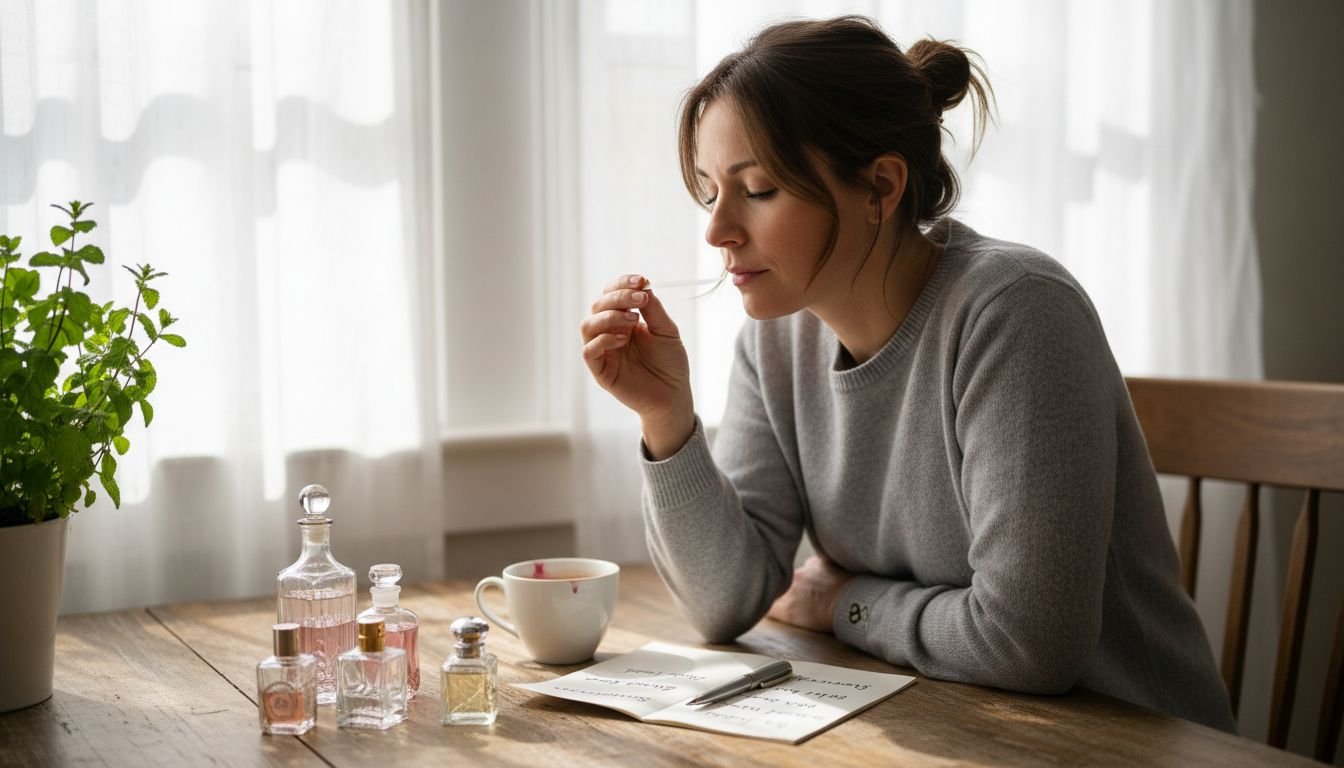
Your nose is only as good as the room you're standing in. Sample in a kitchen, beside a lit candle, with two other people spraying, and you'll catch one loud impression and miss everything underneath it. That isn't a nose problem, and no amount of training fixes it.
Clear the space first. Close the window if traffic or cooking drifts in. If people nearby are wearing fragrance, move somewhere quieter or suggest you test at different times — that's practical, not precious. Your brain reads scent alongside what you're seeing and hearing, so stripping out the competing input genuinely sharpens your focus on the smell itself. Avoid any room that reeks of cleaning products, perfumed candles or air fresheners. That residue fatigues your nose before you've sprayed a thing.
Then sort out lighting and comfort. A fragrance unfolds in stages — head notes first, then heart, then base — and you want natural daylight or soft artificial light so you can see what's on your skin and follow how it develops. Temperature matters as much. Too warm and the top notes burn off faster than you can read them; too cold and the whole thing goes quiet. Aim for a comfortable 20 to 22 degrees Celsius. Skip aggressive air conditioning or heating too, since dried-out skin changes how a fragrance performs and how you perceive it over the hours.
Pro tip: Test in the morning or early afternoon, when your sense of smell is sharpest, and don't bother straight after spicy food or coffee — both blunt your ability to pick up the quieter nuances.
For clarity, here is a summary of optimal scent testing conditions:
Nobody is born knowing a violet leaf from a violet flower. Olfactory memory builds the way any other skill does — repetition, attention, and a stretch of time where nothing seems to be happening. This is the step most people abandon, and it's the one that does the heavy lifting.
Pick four distinct fragrances or materials covering different territory: something floral, something fresh, something woody, and something spicy or resinous. Spend at least 20 seconds on each, every day, twice daily if you can manage it. Casual sniffing won't do it. Ask what the smell reminds you of. Does rose pull up a garden, a bottle from your childhood, or nothing at all? After several weeks the pathways for those specific scents get stronger, and you'll start recognising them inside real fragrances almost before you've thought about it. Swap in a fresh set after three months, otherwise adaptation sets in and your brain quietly stops registering what's become familiar.
Speed isn't the point, and comparing yourself to other people is a waste of energy. Some develop reliable recognition in two months. Others need four or five. Genetics, age and any training you've already done all move the line. Keep a plain notebook and write down what each scent reminds you of, every session. The proof shows up in your own handwriting: "that floral one" becomes "that rosy, slightly powdery floral," and that shift in language is your olfactory memory acquiring actual depth.
Pro tip: Train at the same time each day. Your sense of smell tends to be strongest in the morning, before you've eaten or met other odours, and consistent timing builds more accurate scent memories.
With the room sorted and the drills running, you can go hunting. Primary notes are the ones that arrive first, the opening impression that holds for roughly 5 to 15 minutes. Catch them before the fragrance moves into its heart and base, or you've missed your window.
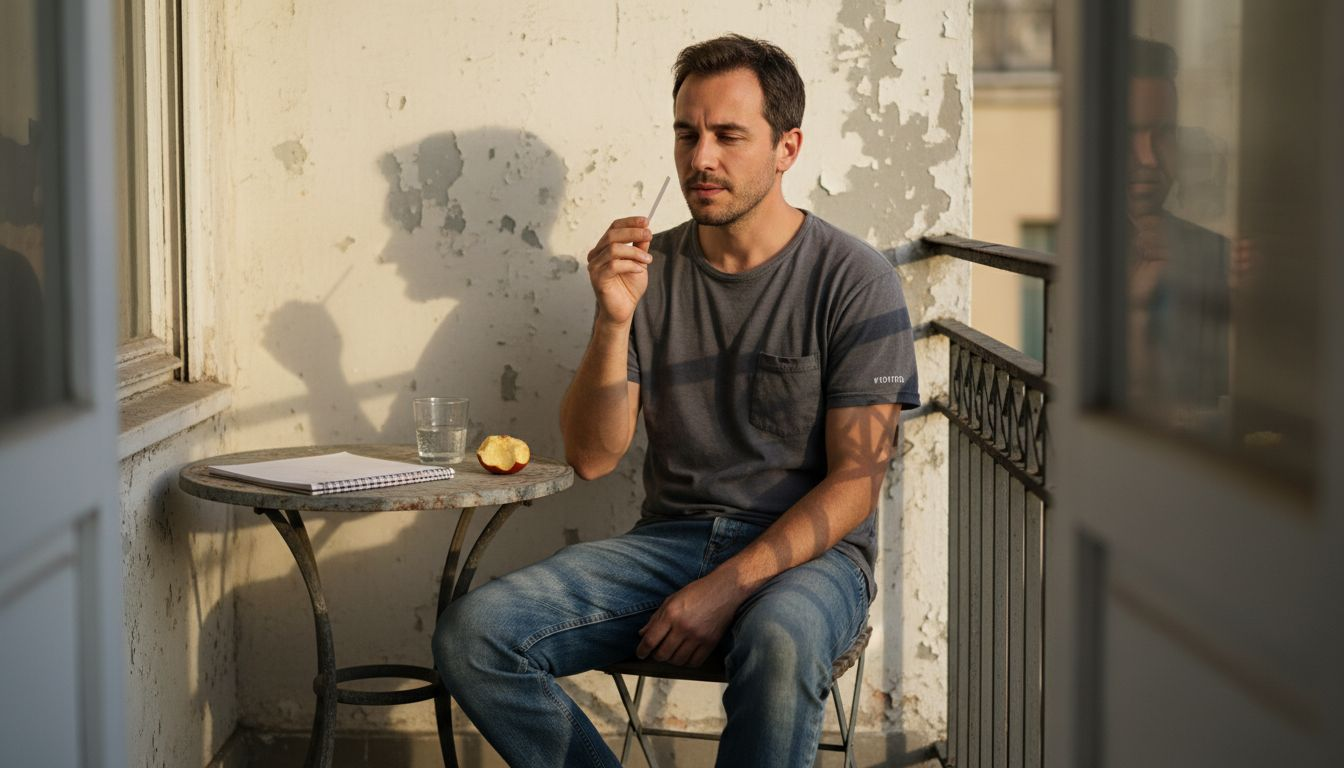
Start with a single fragrance you're curious about. Spray it on a test strip or your inner wrist and bring it straight to your nose. What lands first? Sharp and citrusy, or leaning floral? Scent molecules have distinct structures tied to their odour characteristics, so a fresh top note tends to be built from volatile compounds that evaporate quickly, while the heavier molecules turn up later. Resist the urge to name everything at once — that's how beginners end up describing nothing. Pick one quality. Fruity? Herbal? Familiar from somewhere? Write it down, wait 30 seconds, smell again. The thing has already shifted, but that first impression is your snapshot.
Now line it up against others with similar openings. Tested something with a lemon top note? Try one with bergamot or grapefruit and smell them back to back. Differences that were invisible in isolation become obvious the second you have a reference point. One reads bright and sharp; the next feels rounder. Do this across several fragrances and your vocabulary stops being decorative and starts being useful — you move past "citrus" to "crisp lemon" versus "juicy orange" versus "herbal bergamot."
It's worth knowing that volatile organic compounds like terpenoids and phenylpropanoids make up floral and fruity aromas, and those chemical structures shape how you perceive them. You don't need a chemistry degree here. But knowing there's real science under your impressions makes the whole exercise feel less like guesswork.
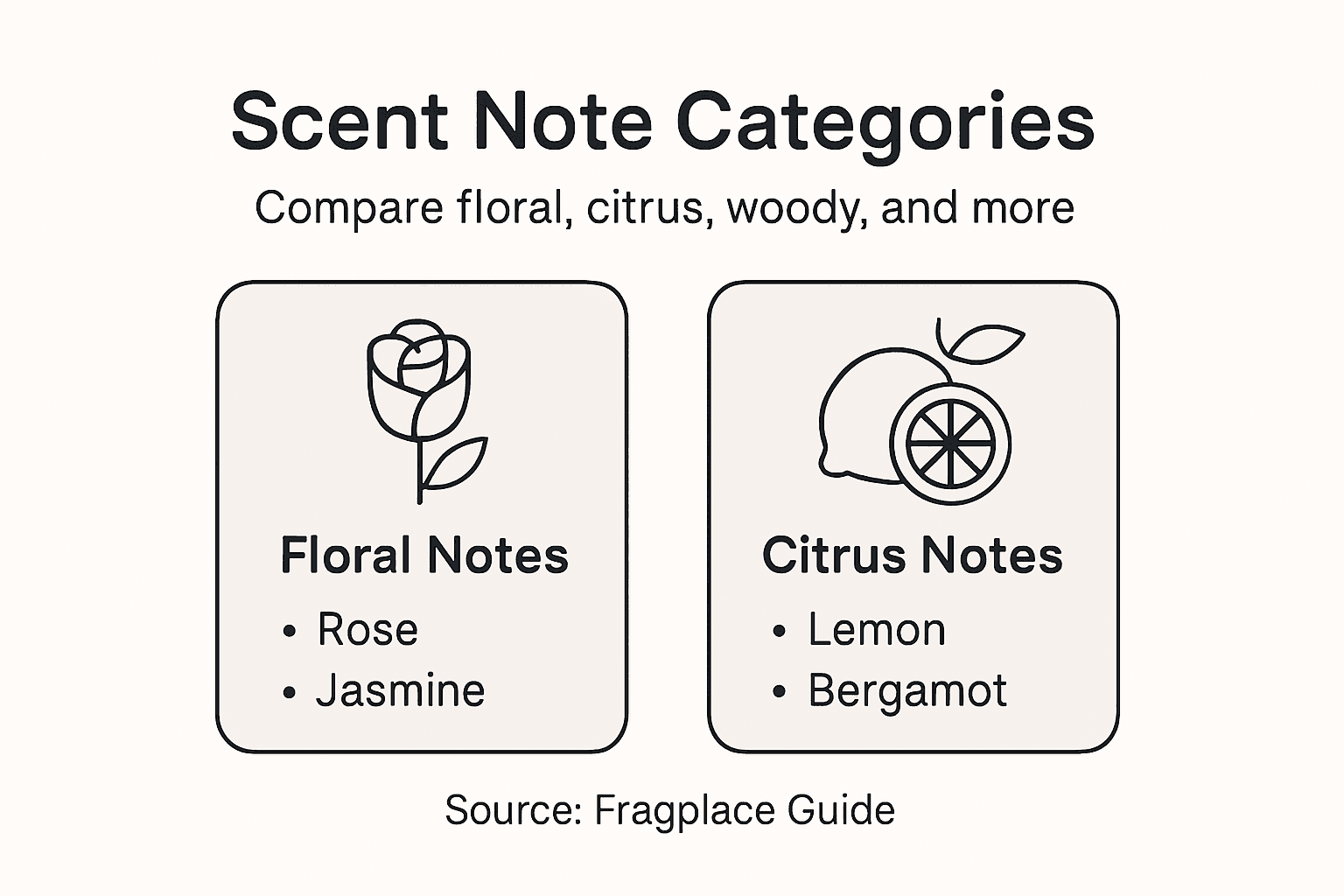
Here's how four core fragrance note categories differ:
Pro tip: Keep blotter strips or fabric swatches of what you've tested in labelled envelopes. That gives you a reference collection to compare primary notes against later, without wearing four fragrances on one arm in a single session.
This is the step that accelerates everything else. Smell one fragrance alone and your brain files it as a finished whole. Put a second one next to it and the seams show immediately.
Choose two that seem obviously different — a fresh citrus and a warm vanilla will do. First on the left wrist, second on the right. Smell each for about 20 seconds, then swap and go again. Your nose picks up difference far better than it picks up absolutes, which is why the comparison does the work. What stands out? Is one sharper, the other softer? Does one fade while the other hangs around? Write it down and don't try to be poetic about it. "Lasts longer" beats "fades fast" as a note to your future self, because it's the one you can actually check. Then add a third on a test strip and compare all three. Every extra reference point makes your descriptions more precise.
Fragrance chemistry involves molecular structure changes that impact scent perception, which is why these distinctions hold up. A small shift in molecular shape separates a fruity apple scent from a fresh herbal one. You're not imagining it — your receptors are detecting real chemical variation. Compare enough fragrances and you'll start recognising those signatures without knowing the first thing about the chemistry behind them.
Build a system for it. A chart or a notes app, fragrance names down one side, three to five key characteristics for each. Somewhere around 15 to 20 fragrances compared systematically, the patterns surface on their own. Fresh citrus notes over woody bases. Floral hearts with powdery undertones. That's your mental library, and once it exists, an unfamiliar fragrance stops being a blank and starts being a variation on something you already know.
Pro tip: Work from lightest to heaviest. Leading with a big fragrance swamps your receptors and makes everything after it harder to read accurately.
You've trained and you've compared. Now the awkward question: is any of it correct? Verification means checking your readings against fragrances with documented notes, which is the only thing standing between a trained nose and a confident imagination.
Pick a fragrance with clearly published note information — something well established and widely discussed, because those have the most documentation behind them. Look up the official notes from the brand or on fragrance communities. Then spray, run your detection process, and write down the top notes before you look at the list. Compare afterwards. If you called lemon and the brand says bergamot, you've just learned something specific about how you personally read citrus. That's not a failure, it's calibration. Your nose caught something real; the label was the problem. Fragrance accuracy relies on validated analytical methods and standards to confirm a composition matches what's listed, so checking your perception against published notes is checking it against verified information, not opinion.
Run this with at least five fragrances from different brands and families. Each one exposes something. Maybe woody bases keep slipping past you because they develop slower than your current attention span. Maybe you catch florals reliably but keep mislabelling them. Track the pattern, because your blind spots are consistent and you can learn to account for them. Once you've verified across several fragrances, you can trust your nose on something unfamiliar — and, more usefully, tell the difference between detecting a component and expecting one.
Engaging with the fragrance community through discussions and reviews also helps verify your notes. When other enthusiasts describe the same fragrance, you get several readings of one thing instead of only yours. Sometimes you'll find you caught what everyone else missed. Sometimes you were plainly wrong, which is the more useful of the two.
Pro tip: Begin verification with fragrances that have strong, obvious notes rather than complex compositions. Confirm your accuracy on the straightforward ones before taking on the layered stuff.
If you only commit to one of these five steps, make it step four. Side-by-side comparison gives you the fastest return for the least discipline, and it works even before your olfactory memory has caught up. Step two is the one that actually rebuilds your nose, but it asks for months of unglamorous daily repetition, and pretending otherwise would be dishonest. Step five is what keeps the whole thing honest — without checking your readings against documented notes, you're just getting more fluent at describing whatever you already expected to smell.
So do two things. Join Fragplace and use the detailed fragrance information and note analysis as your answer key — the documented notes you check your own guesses against in step five. Then take your readings to the fragrance community through discussions and reviews and find out where your perception matches everyone else's and where it doesn't. The second part is where you learn the most.
Keep the space neutral and free of competing odours. Close the windows, keep other fragrances out of range, and hold the room at a comfortable 20 to 22 degrees Celsius.
Expose yourself to distinct scents on a schedule. Spend at least 20 seconds on each of four different fragrances daily — floral, fresh, woody and spicy — and keep it up for several weeks before you judge the results.
Spray on a test strip or your inner wrist and commit to your first impression. Write down the qualities you catch, wait 30 seconds, then smell again and note what's changed.
Side by side, always. One fragrance per wrist, smell and record, then switch and go back the other way. The contrast is what makes each one's character obvious.
Choose fragrances with clearly published notes. Spray, write down what you detect, and only then check the official list to see how closely your reading lines up.
Your sense of smell is typically sharpest in the morning, before you've eaten or been exposed to other smells. Test in the morning or early afternoon and you're working with your nose rather than against it.
| Key Insight | Explanation |
|---|
| 1. Create an Ideal Scent Environment | Control your surroundings to optimise fragrance testing and enhance your ability to detect subtle notes. |
| 2. Regularly Train Your Olfactory Memory | Practise smelling distinct scents daily to strengthen scent recognition and improve descriptive abilities over time. |
| 3. Isolate and Identify Primary Notes | Focus on the initial impressions of fragrances to learn what distinguishes different scent notes effectively. |
| 4. Compare Fragrances for Distinction | Smell fragrances side by side to recognise subtle differences and develop a clearer understanding of their characteristics. |
| 5. Verify Findings with Known Fragrances | Test your scent identification against documented notes to refine your olfactory skills and verify your perceptions. |
| Factor | Ideal Setting | Why It Matters |
|---|
| Room Odour | Neutral, odour-free space | Prevents scent confusion |
| Lighting | Natural or soft artificial | Assists visual monitoring |
| Temperature | 20–22°C | Ensures true scent development |
| Air Circulation | Gentle, no strong currents | Maintains skin hydration levels |
| Timing | Morning/early afternoon | Heightened scent perception |
| Note Category | Typical Molecules | Sensory Qualities | Example Ingredients |
|---|
| Floral | Terpenoids, esters | Soft, powdery, romantic | Rose, violet, jasmine |
| Citrus/Fresh | Aldehydes, citral | Crisp, bright, invigorating | Lemon, bergamot, orange |
| Woody | Sesquiterpenes | Earthy, warm, lingering | Sandalwood, cedar |
| Spicy/Resin | Phenylpropanoids | Warm, sharp, complex | Clove, frankincense |