Articles
Get the Fragletter
New fragrance stories and picks in your inbox. Unsubscribe anytime.
New fragrance stories and picks in your inbox. Unsubscribe anytime.
New fragrance stories and picks in your inbox. Unsubscribe anytime.
New fragrance stories and picks in your inbox. Unsubscribe anytime.
Most people don't struggle to find a good fragrance. They struggle to choose between forty of them. Over 80 percent of people admit they can't find one that matches their personality and routine, and in the British perfume market that's a shortlist problem, not a supply problem.
| Key Insight | Explanation |
|---|---|
| 1. Understand Your Scent Preferences | Assess your personal habits and sensory preferences to identify suitable fragrances for different occasions and seasons. |
| 2. Explore Fragrance Families | Familiarise yourself with fragrance categories like floral, citrus, and woody to better understand your tastes and options. |
| 3. Systematic Testing is Essential | Use paper strips for initial testing, then apply on skin, allowing time to observe how fragrances evolve with your body chemistry. |
| 4. Evaluate Longevity and Projection | Monitor how fragrances perform on your skin throughout the day regarding projection, longevity, and personal compatibility. |
| 5. Make Informed Final Choices | Narrow down selections by comparing scents based on key criteria and ensure they resonate with your true self before purchasing. |
Start with your diary, not the perfume counter. What you'll actually wear at eight on a Tuesday morning matters more than what smells impressive under shop lighting.
Occasions and seasons pull in different directions, and a scent that ignores both becomes a bottle you dust. Lighter scents suit warmer months; richer, deeper fragrances make sense once the weather turns. The same logic applies to where you spend your days. Sit in a corporate office and subtle understated notes are the safer bet. Work somewhere creative and bolder aromatic expressions cost you nothing socially.
Then build a personal scent profile by working through the fragrance families one at a time. Notice which categories keep pulling you back — fragrant florals, crisp citrus, warm woody notes, exotic spice blends — and buy sample sets rather than bottles while you're deciding. Sampling is the cheapest tuition in this hobby, and it's the step most people skip on their way to an expensive mistake.
Be patient with the process. Taste takes a while to arrive, and rushing it usually produces a purchase you resent.
Fragrance families are a filing system, not a personality test. Used properly, though, that filing system saves you months of wandering.
The primary categories are citrus, floral, oriental, woody, aromatic and fresh. Citrus leads with bright zesty elements like lemon and bergamot — the family that flatters almost everyone and commits to nothing, which is both its charm and its limit. Floral covers the delicate end: rose, jasmine, lily. Oriental runs on warm, rich ingredients such as vanilla and amber, and that pairing is exactly why the family reads sensuous and complex — it's also why an oriental can tip into dessert territory if you're heavy-handed with the sprays.
Test one category at a time. Sampling four families in one afternoon teaches you nothing except that your nose is tired. Watch how individual notes interact, and pay real attention to the drydown rather than the opening — the hours after application are where a fragrance either earns its money or loses it. Do this for a few weeks and you'll stop asking shop assistants what's popular, because you'll know what you want.
A quick spritz and an instant judgement is how people end up with bottles they never finish.
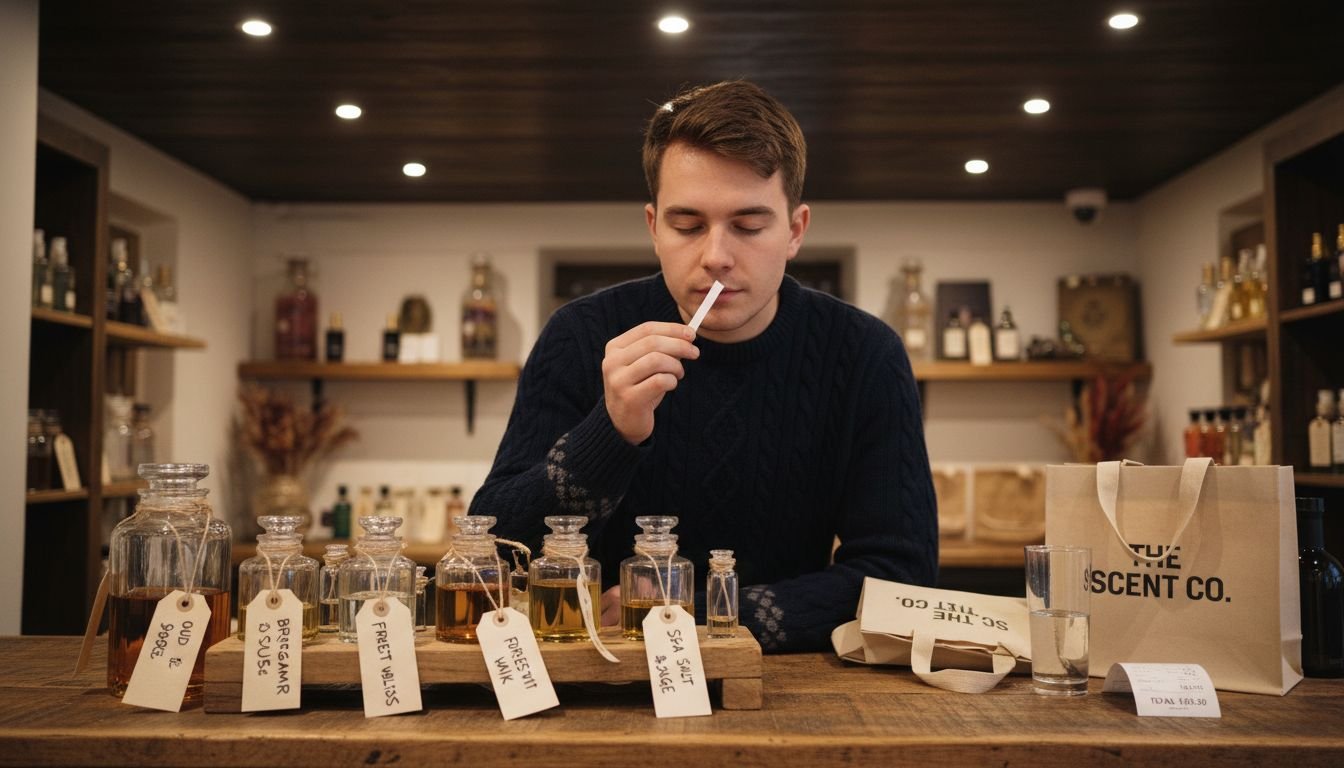
Start at specialised fragrance stores or beauty counters that offer complimentary sampling. Paper testing strips first — they give you the shape of a scent profile without tying up your skin for the afternoon. When something earns a second look, apply a small amount to your inner wrist or elbow, where skin temperature naturally varies, then leave it alone for at least 30 minutes. Top notes are marketing. The middle and base notes are what you actually live with, and they only show up if you wait.
Pro tip: test in neutral environments with minimal competing aromas, and don't run several scents at once — your nose blurs them into one another and you'll trust the result anyway. Keep a small notebook, or use your phone. Write down how each fragrance made you feel, how long it lasted, and how it shifted across the day. It feels fussy. It's also the difference between choosing a perfume and being sold one.
Bottle smell and skin smell aren't the same thing, and the gap between them is where most fragrance disappointment lives.
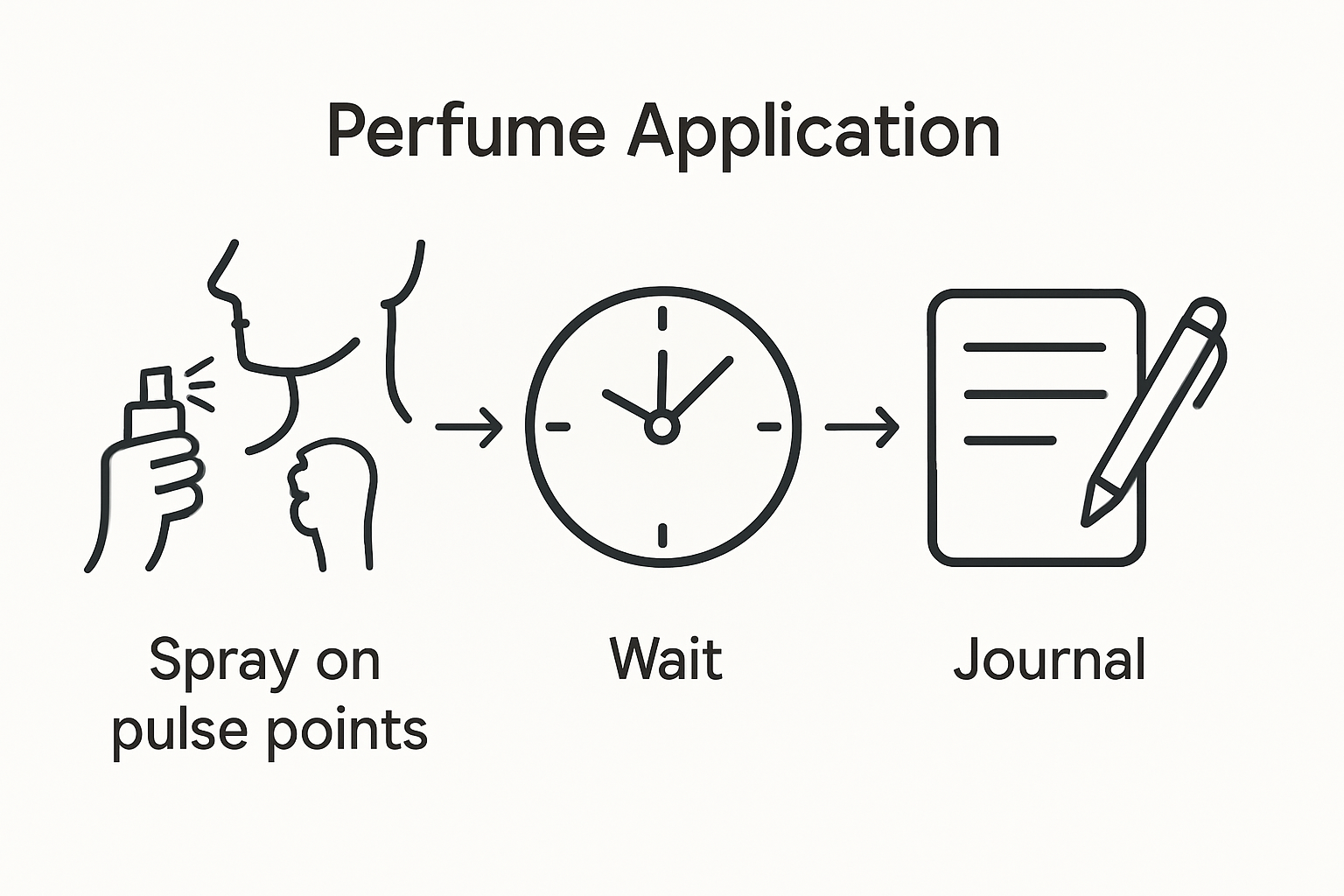
Apply to pulse points, where body heat amplifies projection: inner wrists, neck, behind the ears, inside the elbows. Then wear it through a full day and track three things — projection (how far the scent radiates), longevity (how long it stays detectable), and whether it agrees with your skin chemistry at all. Some fragrances that are lovely on a strip go flat or sour against a particular natural odour. That isn't a fault in the perfume. It's the information you came for.
Keep a detailed journal of each test. First impressions, how the scent changes over hours, any compliments, and — the entry that matters most — how wearing it makes you feel. A fragrance can smell excellent and still feel like someone else's coat. If it does, it's the wrong bottle, whatever the reviews say.
Get to a top three and then stop collecting. Past that point, more testing is procrastination that happens to smell nice.
Build a comparison chart for those three and score them across longevity, projection, versatility and emotional response. Be blunt about occasions while you're at it: does it hold up in a professional environment, at a social gathering, or only alone on a Sunday afternoon? A scent that only works in one narrow slot isn't disqualified — it just shouldn't be your only bottle.
Then trust your instincts. The right fragrance is an extension of your identity rather than a pleasant aroma you've talked yourself into, so pick the one that feels like you, sits well on your skin and gives you that quiet bit of confidence. Before you commit, ask for sample vials or travel sizes and live with the front-runner for a few weeks. Initial excitement fades on almost everything. What survives that fade is your signature scent.
If you take one thing from this guide, take this: sample before you buy, and give every candidate a full day on your skin. Everything else here is refinement. The reason people stall isn't that the method is hard — it's that they lack detailed scent information and honest community insight to test their impressions against.
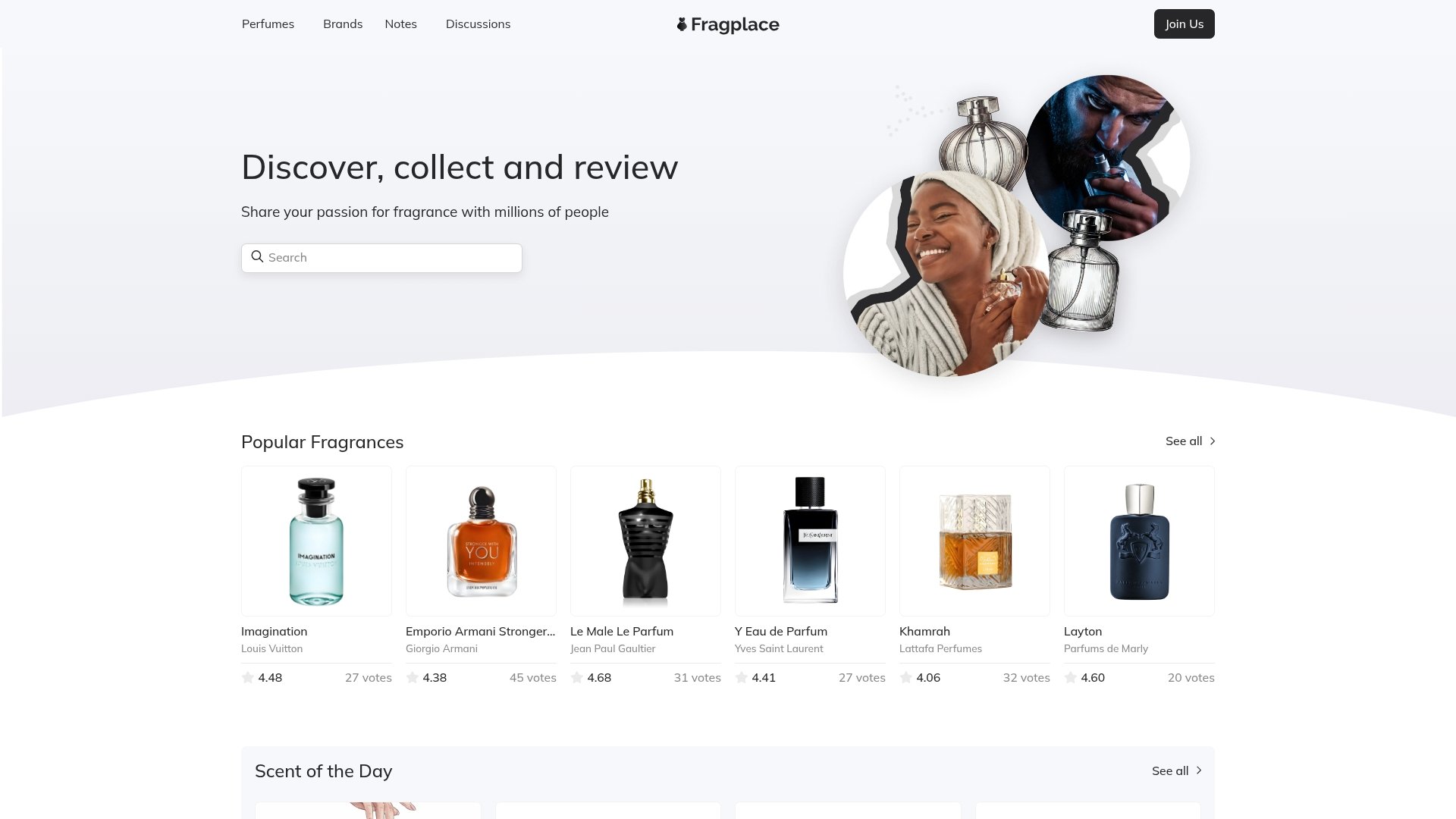
Fragplace.com exists for that gap. You can explore popular perfumes, analyse notes, and read what other enthusiasts actually think rather than what a brand's copywriter wants you to think. Compare across fragrance families, gather sensory feedback, and narrow your shortlist with people who've already done the legwork.
So: browse the notes and honest reviews over at Fragplace and build your shortlist there. Then, once you've lived with a front-runner for a few weeks, write up what you found — putting a scent into words is the fastest way to discover whether you like it or just liked the bottle.
Look at your routine before you look at bottles: where you'll wear fragrance, and for whom. Then notice how different scents make you feel, and name the aroma categories — floral, citrus, woody — that keep pulling you back.
Citrus, floral, oriental, woody, aromatic and fresh. Work through them one at a time and you'll quickly find which key notes suit your taste and which ones you've been talked into liking.
Visit specialised stores and use paper testing strips first. Anything that survives that round goes onto pulse points, gets at least 30 minutes to develop, and gets watched as it evolves — the opening tells you almost nothing.
Projection, longevity, and how well it blends with your skin chemistry. Apply to pulse points and keep a journal across a full day, because a scent that's stunning at 9am and gone by lunch is a different purchase from one that lasts.
Build a comparison chart for your top contenders — longevity, projection, emotional response — then trust your instincts and pick the one that feels authentic to you. Live with it for a few weeks before you commit to a full bottle.