Articles
Get the Fragletter
New fragrance stories and picks in your inbox. Unsubscribe anytime.
New fragrance stories and picks in your inbox. Unsubscribe anytime.
New fragrance stories and picks in your inbox. Unsubscribe anytime.
New fragrance stories and picks in your inbox. Unsubscribe anytime.
Your favourite perfume is mostly a story about you rather than about the bottle: studies show over 80 percent of perfume preferences are shaped by individual psychology and body chemistry. Which is why borrowing someone else's signature scent so often falls flat, however good it smells on them. Here's a step-by-step way to find the one that suits your skin and your week.
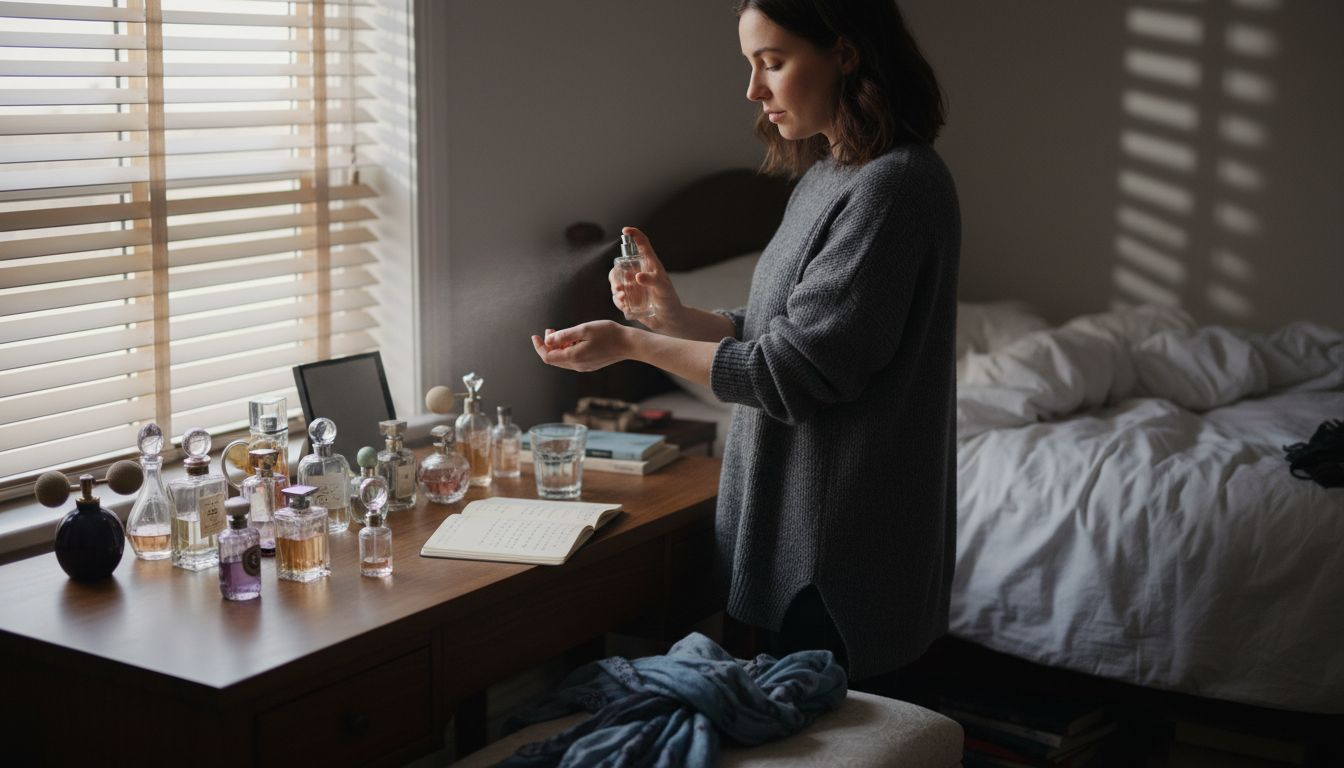
Start with your diary, not the shop floor. Preference tracks psychological and biological factors — your identity, your daily interactions, your body chemistry — far more than any objective ranking of quality, which is why the bottle you think you should love and the one you keep reaching for are rarely the same.
So look at where your hours actually go. An office at close quarters, a long walk in cold air and a crowded bar all reward different things; a scent that reads as assured across a meeting table can read as an imposition in a lift. Plenty of people want something quiet for work and something louder after dark, and there's nothing indecisive about that. What's wasteful is buying the loud one, wearing it twice and letting it go stale on a shelf. Notice which smells drag a memory up with them, too — that reaction tells you more than any note pyramid.
Age, cultural background and personal values shape this as well, along with mood and whatever ethical lines you draw about ingredients and sourcing. None of it is trivia. It's the brief you're shopping against.
Practised Tip: Keep a small fragrance journal. It's the dullest advice here and the first thing most people skip — it's also what makes the final choice easy instead of agonising.
The Fragrance Wheel is the standard map, and it's worth learning because it turns a wall of identical-looking bottles into a handful of directions. Treat it as a map, not a verdict — some of the most interesting perfumes sit awkwardly between categories.
A perfume isn't one smell, it's a sequence. Top notes land immediately after application and are light and fleeting. Middle notes arrive after about 15 minutes and carry the theme. Base notes are the deepest and longest lasting, and they anchor the whole composition — they're also the part you'll actually live with, so judge a fragrance there rather than on the opening blast at a counter. Ingredients run from natural botanical extracts to synthetic compounds, and the synthetics aren't the villains they're often made out to be; plenty of the textures people love don't exist in nature. The main families — floral, woody, oriental, fresh and citrus — each pull a different sort of person.
The table below highlights the key perfume note stages and what to observe during each:
| Perfume Stage | Timing After Application | What to Observe |
|---|---|---|
| Top Notes | 0–15 minutes | Initial freshness, first impression |
| Middle Notes |
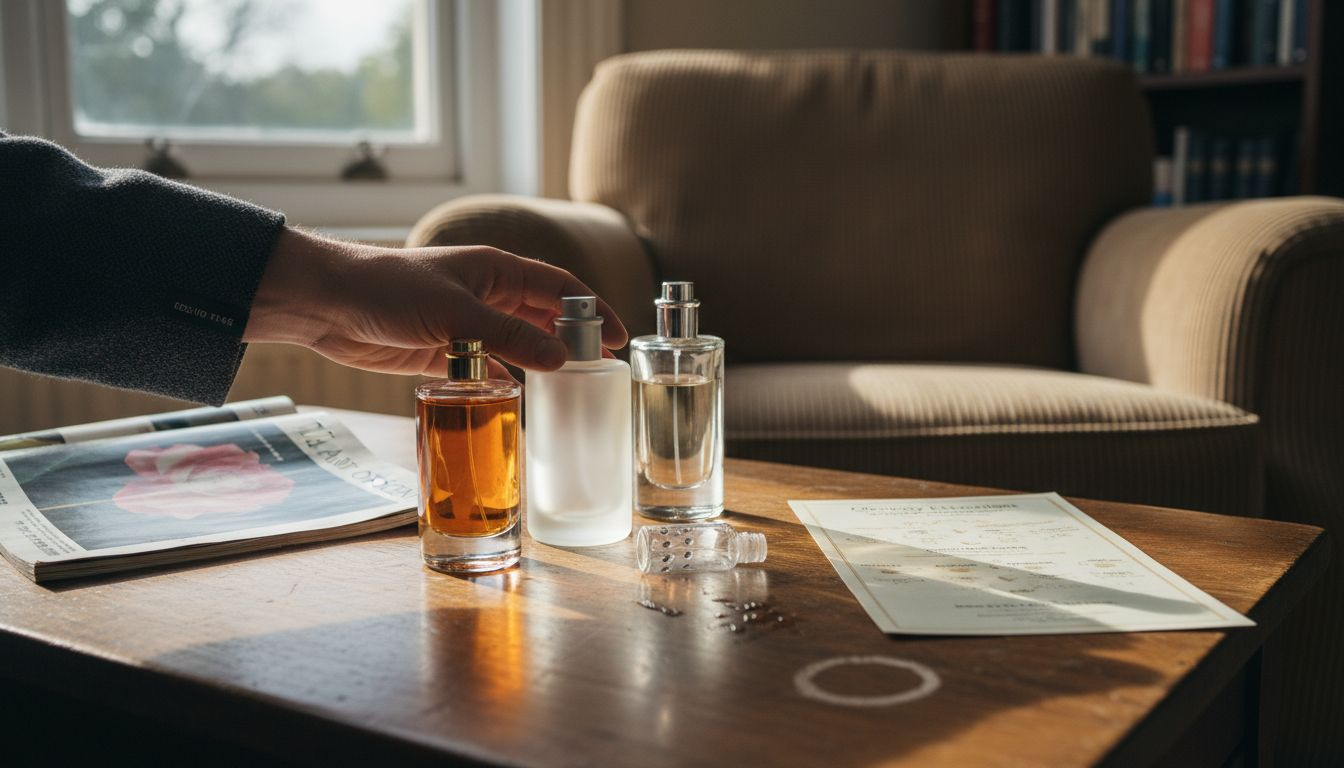
Sample across several families before you narrow anything down. Ask for tester strips in store by all means, but don't decide on them — paper flatters almost everything. Give a shortlisted scent a few hours and see which notes still hold your attention at the end of it.
Practised Tip: Test on skin, not paper. Body heat and your own chemistry rework a composition so thoroughly that the strip version is closer to marketing than to what you'll wear.
Here is a summary of the main fragrance families and the type of personality or lifestyle they often complement:
Skin is the only test that counts. The same formula can turn sweeter on one person and drier on another, so a fragrance's reputation is at best a hint about how it will behave on you.
Apply to pulse points — inner wrists, neck, behind the ears — where heat draws the composition out, then leave it alone for several hours and watch the arc: first impression, mid notes, the lingering end. Run a patch test first if your skin is sensitive or you have known allergies. A rash is a miserable way to learn a house doesn't agree with you. And don't sample several things at once; your nose gives up long before your enthusiasm does, and you end up comparing blurs.
Humidity, body temperature and even your diet move the needle. The perfume that was perfect on a friend can flatten on you, and that isn't a defect in either of you. Where sample sizes or travel versions exist, buy those first — a full bottle bought on a first impression is how bathroom shelves fill up with regrets.
Practised Tip: Walk around with it and let your own warmth work on it, then try the same scent at different times of day. Morning skin and evening skin are not the same test.
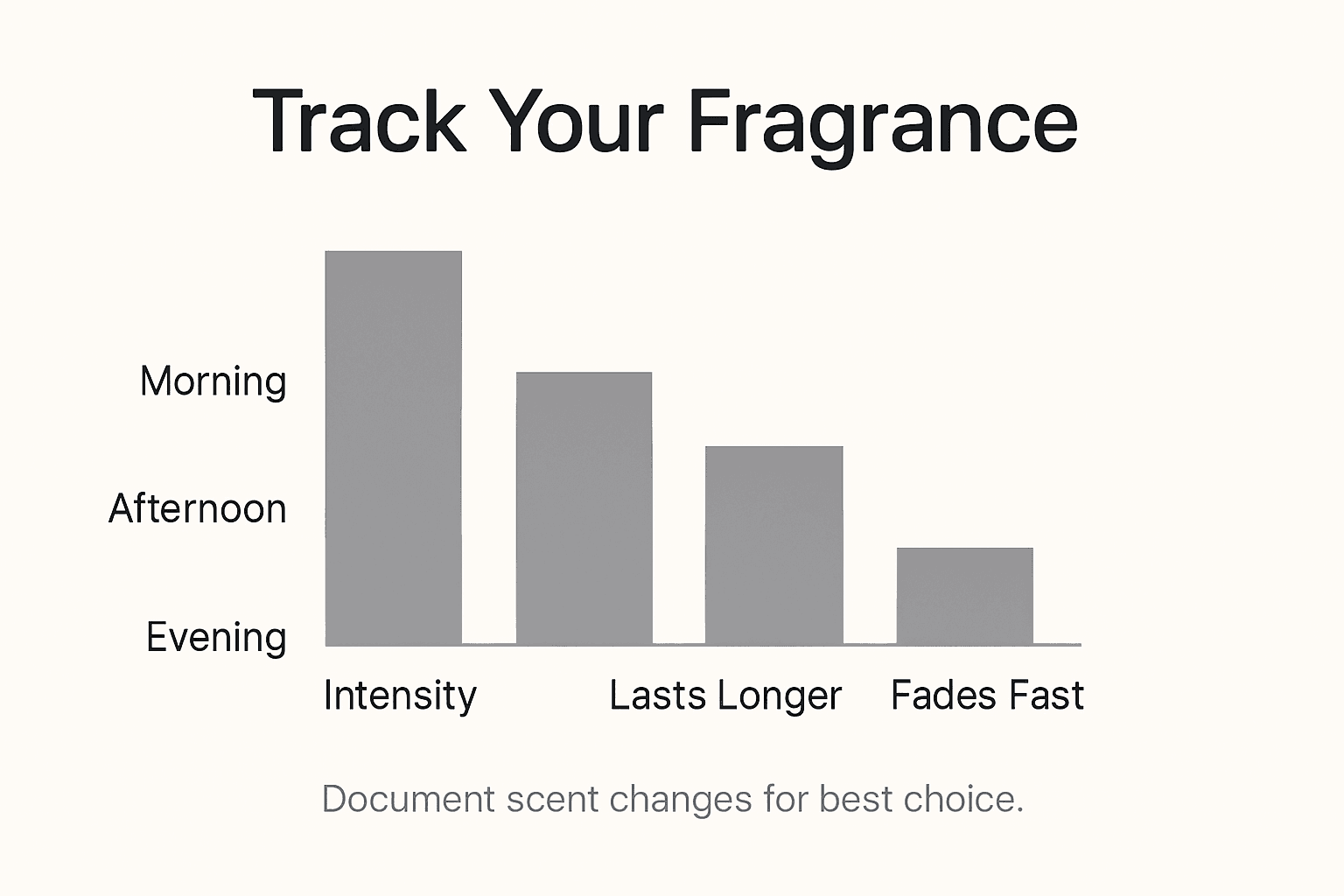
Longevity is the most argued-about subject in perfume and the easiest to settle for yourself: write it down.
Note your first impression at application, then check back at two hour increments. Track three things: projection (how far it carries), intensity (how strong it reads up close) and longevity (how long it stays detectable at all). Complex formulations behave differently across skin types, which is exactly why a journal beats memory — it turns vague impressions into a profile you can use.
Then account for conditions. Temperature, humidity, physical activity and diet all shift the result. A scent that sings on a cool morning can thin out in afternoon heat; another gets louder the warmer you get. Neither outcome is automatically a fault. It's information about when to wear the thing.
Practised Tip: A simple spreadsheet or a notes app is plenty. Log the application time, the conditions and what you honestly thought — that last column is the one you'll reread.
Now read your own notes back. Patterns surface quickly: the same family keeps reappearing, or one bottle keeps outperforming the ones you expected to love. Weigh how each behaved across the day and across different conditions, factor in the compliments if you got them, and give real weight to health considerations and safer ingredient profiles — this is something you may wear daily.
A signature scent should feel like yours without you having to think about it. Trust the instinct, but keep the evidence in view. If a fragrance performs well on your skin, feels comfortable and draws a warm reaction, that's your answer. Don't rush the confirmation — wear it in a few different contexts first. And it's fine not to land on one at all; a small rotation matched to the seasons beats forcing a single bottle to do every job badly.
Practised Tip: Buy the travel size or gather samples before the full bottle. It costs far less than one bad full-bottle decision.
Everything above — pinning down families, tracking longevity, matching a perfume to how you actually live — goes faster with other people's notes beside your own. That's what Fragplace is for: detailed fragrance notes, honest reviews, and a community that will happily argue with you about whether a base smells plush or cloying.
Start at Fragplace, where you can dig into note breakdowns and new releases without wading through marketing copy first.
The verdict: ignore the ranked lists and do steps 3 and 4 properly. Skin testing plus honest notes will beat any recommendation, including this one, because the only useful data is how a formula behaves on you. If you do a single thing from this guide, make it the journal.
So make it two. Join the Community of fragrance passionates and put your shortlist in front of people who have smelled it, then turn your own notes into something worth reading with How to Write Fragrance Reviews Effectively.
Look at your week before you look at bottles. The rooms you spend time in and the feelings certain smells pull up will tell you more than any counter recommendation. Write it down as you go, because memory rewrites this stuff within a day.
Families group scents by shared character — floral, woody, oriental and the rest. They're a shortcut: once you know which direction you lean, you can ignore most of the shop and concentrate on the part that might actually work. Sample across a few of them before you commit to one.
On skin, on pulse points like the wrists and neck, and with patience. Give it several hours so your chemistry has time to do its work, and note what you smell as it shifts. Don't test several at once — your nose fades long before your enthusiasm does.
Projection, intensity and longevity, checked at two-hour intervals after application. That's three columns in a notes app, nothing fancier. Across a full day you'll see which scents hold and which quietly disappear before lunch.
Reread your notes and back the scent that kept earning its place — the one that felt comfortable and drew a good reaction, not the one with the loudest reputation. Get a travel size and live with it in a few different settings before the full bottle.
| Important Insight | Explanation |
|---|
| 1. Understand Your Scent Preferences | Reflect on your lifestyle and body chemistry to identify scents that resonate with your identity and personal interactions. |
| 2. Explore Fragrance Families | Familiarise yourself with fragrance families and their characteristics to navigate your options effectively. |
| 3. Test Fragrances on Your Skin | Apply perfumes on pulse points to observe how they react with your body chemistry, as scents can change over time. |
| 4. Document Your Experiences | Keep a fragrance journal to track performance at various intervals and under different conditions for better insights. |
| 5. Select Your Signature Fragrance | Review your testing notes to choose a fragrance that reflects your personality and feels comfortable for long-term wear. |
| 15–60 minutes |
| Heart of scent, main theme |
| Base Notes | 1 hour and beyond | Deepness, lasting trail |
| Fragrance Family | Distinctive Characteristics | Suited Personality or Lifestyle |
|---|
| Floral | Soft, romantic, classic | Traditional, elegant, nurturing |
| Woody | Earthy, warm, sophisticated | Calm, grounded, outdoor-loving |
| Oriental | Spicy, rich, sensual | Bold, adventurous, creative |
| Fresh/Citrus | Crisp, clean, invigorating | Energetic, sporty, modern |
| Fougère | Herbal, green, aromatic | Dynamic, confident, refined |