Articles
Get the Fragletter
New fragrance stories and picks in your inbox. Unsubscribe anytime.
New fragrance stories and picks in your inbox. Unsubscribe anytime.
New fragrance stories and picks in your inbox. Unsubscribe anytime.
New fragrance stories and picks in your inbox. Unsubscribe anytime.
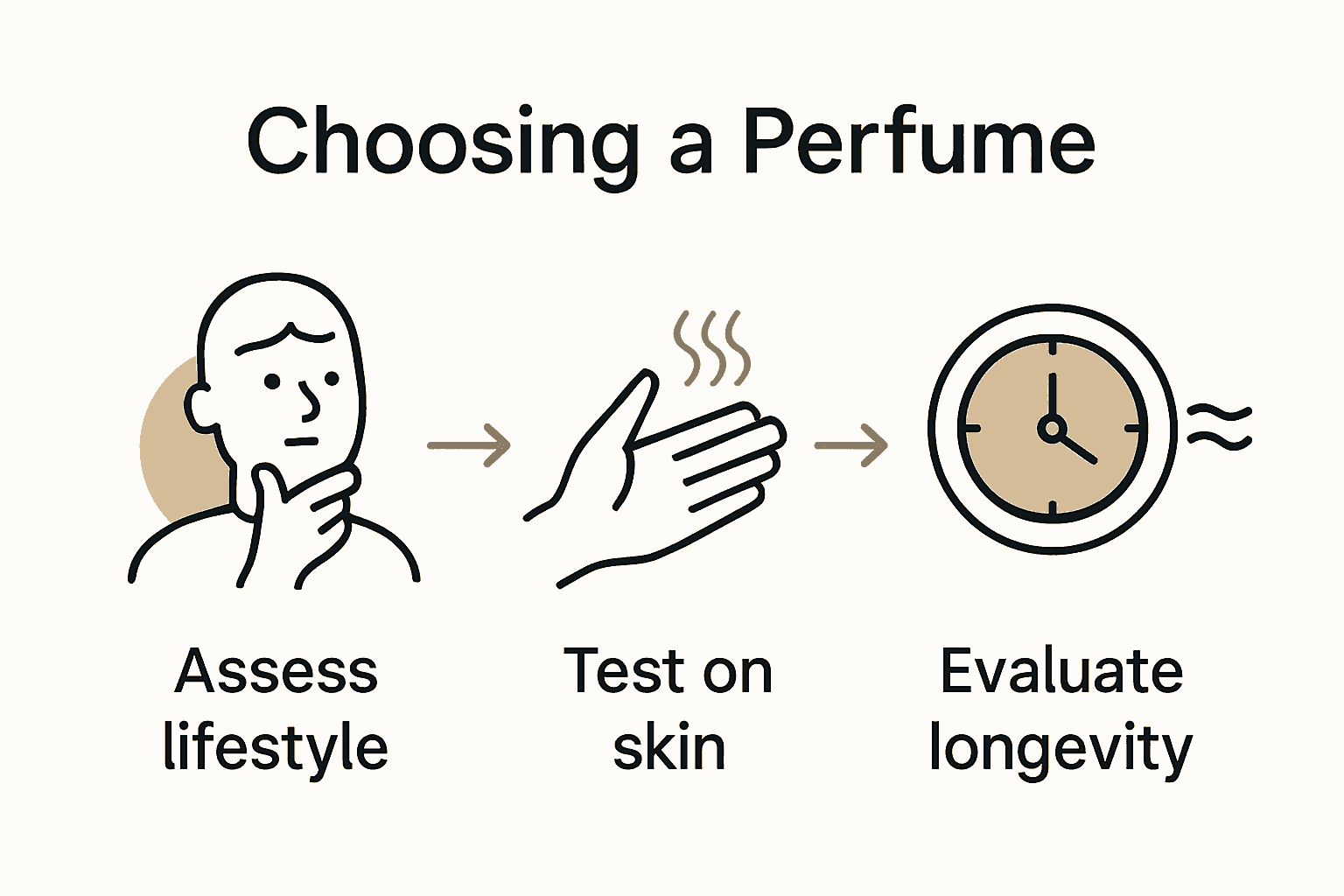
Most perfume advice hands you a promise: find your signature scent, one bottle, sorted for life. That framing is part of why over 80 percent of people admit that finding their signature scent feels confusing at first — you're not picking a fragrance, you're auditioning for a marriage. Narrow it instead: work out how you live, learn how a perfume is built, then let your own skin cast the deciding vote.
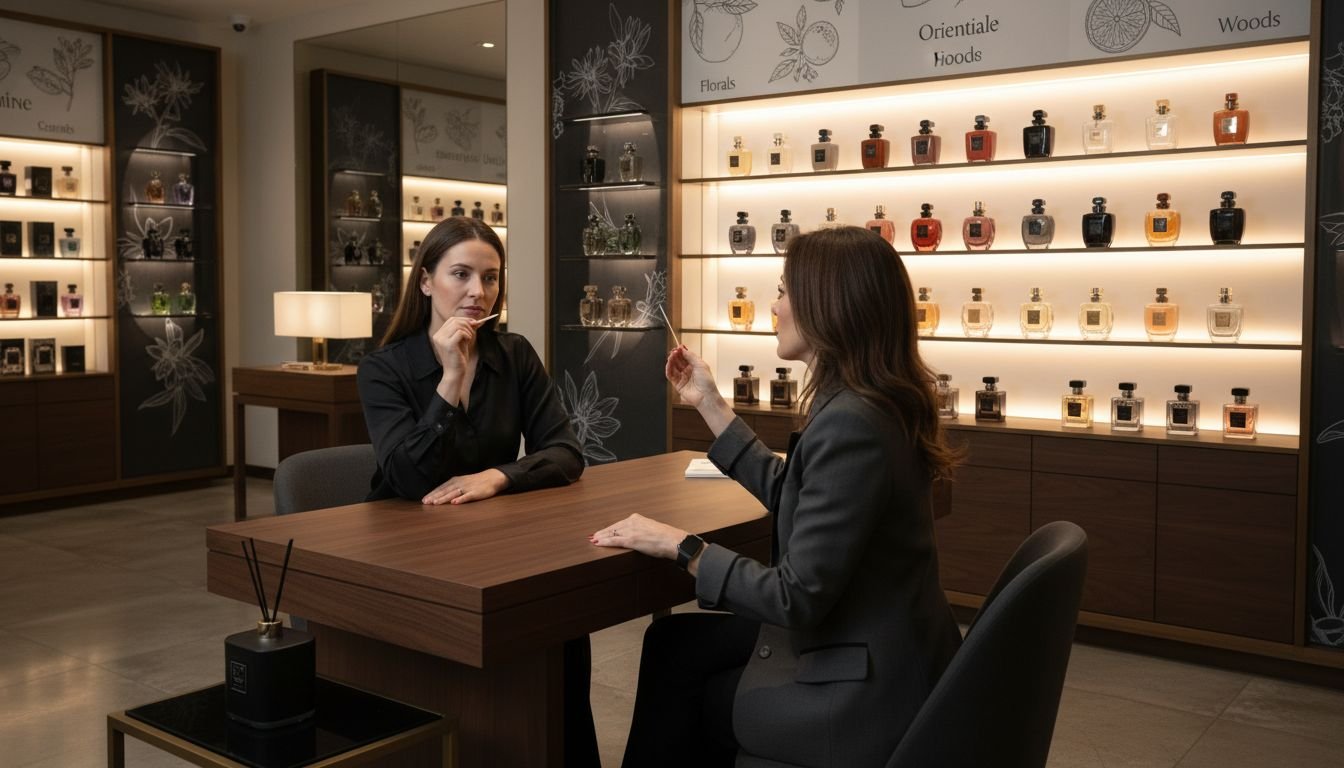
Start with your diary, not the shop floor. The perfume that suits you is the one that survives contact with the rooms you're actually in.
A study from arxiv.org exploring perfume usage among consumers found people select fragrances around factors like daily routines, climate and personal presentation. Read that as permission to be practical rather than romantic. Your scent is an extension of your identity, sure — but identity here includes the open-plan office and the commute.
So take your week apart. Desk job? Clean and quiet does more work for you than anything loud. Outdoors or moving all day? Something lighter and fresher will hold up better than a heavy one going soft in the heat. In close quarters — lifts, shared desks, the last train — understated isn't timidity. It's manners. Nobody around you agreed to your fragrance.
A second, more sophisticated arxiv.org paper proposes that fragrance preferences can link to personality traits: anger, creativity, introversion, extroversion. Treat that as a prompt for self-examination rather than a prescription. Plenty of quiet people wear enormous perfumes on purpose, and they're right to.
Pro Tip: Don't rush this. Wear a candidate on skin and watch what your body chemistry does to it across an entire day.
Next comes the vocabulary you need before you can shop with any precision.
Families are a map, not a verdict. According to msuniv.ac.in, perfumes are traditionally categorised into six primary fragrance families: Floral, Oriental, Woody, Fresh, Fruity and Gourmand. Each covers enormous ground — Woody stretches from a dry cedar office scent to something dark and smoky, and Floral runs from a single soapy stem to a whole overgrown garden — so use the label as a direction of travel, not a description.
The Jarrolds guide earns its keep with the musical analogy. Notes behave like chords. Top notes are the opening: light, volatile, usually citrus or lavender, and mostly gone before you've left the shop. Middle notes emerge after 10 to 20 minutes and form the heart. Base notes provide depth and longevity — think vanilla or sandalwood — and they're the part anyone standing near you later in the day will actually recognise.
Which gives you the most useful rule in this article: judging a perfume on its first thirty seconds tells you almost nothing. Spray, sniff, buy, and you've paid for the top notes and inherited the base.
Pro Tip: When testing a new fragrance, give it at least 30 minutes on your skin before you form an opinion worth acting on.
Know the families and you can at least ask for what you want. Knowing what it does on you is a separate problem.
Other people's noses are a filter, not an authority. Used properly, they save you a wasted afternoon.
A compelling study from arxiv.org applied community detection techniques to analyse user preferences, revealing how perfumes are grouped and perceived by different user segments. That finding is more practical than it sounds: taste clusters. When a fragrance is described as universally loved, what's usually meant is that one particular crowd loves it, and you may not be in that crowd.
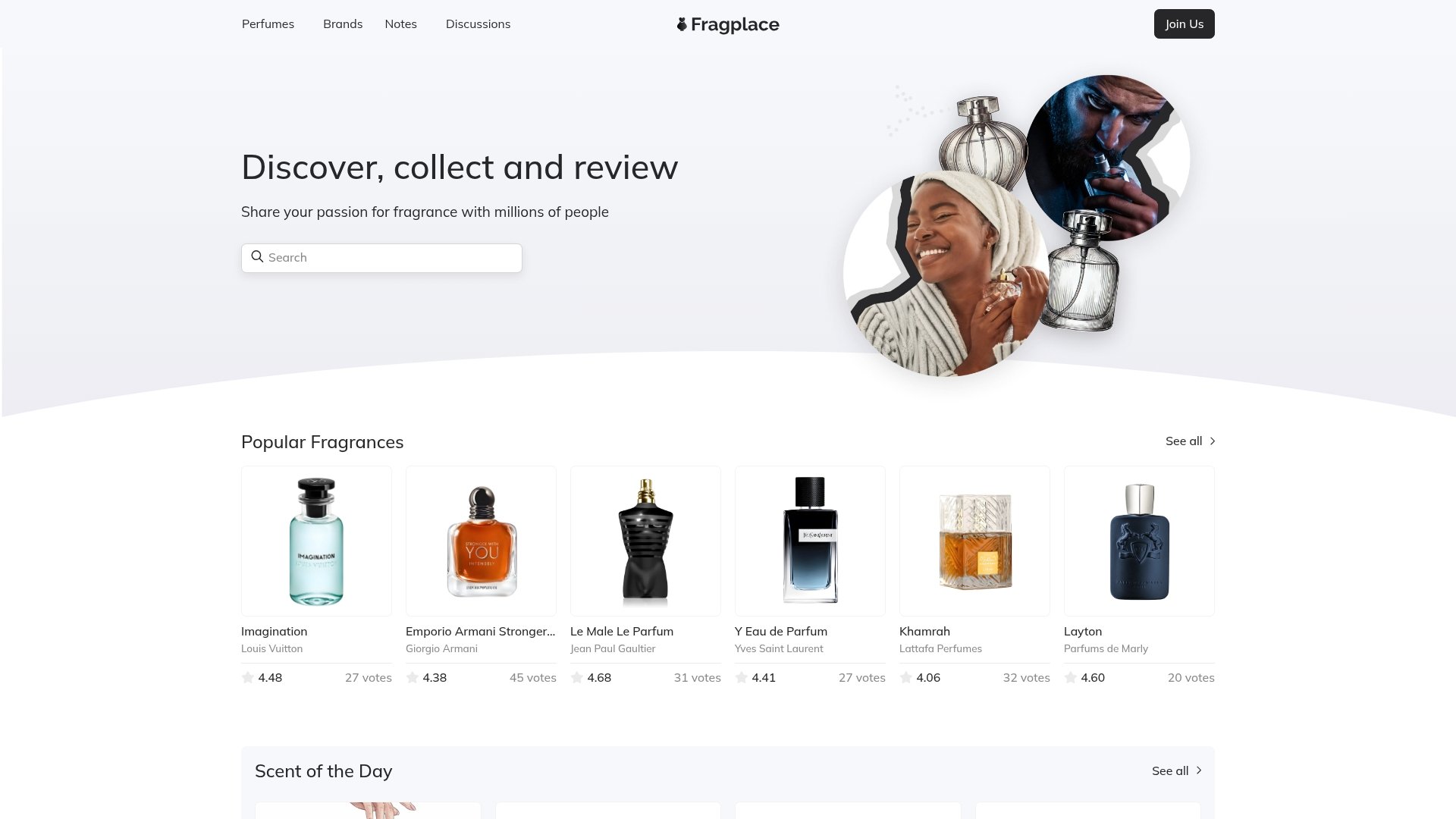
Wikipedia points to platforms such as Basenotes, which hosts a database of over 20,000 fragrances and 90,000 user reviews, searchable by name, house, launch year, gender and specific notes. Search-by-notes is the underrated tool there. If you already know a note that flatters you, you can work outwards from it instead of wandering a counter at random.
The five-star reviews are the least informative thing on any of these sites. Specific complaints are where the value sits: it vanished by lunch, it turned sour after an hour, it smells like a cheaper bottle you already own. That's the stuff marketing copy will never tell you.
Pro Tip: Don't just read the positive reviews. The detailed critiques describing how a fragrance performs across a day are worth ten raves.
Read enough of them and you'll have a shortlist. A shortlist is not a decision.
Paper blotters are for shortlisting and nothing else. They have no body heat, no chemistry and no stake in the outcome.
Wikipedia's account of the famous 'sweaty T-shirt study' demonstrated that individuals are most attracted to scents from people with dissimilar genetic profiles — your biology has opinions about smell that predate your taste. Research from arxiv.org on how olfactory cues shape sensory impressions points the same way. Both are arguments for testing on yourself rather than trusting a description.
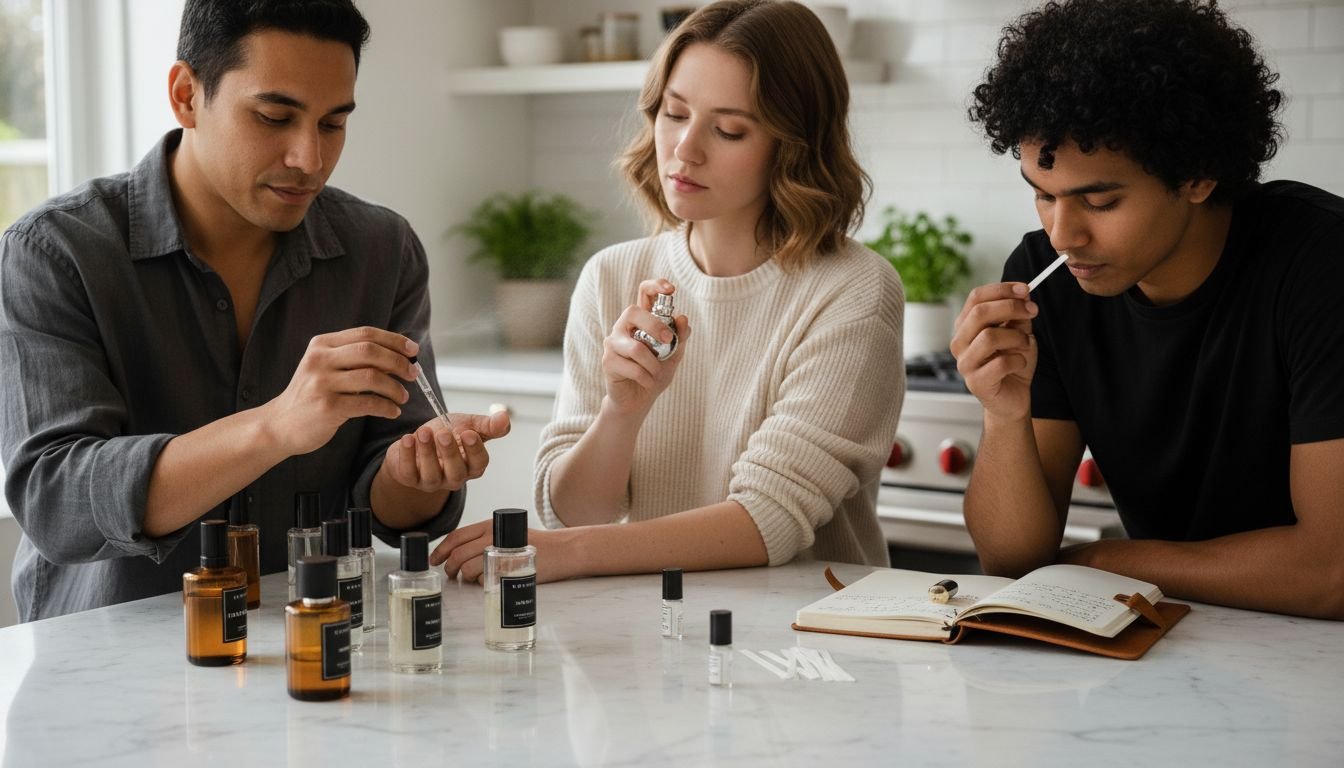
The method is simple. Apply to pulse points — wrists and neck. Wait at least 30 minutes and pay attention as different notes emerge and the thing rearranges itself. Test a handful at most in one session; past that your nose surrenders and everything smells like the shop.
Pro Tip: Always test on your own skin. A perfume that smells extraordinary on a friend can go flat or sharp on you, and there's no predicting which.
Once it's on you and behaving like itself, you can start judging performance.
Longevity is how long it lasts. Sillage is how far it travels. People routinely want the first and end up buying the second.
According to Wikipedia, aromachology holds that individual physiological responses can dramatically affect how a fragrance develops, and the docking theory of olfaction supplies the mechanism: weak non-covalent interactions between odorant molecules and your own receptors. The short version is that a perfume is a collaboration with your skin, and your skin gets the last word.
To assess longevity honestly, apply it and track its performance over 8 to 10 hours, noting how it shifts from the opening through the heart and into the base. Some bottles are gorgeous for an hour and gone. That's a legitimate purchase if you know it going in and a genuine annoyance if you don't.
Pro Tip: Test in different environments and during different activities. Heat, movement and a cold morning will each give you a different answer.
Be sceptical about sillage in particular. Big projection reads as confidence in a review and as an imposition in a small meeting room. If you spend your days close to other people, a modest one you can top up beats a monster you'll regret before lunch.
The right vocabulary makes the last decision cheaper. Wikipedia describes the Fougère family as a classic perfume classification characterised by sweet lavender top notes blended with woody and coumarin base notes, while the Chypre classification pairs citrus top notes with cistus labdanum middle notes and mossy base notes. Learn to say you want something chypre-shaped but less mossy and a sales assistant stops guessing at you.
Then buy small. A travel size costs more per millilitre and it's still the better buy for anything you've known for a week — the full bottle purchased on a first-day crush is how collections fill up with regret. Compare prices across retailers by all means, but treat a startling discount on a designer bottle as information about the bottle, not the bargain.
Pro Tip: Always check the return or exchange policy before you pay. Some retailers run sample programmes or tester sizes that let you explore without committing real money.
And then stop researching. Past a certain point, more reading is just procrastination in a lab coat.
Here's the verdict: the step nearly everyone skips is the cheap one. Samples, worn on your own skin, on ordinary days, before any money moves. If you take one recommendation from this article, take that one — spend on samples across a few different families rather than a full bottle in the family you already know, because the surprise is usually where the good stuff is. Fragplace exists to make that stretch less of a slog.
Start at Fragplace.com: detailed fragrance profiles, user reviews and expert articles that break down families, notes and how a scent behaves over a day, plus a community that argues about all of it in good faith. Then, once you've lived with something long enough to have a real view, write it up — How to Write Fragrance Reviews Effectively will show you how to make notes the next person can actually use. Personalised discovery works better when everyone contributes.
Look at your week before you look at a counter. Office days, outdoor hours and crowded rooms each ask for something different, so pick for the environments you're genuinely in rather than the life you'd like to be photographed living.
Floral, Oriental, Woody, Fresh, Fruity and Gourmand. They're broad categories rather than precise descriptions, so use them to point yourself in a direction and let your nose handle the rest.
Apply to pulse points like your wrists and neck, then wait at least 30 minutes. The opening is the least honest part of any perfume; what emerges after half an hour is the thing you'd be buying.
Longevity and sillage. Track how long it holds on your skin and how far it carries, and check both in different environments and activities before you decide it works.
Trust the testing you've already done and buy small first. A travel size confirms long-term satisfaction without committing you to a full bottle you might resent by month two.
Check the return or exchange policy. It's the dull step that saves you if the thing behaves differently at home than it did in a shop full of competing scents.
| Key Point | Explanation |
|---|
| 1. Assess your personal lifestyle first | Understand your daily activities to choose a fragrance that enhances your identity and fits your environments, such as work or social events. |
| 2. Learn about fragrance families and notes | Familiarize yourself with six key fragrance families to navigate scent selections, understanding how different notes interact and evolve over time. |
| 3. Test fragrances on your own skin | Apply fragrances on pulse points and allow 30 minutes for development to see how they interact with your unique body chemistry. |
| 4. Evaluate scent longevity and sillage | Observe how a fragrance lasts and projects around you throughout the day to ensure it meets your personal expectations and lifestyle needs. |
| 5. Finalize your purchase thoughtfully | Choose a fragrance confidently, considering trial sizes and verifying return policies to ensure long-term satisfaction without significant financial commitment. |