Articles
Get the Fragletter
New fragrance stories and picks in your inbox. Unsubscribe anytime.
New fragrance stories and picks in your inbox. Unsubscribe anytime.
New fragrance stories and picks in your inbox. Unsubscribe anytime.
New fragrance stories and picks in your inbox. Unsubscribe anytime.
Perfumery gets sold to you as magic, and that's the least interesting thing about it. What actually happens looks more like engineering with taste: materials chosen for how they behave over hours, not just how they smell in the first ten seconds. Learn the mechanics and you stop buying the story printed on the box.
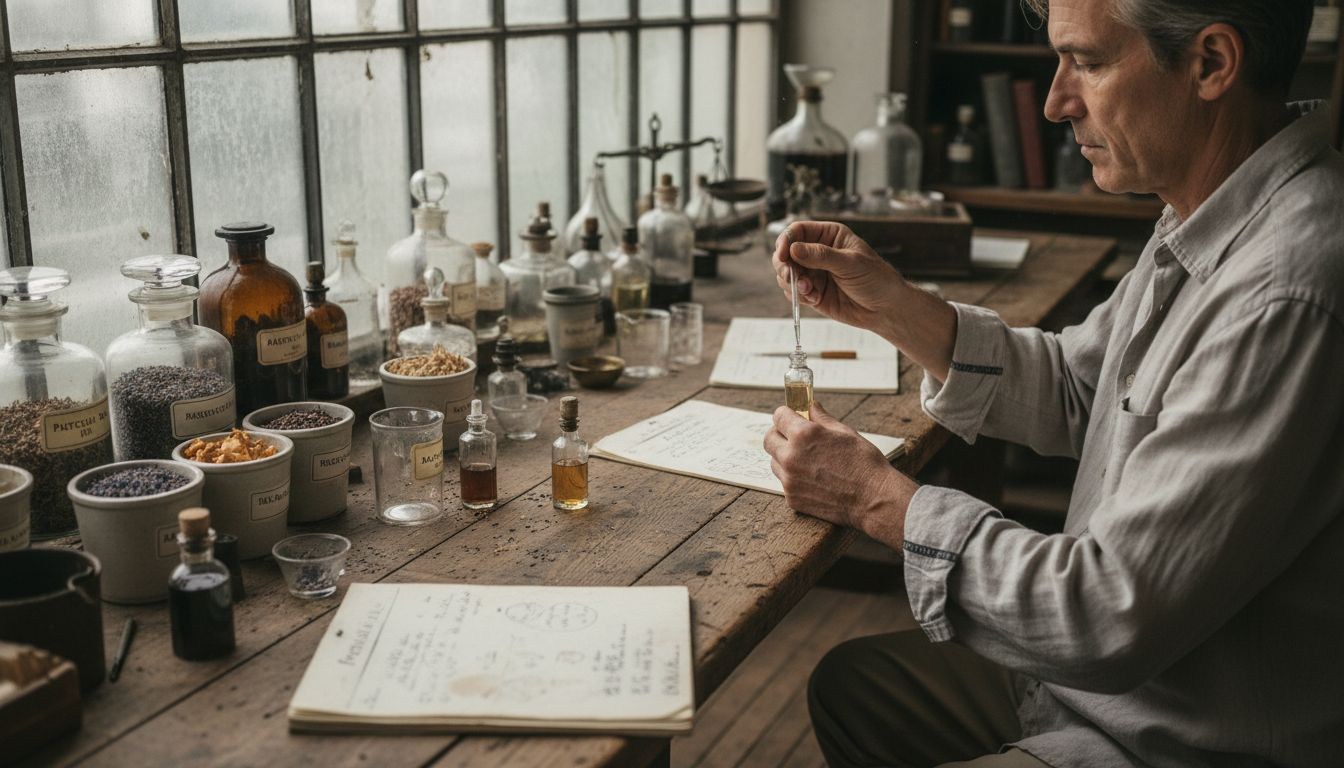
The myth is that a perfumer dreams up a scent and pours it into a bottle. The reality is a brief, a budget, a restricted materials list and a long run of trials that mostly don't work. Calling it mixing pleasant liquids is like calling architecture stacking bricks.
Four things happen at once in any serious formula:
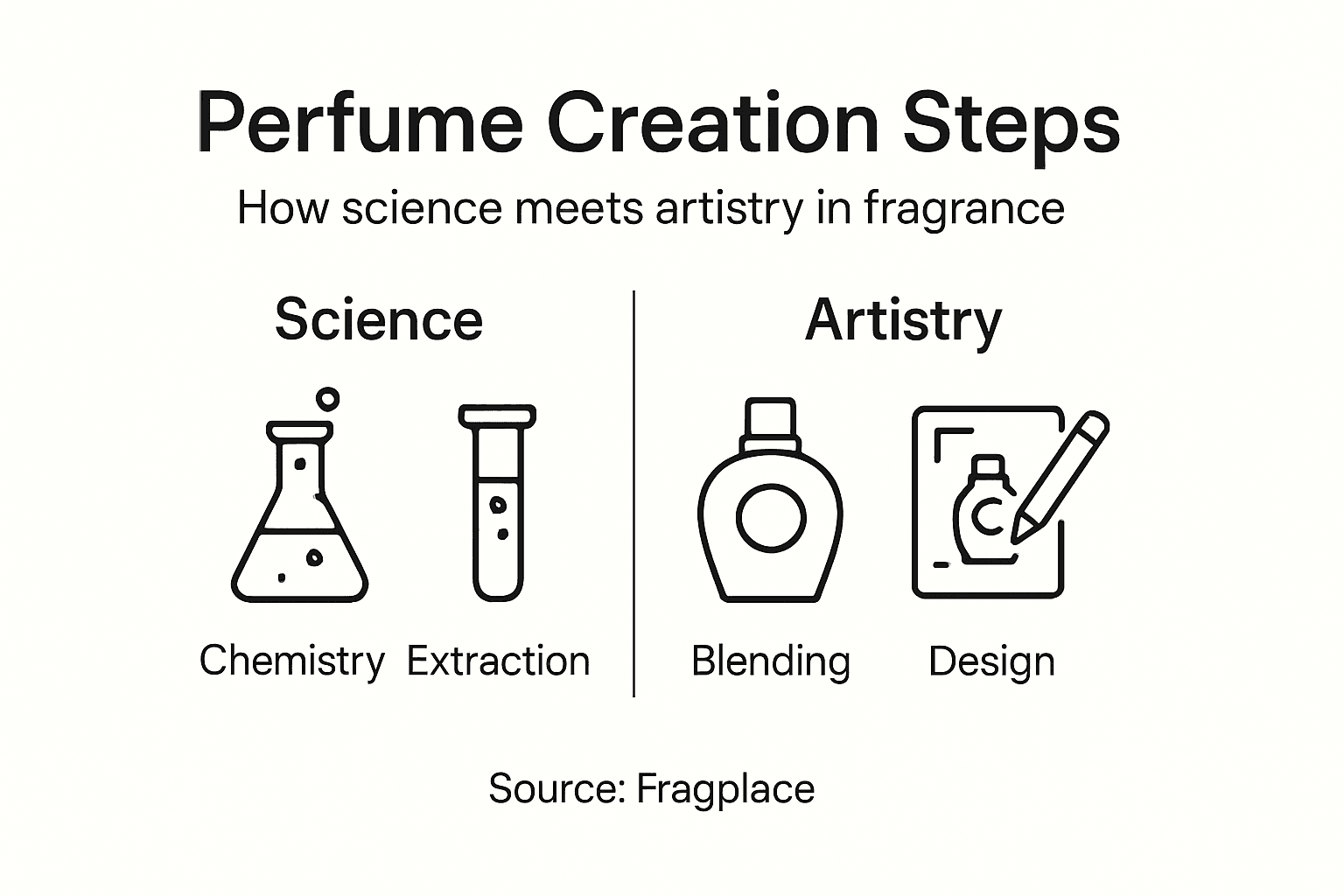
The old argument about whether perfumery is art or science is tired, and the answer is boring: it's both. The industry leans on the art half because art sells better than chemistry does. The craft underneath is real, though. Professional perfumers, the 'Noses', train for years to carry thousands of fragrance molecules in their heads, along with how those molecules interact and what they make people feel. Some fragrances stand up as legitimate creative works, which says more about how narrow our definitions of art are than about perfume.
Pro tip: Read a fragrance as an argument someone constructed, not as a mood. Once you start noticing the choices, lazy work is much easier to spot.
The natural-versus-synthetic fight is the most tedious argument in perfumery, and it's usually backwards. Plenty of synthetics cost more than the botanical sitting next to them, and plenty of naturals swing wildly from harvest to harvest.
Ingredients fall into two camps:
Natural Ingredients:
Synthetic Ingredients:
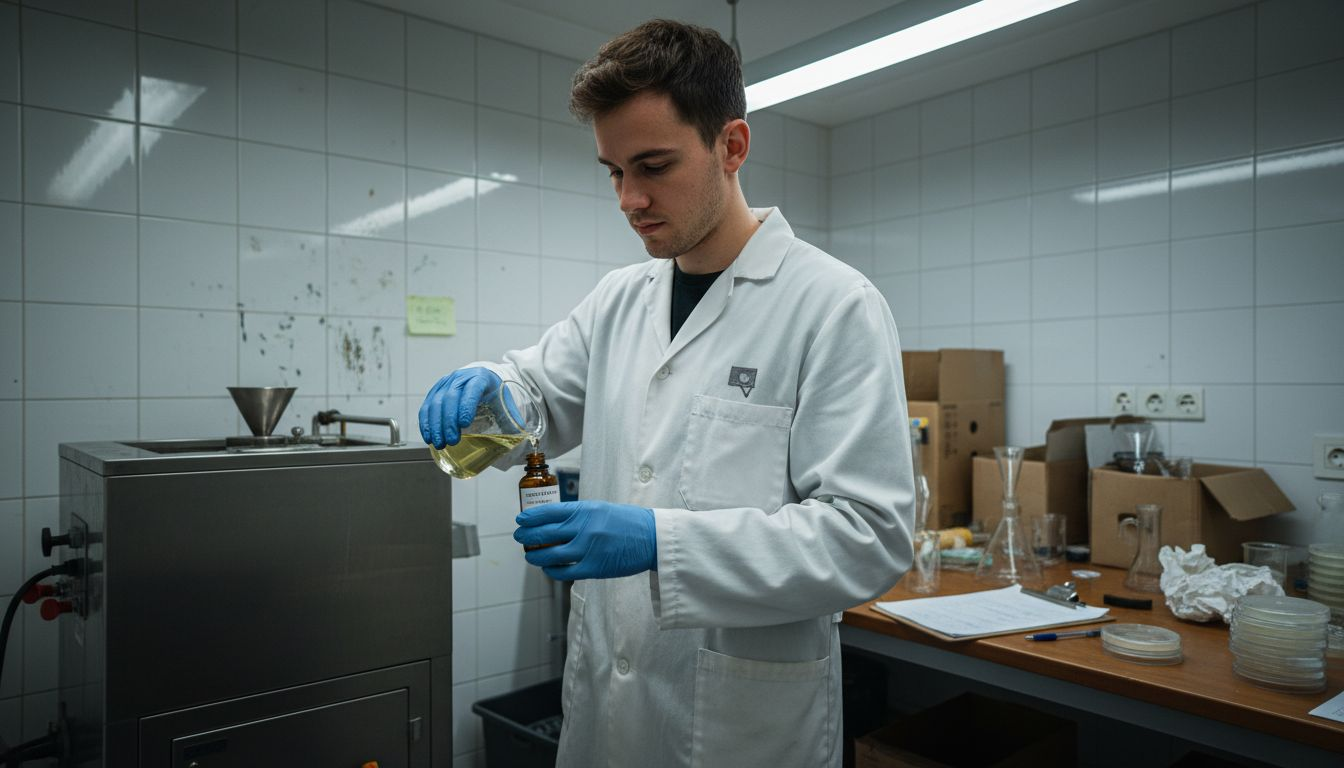
Extraction is the bridge between a raw material and something a perfumer can use. Steam distillation and cold pressing still do plenty of the work, now joined by supercritical fluid extraction, which isolates material with more precision and less collateral damage. The gain is twofold: delicate molecular structures survive the process, and the environmental cost drops, which matters to buyers who have started asking where things come from.
Pro tip: Assume every scent you like is a negotiation between natural and synthetic material. Judge the result, not the label on the ingredient.
Small workshops turned into global factories, and the mourning over that is overdone. Scale bought consistency, and consistency is worth more than most enthusiasts will admit out loud.
Where the two approaches genuinely part ways:
Industrial Production:
Artisanal Production:
Industrial methods run commercial perfumery, but they haven't wiped out the artisanal side. Technological advancements have made it possible to replicate complicated scent profiles with real precision, so the nuance once locked inside small workshops now turns up in factory output too. The flip side deserves saying: small-batch can also mean batch-to-batch drift, and a share of the premium you pay for handcrafted work is buying the story rather than the juice.
Here's a concise comparison of industrial and artisanal perfume production to clarify their distinct strengths:
Pro tip: Don't treat "artisanal" as a quality rating. It describes a production scale, and scale tells you nothing about whether the formula is any good.
Blending is where taste and arithmetic meet. Every material has to earn its place, and one overdose in the wrong spot flattens everything around it.
The familiar pyramid is a teaching diagram rather than a law, but it's a useful one. Treat the timings below as typical behaviour, not a guarantee:
Top Notes:
Heart Notes (Middle Notes):
Base Notes:
If you buy on the opening spray alone, you're judging the part that dies first. The heart is where a fragrance shows its personality, and the base decides whether you still like it at the end of the day.
A finished formula keeps moving. Chemical reactions carry on after blending, with oxidation and other molecular shifts slowly reshaping the composition. Some perfumers let a batch mature on purpose because they think time knits the materials together. Others think that's romanticism. Both camps agree the liquid in your bottle isn't frozen.
Pro tip: Store your favourite perfumes somewhere cool and dark. Heat and light degrade aromatic compounds faster than age does, and a bathroom shelf is the worst place in the house.
Regulation is the least glamorous part of perfumery and the part enthusiasts complain about most. Some of that anger is fair. Some of it is cost-cutting hiding behind a rule, with reformulation blamed on the regulator when the real culprit is the accountant.
What the framework actually covers:
Health and Allergenic Risks:
Regulatory Compliance:
Sourcing has become the other pressure point. Brands are being pushed towards supply chains they can explain, which means environmental impact, fair trade principles and social responsibility now sit in the formulation conversation rather than in a separate marketing brochure. Progress here is uneven, and the loudest claims are rarely the best documented.
International regulatory bodies keep revising their positions, balancing consumer safety against ingredient innovation and environmental cost. That keeps manufacturers moving: formulas and sourcing strategies get rebuilt as standards shift, which is one reason the fragrance you loved five years ago may not smell identical today.
Pro tip: Check the ingredient list and back the brands that publish their sourcing and certifications. Silence on that front is information too.
Here's the verdict. Judge a perfume by how it's built and what's in it, not by whether the label says artisanal or the advert says art. Knowing how extraction, blending and ageing work turns you from someone who buys a mood into someone who can say why a fragrance falls apart after an hour, and that's the difference between a collection and a pile of bottles.
Join Fragplace and argue about new releases with people who care about the chemistry as much as the marketing, with reviews and full note breakdowns to back it up. Then go straight to the Perfumers pages and follow the names behind the work you keep coming back to.
Four disciplines running at once: olfactory design, chemical engineering, regulatory compliance and artistic expression. It's a slow, technical process, and the creativity happens inside the constraints rather than around them.
Both natural and synthetic. Naturals cover essential oils, extracts from herbs and spices, and resins; synthetics cover laboratory-created molecules and aroma chemicals. Almost everything you own is a blend of the two.
Chemical interactions between ingredients carry on after blending, which can add complexity and depth over time. It's not a guarantee of improvement, but it does mean a fragrance keeps changing in the bottle.
Manufacturers work to international safety standards covering health and allergenic risks, ingredient transparency and product labelling. The point is consumer safety without shutting down innovation, and the balance keeps shifting.
| Point | Details |
|---|
| Perfume creation is an art and science | Crafting fragrances combines olfactory design, chemical engineering, and artistic expression, requiring extensive expertise. |
| Diverse ingredients play a crucial role | Perfumes are composed of natural and synthetic ingredients, with careful extraction processes to minimise environmental impact. |
| Production methods differ significantly | Industrial production focuses on standardisation and efficiency, while artisanal production emphasises uniqueness and craftsmanship. |
| Safety and regulations are vital | The perfume industry must adhere to strict safety regulations, ensuring transparency and ethical sourcing to protect consumers. |
| Aspect | Industrial Production | Artisanal Production |
|---|
| Batch Size | Large-scale, consistent output | Small batches, unique creations |
| Innovation Approach | Systematic, formula-driven | Experimental, creative freedom |
| Cost Efficiency | Lower costs per unit | Higher production costs |
| Consumer Experience | Widespread accessibility | Exclusive, bespoke fragrances |
| Layer | Duration on Skin | Sensory Impact | Typical Ingredients |
|---|
| Top Notes | 15–30 minutes | Initial freshness and sparkle | Citrus, light florals |
| Heart Notes | 2–4 hours | Character and personality | Jasmine, spices, fruits |
| Base Notes | 4–8 hours | Rich depth and warmth | Woods, musks, resins |