Articles
Get the Fragletter
New fragrance stories and picks in your inbox. Unsubscribe anytime.
New fragrance stories and picks in your inbox. Unsubscribe anytime.
New fragrance stories and picks in your inbox. Unsubscribe anytime.
New fragrance stories and picks in your inbox. Unsubscribe anytime.
Most of what you're told separates one perfume house from another is marketing. Some of it isn't — the sourcing, the brief handed to the perfumer, the accord that keeps surfacing release after release — and that's the part worth learning to spot. Here's how to tell them apart.
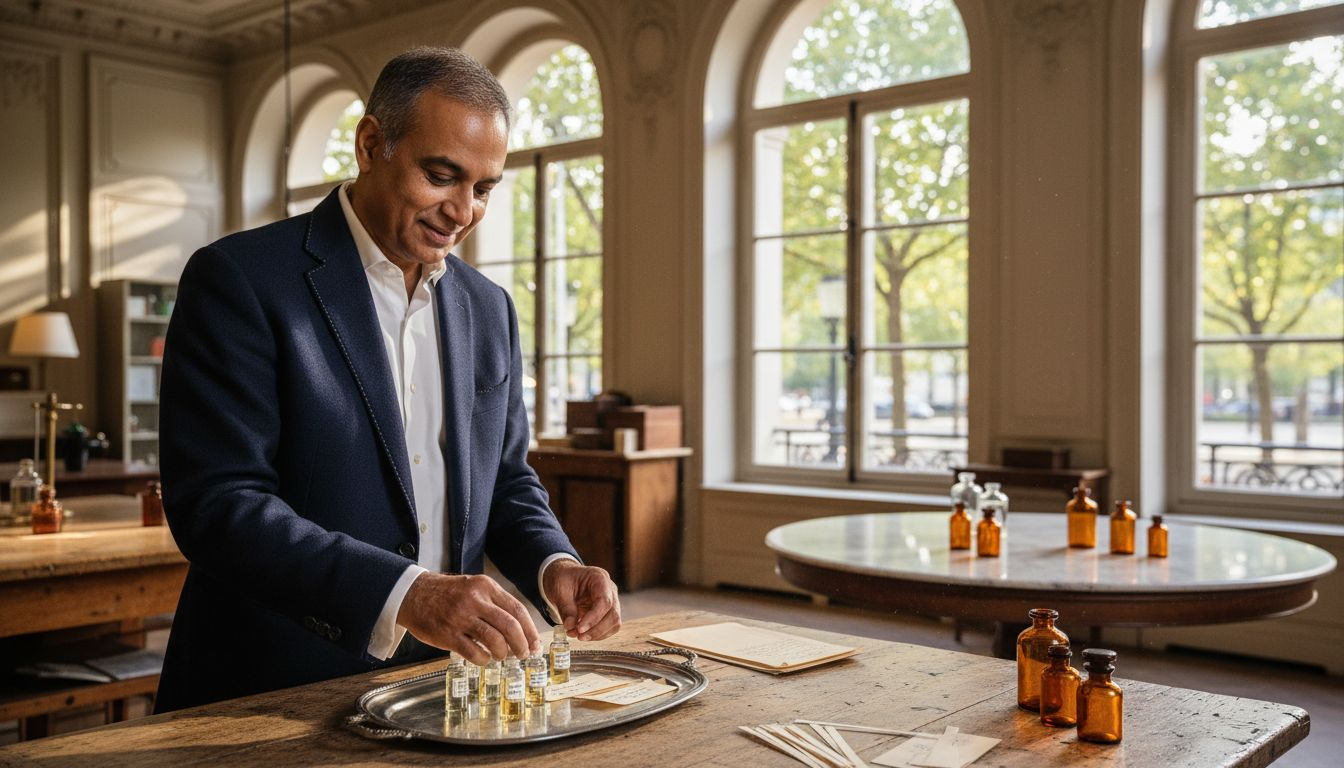
A fragrance house is a specialised business that creates and markets perfume. That sounds obvious until you notice how loosely the term gets used: it covers a two-person studio blending in the back of a shop and a company with laboratories on three continents. What they share is the job — turning raw aromatic materials into compositions people will pay for and wear again.
Behind almost any bottle is a team, not a lone genius. Perfumers (the master fragrance designers called 'noses') build the composition, chemists analyse molecular compositions, marketing experts craft the brand story, and quality control specialists make sure the fifty-thousandth bottle smells like the first. The romantic version of perfumery skips the last three roles. Don't skip them. The gap between a house you can trust and one you can't usually sits in the unglamorous jobs.
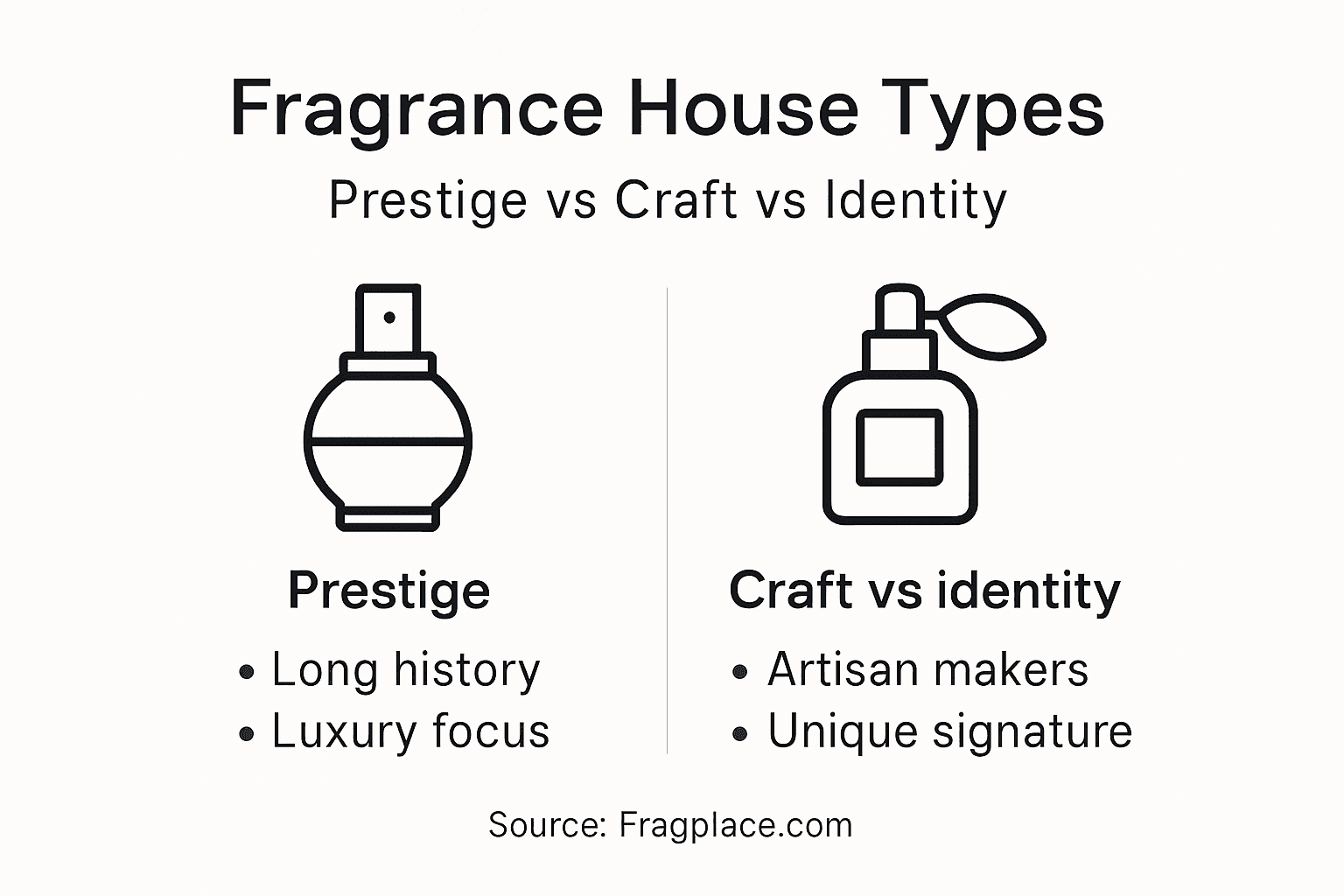
Houses sit on a spectrum. At one end, independent artisan workshops chasing unconventional ingredient combinations in limited editions; at the other, large designer brands built on consistent, repeatable product lines aimed at a mass market. Neither position wins by default. Small doesn't guarantee interesting, and big doesn't guarantee careless — there are beautifully made mass-market scents, and there are self-indulgent niche ones nobody can wear.
Pro tip: Find out who a house's perfumers are before you buy into its philosophy. A house that names its noses is telling you something; one that hides them behind a story is telling you something too.
Here's a comparison of typical roles within a fragrance house and their strategic impact:
Brand heritage is the most abused word on a perfume box. Used honestly, it means a house has a real history — a line of perfumers, a region it draws materials from, techniques it kept after they stopped being fashionable. Used as decoration, it means a founding date set in serif type on a brand that launched the year before last. The first kind creates genuine emotional resonance with buyers. The second creates a markup.
Heritage shows up in a few recognisable forms. Some houses emphasise generational expertise, tracing a lineage of master perfumers who passed down intricate scent-crafting techniques. Others lean on geography, tying themselves to cultural regions known for botanical ingredients or traditional perfumery methods. When the claim is real, it changes what's in the bottle and turns the fragrance into something closer to a cultural artefact. When it's just storytelling, it changes only the price.
The houses worth your attention hold both ends at once: they keep the craftsmanship and still take risks. That balance is harder than it sounds, and plenty of storied names have quietly settled into reissuing their own past — flankers of flankers, each thinner than the last. A brand's narrative should tell you what it believes about perfume, not just how old it is.
Pro tip: Before you buy the history, look at what the house has released lately. A heritage that stopped producing new ideas is a museum, not a fragrance house.
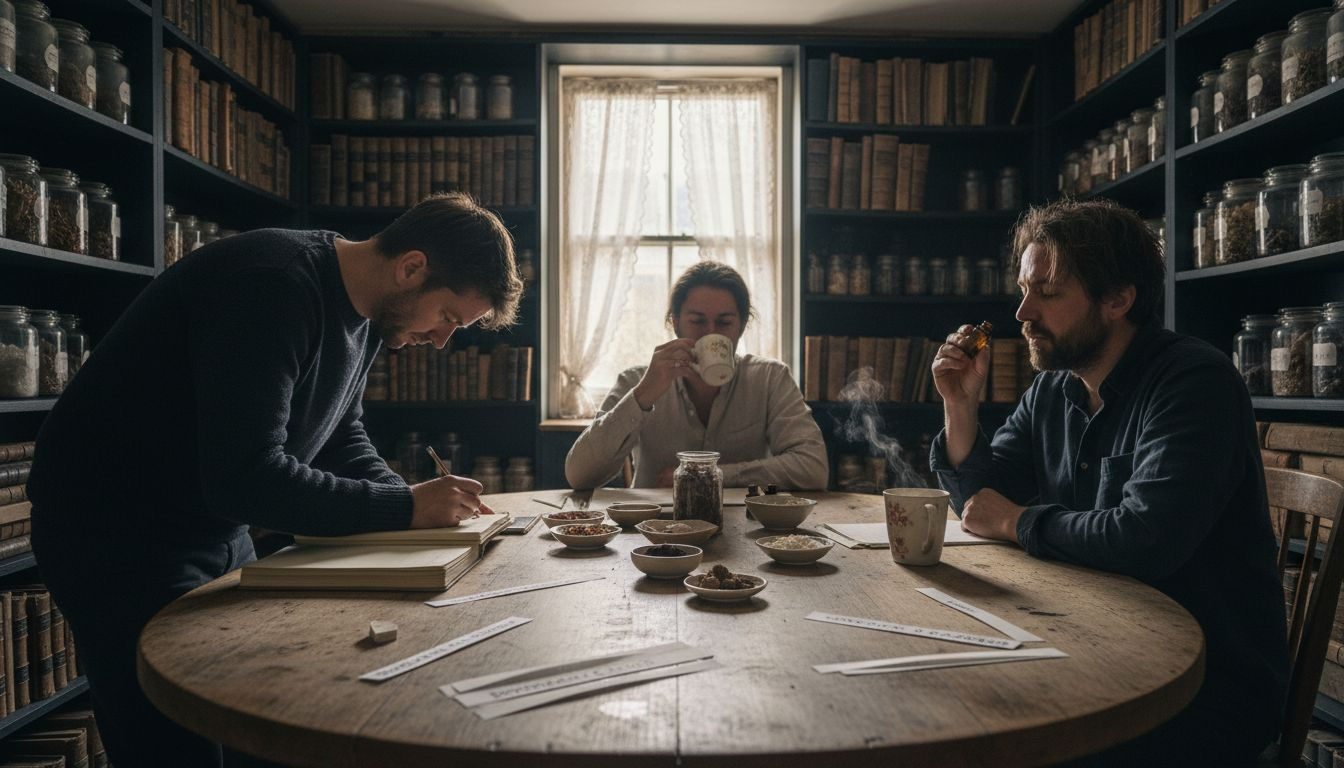
Perfumers do the actual inventing, and they do it inside constraints most buyers never see. The scent pyramid — top, heart and base — is a plan for how a composition unfolds, and building one means holding hundreds of natural and synthetic ingredients in your head at once, then deciding which twenty earn their place. It's a technical discipline that happens to produce emotion and memory.
The work runs brief, trial, revision, repeat. A creative brief hands over a theme and a set of limits, and those limits are organisational as much as artistic: what a material costs, what regulation allows, what the commercial side thinks a customer will recognise. That tension can be productive — some of the best fragrances came out of a perfumer solving a problem they didn't choose.
Digital tools and artificial intelligence now sit alongside traditional methods, modelling ingredient interactions and molecular structures and suggesting combinations a person might not reach for. They're useful. They don't decide anything. A perfumer's intuition and cultural read are still what separates a composition with a point of view from a competent arrangement of molecules.
Pro tip: Follow perfumers, not just brands. Once you know whose hand you like, you'll find their work in houses that have nothing else in common.
Ingredient sourcing is where a house's claims get tested. Materials arrive through long global supply chains — botanical, synthetic and rare — each supplier with its own standards, and blockchain traceability has been proposed as a fix for how little of that chain anyone can actually see. Whether it becomes normal practice or stays a press release is a separate question.
Quality control doesn't stop at choosing good materials. Raw batches get screened for contamination, then put through molecular analysis, stability testing and sensory evaluation, because a material that smells correct on delivery can drift later. Laboratories hunt for variations too small to name and large enough that you'd notice the batch smelled slightly off. This is the least glamorous part of perfumery and the part that decides whether your second bottle matches your first.
The ethical side has moved from optional to expected. Houses investing in direct relationships with producers, fair trade practices and transparent supply chain management tend to get better raw material, and they get a story buyers now ask for. Stay sceptical about the vaguer versions, though. 'Sustainably sourced' means nothing without a named partner or a named region behind it.
Pro tip: Judge sourcing claims on specificity. A house that names the region, the harvest or the supplier is giving you information; one that promises 'the finest natural ingredients' is giving you copy.
Signature styles are the closest thing perfumery has to handwriting — the accord or material a house returns to until you can identify it blind. It's built from consistent ingredient selection, distinctive accords and recurring thematic habits, and done well it's the most valuable thing a brand owns. Done badly, it's why every bottle in a line smells like a variation on the one you already bought.
Developing one takes years of decisions about how top, heart and base notes evolve against each other. The houses that manage it keep the aesthetic recognisable while leaving enough complexity to hold a collector's interest. Some go loud and experimental. Others work in small adjustments to classic aromatic themes, which is the harder trick and gets far less credit for it.
House codes also do emotional work. Once a profile becomes familiar, it stops functioning as a product and starts functioning as shorthand for an identity — which is exactly why certain scents harden into signature-scent cliches, and why a successful code gets imitated across the market. Sample widely enough and you'll start clocking the recurring materials and characteristic dry-downs that run through a house's collections. That's the point where fragrance stops feeling random.
Pro tip: Sample three or four scents from one house back to back. Whatever runs through all of them is the house code, and you'll learn more from that than from any brand history page.
Niche fragrance houses and designer brands are the most useful division in perfumery and the most overstated. The honest version: niche optimises for artistic expression and olfactory innovation, designer optimises for broad appeal and commercial viability. The dishonest version, which you'll hear constantly, is that one is art and the other is product.
The real differences sit in method and materials. Niche perfumers usually get extraordinary creative freedom and access to rare, expensive ingredients without anyone trimming the formula to hit a cost target. They're writing for collectors who want complex, unconventional profiles and don't mind being challenged. Designer houses build for a wider room, using recognisable accords and more accessible structures tuned to current fashion. That's a constraint, not a failing — hitting a broad target without going bland takes real skill.
Economics explains most of the rest. Smaller production runs let niche houses experiment and curate, and their pricing reflects craftsmanship, ingredient quality and a healthy amount of scarcity. Designer brands run on marketing infrastructure, celebrity collaborations and global distribution, which turns a fragrance into a lifestyle statement as much as a scent. The ugly middle is where it gets expensive for you: niche pricing from houses with no craft behind the number. Price isn't evidence.
Pro tip: Sample across both categories before deciding which camp you belong to. Most people who insist they only wear niche haven't tested that assumption in a while.
Below is a side-by-side comparison illustrating niche and designer fragrance houses:
So here's the verdict. House codes and sourcing are worth learning; heritage as a marketing claim isn't. If you're deciding where your money goes, back the house whose provenance you can verify and whose recent work still argues for something — that filter beats niche-versus-designer, and it stops you paying rare-material prices for a founding date.
Two things to do next. Get the structural basics straight with What is an Eau de Parfum? Understanding Fragrance Layers, then take your questions to the community at Fragplace, where the reviews, the arguments about perfumers and the debates over house philosophies are already running.
A specialised business that creates and markets perfume, combining artistry with scientific precision. In practice that means a team — perfumers, chemists, marketers and quality control — working on the same bottle.
Niche houses prioritise artistic expression and rare ingredients, aiming at sophisticated collectors. Designer brands go wider, with market-driven fragrances built on recognisable accords. Neither category guarantees quality on its own.
Perfumers, the 'noses', are the master fragrance designers who build scent compositions that evoke emotion and memory. They do it inside a brief, a budget and a set of regulatory limits.
It determines the quality, sustainability and ethical standards of what ends up in the bottle. Every component has to meet rigorous criteria, and a house that can't tell you where a material came from usually isn't paying much for it.
| Point | Details |
|---|
| Role of Fragrance Houses | Fragrance houses blend artistic vision with scientific precision, employing multidisciplinary teams to create marketable perfumes. |
| Importance of Brand Heritage | A strong brand heritage enhances emotional connections with consumers, making fragrances more than mere products by weaving cultural narratives. |
| Creative Process of Perfumers | Perfumers must navigate a complex interplay of creativity, technical limitations, and market expectations to develop unique scents. |
| Differences Between Niche and Designer Houses | Niche houses focus on artistic expression with exclusive collections, while designer brands aim for mass appeal with broader market-friendly fragrances. |
| Role | Main Responsibility | Strategic Impact |
|---|
| Perfumer ('Nose') | Creates scent compositions | Defines creative direction |
| Chemist | Analyses molecular structure | Ensures technical feasibility |
| Marketing Expert | Crafts brand narratives | Drives market differentiation |
| Quality Specialist | Conducts rigorous product testing | Guarantees reputation and trust |
| Aspect | Niche Houses | Designer Houses |
|---|
| Creative Freedom | Highly experimental scents | Market-driven fragrances |
| Ingredient Choice | Rare and expensive materials | Broad, accessible ingredients |
| Production Scale | Limited runs, exclusivity | High volume, global reach |
| Consumer Focus | Collectors and enthusiasts | Mass-market appeal |