Fragrance Families: Enhancing Scent Selection Skills
02 Feb 2026
Choosing a new perfume can quickly become confusing with so many scent options filling the shelves. For fragrance lovers and collectors, understanding the structure of the fragrance wheel makes olfactory discovery less overwhelming and much more rewarding. This classification tool breaks down aromatic profiles into clear families like Floral, Woody, Oriental, and Fresh, helping you navigate overlapping scents and find the notes that truly reflect your taste.
Table of Contents
- Fragrance Families And The Scent Wheel
- Exploring Main Fragrance Family Types
- Key Notes And Distinguishing Features
- How Fragrance Families Guide Selection
- Common Mistakes In Scent Classification
Key Takeaways
Fragrance families and the scent wheel
The fragrance wheel serves as a fundamental classification system within the perfumery world, offering enthusiasts and professionals a structured approach to understanding scent composition. Developed by experts to categorise olfactory experiences, this circular diagram provides a visual representation of how different aromatic profiles relate and interconnect.
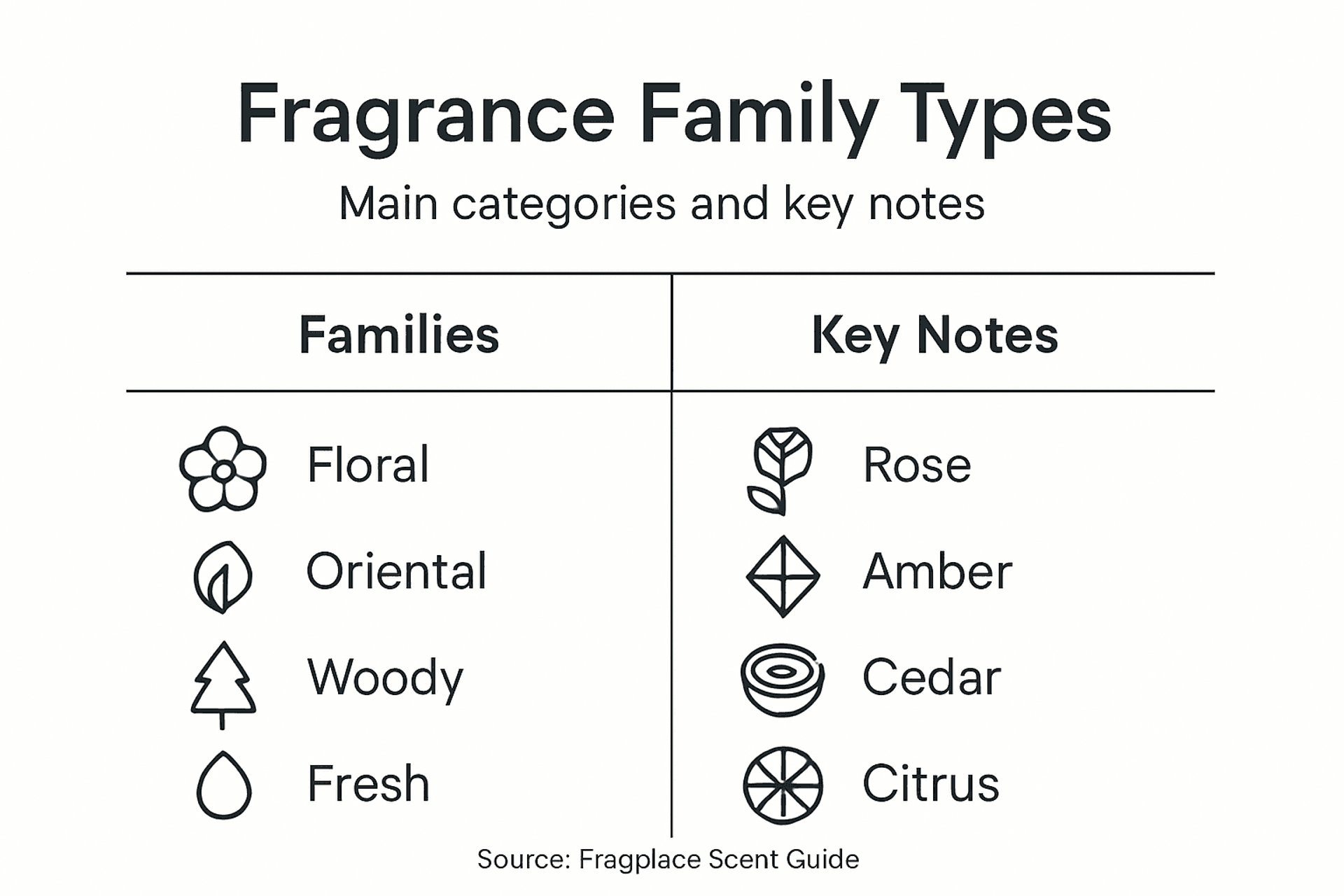
Traditionally, the fragrance wheel divides perfumes into several primary families:
- Floral: Dominated by flower-based notes
- Oriental: Rich, warm scents with spicy undertones
- Woody: Characterised by earthy, forest-like aromas
- Fresh: Crisp, clean scents reminiscent of citrus and water
Each family contains multiple subfamilies, allowing for nuanced categorisation. Perfume classification systems help consumers understand scent profiles more precisely, transforming what might seem like an overwhelming sensory experience into an approachable journey of olfactory exploration.
Understanding the fragrance wheel enables collectors and enthusiasts to:
- Identify preferred scent profiles
- Discover related fragrances within similar families
- Expand their aromatic horizons systematically
- Communicate fragrance characteristics more effectively
Pro tip: When exploring new fragrances, start by identifying the primary family of scents you already enjoy, then gradually explore adjacent subfamilies to expand your sensory palette.
Exploring main fragrance family types
Fragrance families represent a sophisticated system for classifying and understanding complex scent profiles. Perfume classification systems map out intricate aromatic landscapes, offering enthusiasts a structured approach to comprehending olfactory experiences.
The primary fragrance families include:
- Floral: Characterised by delicate flower-based notes
- Oriental: Rich, warm scents with sensual spicy undertones
- Woody: Earthy aromas reminiscent of forests and timber
- Fresh: Crisp, clean scents evocative of citrus and aquatic elements
- Chypre: Complex compositions blending mossy and woody characteristics
- Gourmand: Edible, sweet fragrances mimicking culinary delights
Perfume classification helps enthusiasts explore nuanced scent profiles by providing a systematic framework for understanding aromatic compositions. Each family contains multiple subfamilies, allowing for incredibly precise scent categorisation and exploration.
Understanding these families enables fragrance collectors to:
For quick reference, here is a summary comparing the main fragrance families and their typical uses:
- Identify personal scent preferences
- Discover related fragrances
- Expand aromatic horizons strategically
- Communicate fragrance characteristics effectively
Pro tip: When building your fragrance collection, explore fragrances from adjacent families to gradually broaden your olfactory palette and discover unexpected aromatic combinations.
Key notes and distinguishing features
Fragrance notes are the fundamental building blocks of perfumery, creating complex olfactory experiences through carefully layered scent compositions. Fragrance ingredient profiles reveal intricate sensory landscapes, allowing enthusiasts to understand how individual elements interact and evolve.
Fragrance notes are typically categorised into three primary layers:
- Top Notes: Initial, fleeting impressions lasting 15-30 minutes
- Typically light, volatile scents like citrus, herbs, and aldehydes
- Heart Notes: The core fragrance emerging after top notes dissipate
- Often floral, spicy, or fruity elements defining the perfume's character
- Base Notes: Long-lasting foundation providing depth and longevity
- Rich, heavy scents like sandalwood, musk, and vanilla
Fragrance ingredients create unique olfactory profiles through sophisticated combinations. Each family's distinguishing features emerge from specific ingredient selections and proportions, creating signature scent experiences.
Distinguishing features across fragrance families include:
To assist with scent exploration, this table highlights how fragrance note layers interact across families:
- Floral: Predominance of flower-based ingredients
- Oriental: Warm, complex spices and resinous elements
- Woody: Prominent cedar, sandalwood, and forest-like essences
- Fresh: Crisp, clean notes emphasising citrus and aquatic tones
Pro tip: Train your nose by systematically sampling fragrances within the same family, paying close attention to how individual notes interact and evolve over time.
How fragrance families guide selection
Fragrance selection is an art form where understanding family characteristics becomes crucial for making informed choices. Fragrance classification systems provide strategic navigation through the complex world of perfumery, allowing enthusiasts to discover scents that resonate with their personal preferences.
The selection process typically involves several strategic approaches:
- Personal Style Alignment: Matching fragrance families to individual personality and aesthetic
- Occasion Matching: Selecting appropriate scent profiles for different settings
- Seasonal Considerations: Choosing fragrances that complement weather and environmental conditions
- Emotional Expression: Using fragrance families to communicate mood and character
Each fragrance family offers unique guidance for selection:
- Floral: Ideal for romantic, feminine expressions
- Oriental: Perfect for evening events and dramatic statements
- Woody: Suitable for professional and sophisticated environments
- Fresh: Excellent for daytime and casual interactions
Pro tip: Create a personal fragrance wardrobe by selecting complementary scents from adjacent fragrance families, allowing versatile and nuanced olfactory experiences.
Common mistakes in scent classification
Scent classification represents a nuanced art where enthusiasts frequently encounter pitfalls that compromise their understanding of fragrance complexity. Fragrance discussions reveal common misconceptions about how perfumes are truly categorised and understood.
The most prevalent errors in scent classification include:
- Oversimplification: Reducing complex fragrances to single, rigid categories
- Ignoring Subtleties: Failing to recognise intricate note interactions
- Sensory Fatigue: Losing nuanced perception after extended sampling
- Preconceived Bias: Allowing previous experiences to limit exploration
- Linear Thinking: Assuming fragrances remain constant throughout wear
Fragrance novices often make critical misclassification mistakes such as:
- Confusing top notes with overall fragrance character
- Neglecting individual skin chemistry's impact
- Overlooking seasonal and environmental influences
- Applying universal standards without personal context
Pro tip: Develop a systematic sampling approach by testing fragrances multiple times in different environments, allowing a more comprehensive and nuanced understanding of their true olfactory profile.
Master Your Scent Selection with Fragplace
The article highlights the challenge many fragrance enthusiasts face when navigating complex fragrance families and understanding scent notes. You may feel overwhelmed by the vast variety of floral, oriental, woody, and fresh profiles or unsure how to identify your personal scent preferences. At Fragplace, we address these exact pain points by offering a community-driven platform where you can explore, review, and discuss perfumes with fellow scent lovers who share your passion. Gain confidence in recognising subtle differences across fragrance note layers and expand your olfactory knowledge intentionally and enjoyably.
Start your journey today by joining Fragplace, where detailed fragrance information and expert insights help you build a curated fragrance wardrobe. Explore popular perfumes, dive deep into note analyses and learn from peers to avoid common classification mistakes. Don’t wait to enrich your perfume experience – visit our homepage now and step confidently into the world of scent discovery.
Frequently Asked Questions
What are the main fragrance families and their characteristics?
The main fragrance families include Floral (flower-based notes), Oriental (rich, warm scents with spicy undertones), Woody (earthy, forest-like aromas), Fresh (crisp, clean scents reminiscent of citrus), Chypre (mossy and woody compositions), and Gourmand (sweet, edible fragrances). Each family offers distinct characteristics that can help guide your scent selection.
How can understanding fragrance families improve my scent selection?
Understanding fragrance families allows you to identify your preferred scent profiles, discover related fragrances within similar categories, and systematically expand your collection. This knowledge also aids in communicating fragrance characteristics more effectively.
How do fragrance notes influence the overall scent experience?
Fragrance notes are categorised into three layers: Top Notes (initial impressions), Heart Notes (core character), and Base Notes (foundation providing depth). Each layer plays a crucial role in how a fragrance evolves over time, impacting the overall experience.
What are common mistakes people make when classifying fragrances?
Common mistakes include oversimplifying fragrances into single categories, ignoring the nuances of note interactions, experiencing sensory fatigue during sampling, having preconceived biases based on previous experiences, and assuming linear consistency in fragrances throughout wear.
Recommended
- 7 Fragrance Wardrobe Essentials Every Collector Needs
- 7 Essential Popular Unisex Scents 2025 for Everyday Wear
- 7 Unisex Fragrances Examples Every Collector Should Know
- 7 Must-Know Top Perfume Trends 2025 for Collectors
- Understanding Essential Oils Good for Hair: Nature's Solutions | MyHair