Articles
Get the Fragletter
New fragrance stories and picks in your inbox. Unsubscribe anytime.
New fragrance stories and picks in your inbox. Unsubscribe anytime.
New fragrance stories and picks in your inbox. Unsubscribe anytime.
New fragrance stories and picks in your inbox. Unsubscribe anytime.
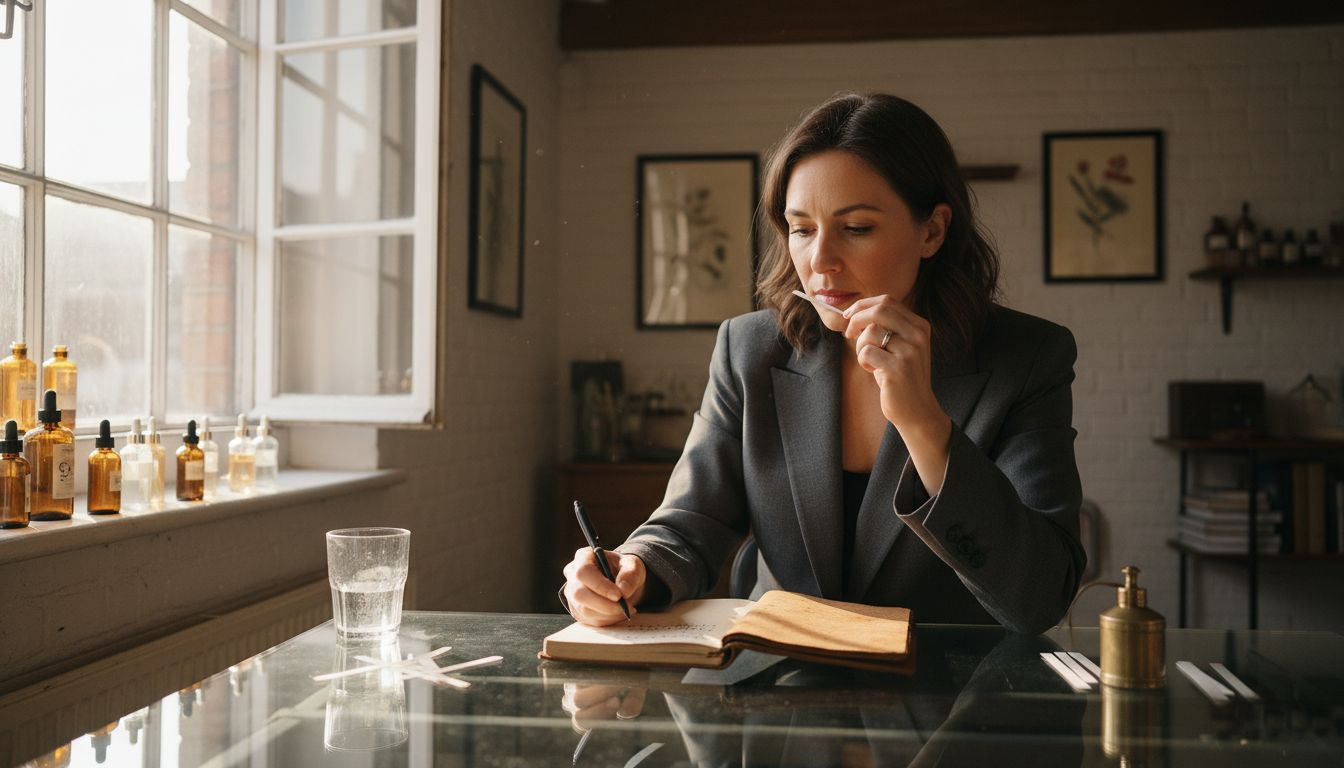
Most people make up their mind about a fragrance before it has finished opening, then call that a verdict. Fragrance evaluation is the correction: a method rather than a gift, and systematic olfactory training is something anyone can build. Learn it and you guess less, argue better, and waste far less money on blind buys.
The laziest idea in this hobby is that scent is entirely subjective, so nobody can ever be wrong. Convenient. Also false. Judging a fragrance takes structured observation and trained olfactory perception, and systematic olfactory training is the framework that builds both.
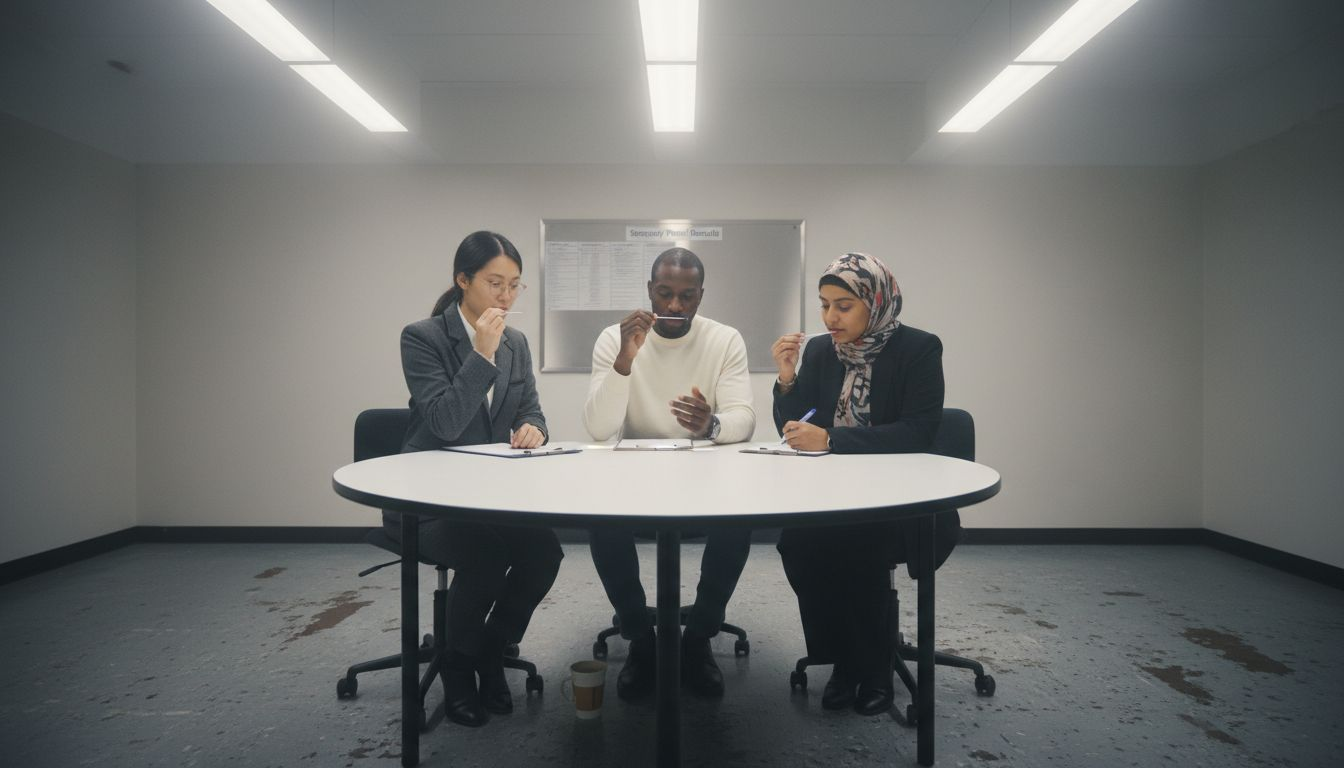
Most misconceptions come from oversimplified assumptions about how humans perceive odours. Novices treat appreciation as pure preference, while scientific methodologies for understanding scent composition and performance already exist. Professional evaluators use sensory panel testing and instrumental analysis to pull a fragrance's aromatic profile apart. That's a different exercise from liking something.
The technical side runs deeper than most enthusiasts expect. Instrumental analysis such as gas chromatography reveals molecular composition, volatility and the interaction of aromatic compounds. Professionals then read initial top notes, heart notes, base notes, projection, sillage and longevity. None of that tells you what to love. It tells you what you're actually smelling, which is the part most reviews skip.
Here's how the main techniques compare:
Pro tip: Sample on a system rather than at random: keep notes on each layer and on how the fragrance shifts over time.
Preference is data. It isn't analysis. Sensory evaluation gives you a structure for the second thing, and it's the reason two people can disagree about a scent and both still be worth reading.
Professional sensory analysis leans on two approaches: descriptive sensory techniques and consumer-based hedonic testing. The first profiles attributes such as initial impression, development, complexity and overall balance. The second measures whether people actually enjoy the thing. You want both, because a composition can be technically clever and still dull to wear.
Trained panellists use standardised descriptive analyses to break a fragrance into its sensory components: intensity, persistence, molecular complexity, olfactory progression. That's how you separate a considered composition from a generic one - the throwaway release tends to have a loud opening and nothing standing behind it. Fair warning, though. Score a fragrance hard enough and you can analyse the pleasure straight out of it.
Pro tip: Sample the same fragrance more than once and write down the opening, the heart and the drydown separately instead of filing one verdict at the end.
Plenty of fragrance reviews online are mood reports in a lab coat. The good ones do something harder: they put individual perception and collective insight in the same room, and cognitive responses in reviews show how one person's sensory experience feeds the wider discourse.
A review is a communication platform, not a rating. Gender perspectives, cultural backgrounds and individual olfactory sensitivities shape how a fragrance gets described and interpreted, which is precisely why a single glowing paragraph tells you almost nothing on its own. Read enough of them and you start building the community's evaluation frameworks yourself, combining technical understanding, emotional response and contextual appreciation.
The reviewers worth following balance objective analysis with personal narrative - the analysis tells you what's in the bottle, the narrative tells you why it might matter to you. That mix is what has pushed the standard of fragrance discussion up over the years. A star rating with no description hasn't contributed anything to it.
Pro tip: Skip generic praise. Say what you smell and when you smell it - a specific note pinned to a specific stage is worth more than any score.
Most bad fragrance takes aren't bad taste. They're bad process. Assessment errors usually trace back to insufficient olfactory training and unconscious cognitive biases that quietly distort perception, and the enthusiasts who fall hardest are the ones relying on impressions without any analytical approach behind them.
Context does more damage than people admit. Environmental conditions, individual sensory adaptation and personal emotional associations all skew how a scent reads, and sensory perception variability shows how completely external factors can rewrite the experience. Professional evaluators plan around these distortions rather than pretending they're immune to them. That's the whole difference: consistency is a skill, and it takes practice and methodology.
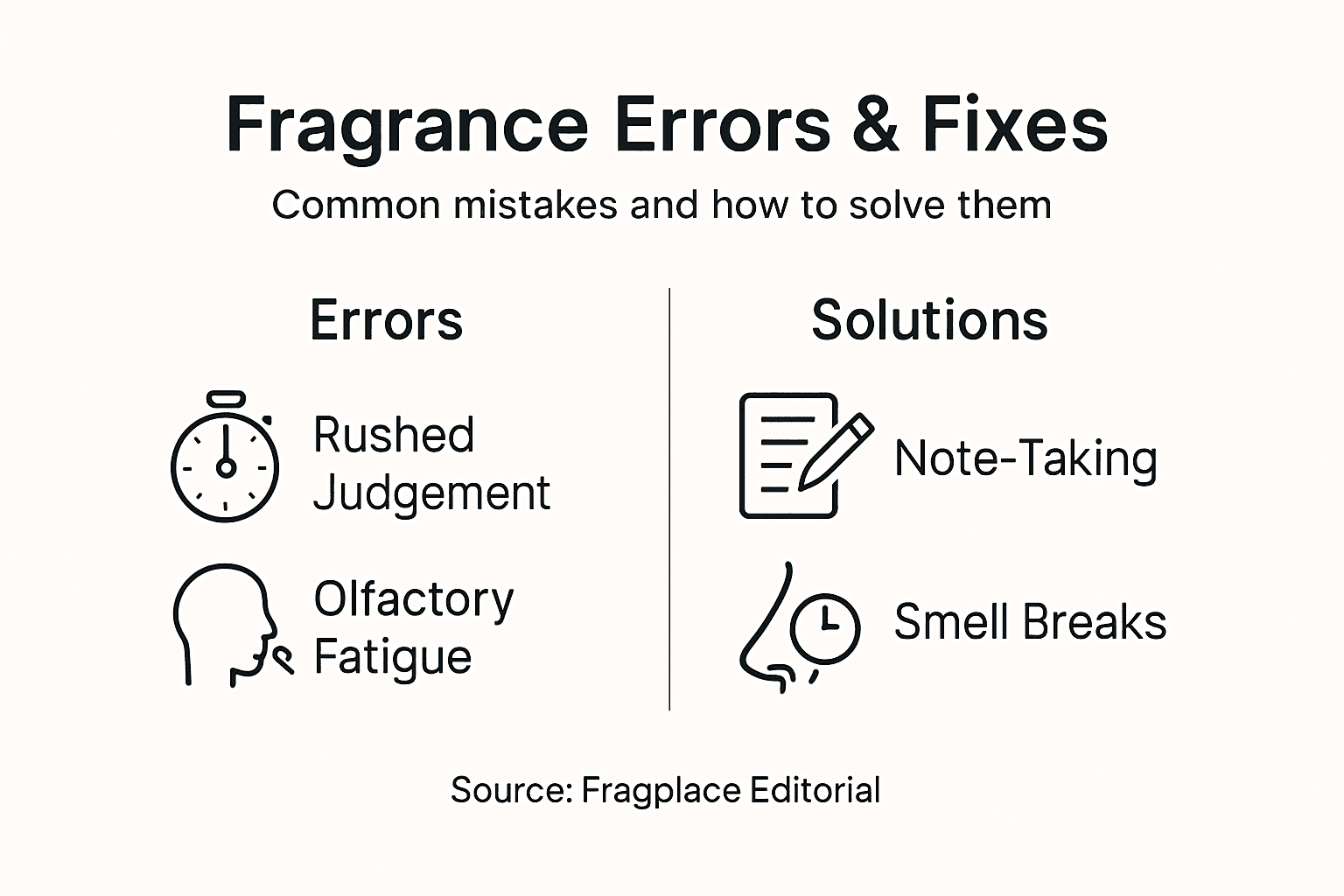
The usual culprits are predictable - premature judgement, olfactory fatigue, inadequate sampling techniques, overreliance on initial impressions. The fix is unglamorous. Build a structured assessment protocol, hold a neutral mindset while you're sampling, and document what you notice across multiple testing conditions. Do that and your evaluations start agreeing with each other, which is the first real sign your nose is trained.
The table below contrasts common fragrance assessment errors and effective solutions:
Pro tip: Reset your nose with coffee beans between samples to hold off sensory adaptation and keep your assessments accurate.
A fragrance is a made thing, composed by someone, and it rewards being read that way. Fragrance composition knowledge is what turns a shelf of bottles into a collection with a point of view, and it takes you well past surface-level impressions.
The payoff for collectors is both intellectual and sensory. Understanding molecular complexity, ingredient interactions and historical context moves you from passive consumption to active study - you begin recognising craftsmanship in places you'd previously walked past, appreciating historical perfumery traditions, and telling an exceptional composition from an ordinary formulation without needing anyone to confirm it.
There's a cultural dimension too, and it isn't decorative. Enthusiasts end up as custodians of olfactory heritage: documenting shifting aesthetic trends, preserving rare formulations, keeping the conversation about scent as an art form alive. Systematic evaluation skills are what connect your own sensory experience to those broader narratives. The honest caveat is that this hobby can curdle into pedantry if you let it - the point of learning to analyse a fragrance is to enjoy more of them, not fewer.
Pro tip: Keep a fragrance journal. Log the environmental conditions, your mood and the specific notes you detect at each sampling - patterns show up fast once you have something to compare against.
If you change one habit, make it this: stop judging on the opening. Olfactory fatigue, premature judgement and unstructured sampling account for most of the takes people later regret, and every one of them is fixable with a protocol rather than a better nose. Disciplined assessment is what turns scent appreciation from a shopping reflex into a genuine practice, and Fragplace exists to give that practice a home - community, resources and reviews written by people doing the same work.
Start here: join Fragplace to dig into fragrance notes, talk to collectors who take this seriously and read analyses that go past personal impressions. Then put it into practice with How to Write Fragrance Reviews Effectively - the fastest way to sharpen your own evaluation is to write one someone else can use.
Use systematic sensory techniques - descriptive sensory profiling and consumer hedonic testing - and document each scent layer as it evolves over time. One sniff at the counter isn't an evaluation.
Premature judgement, olfactory fatigue, inadequate sampling techniques and overreliance on first impressions. Counter them with a structured assessment protocol and a neutral evaluation mindset.
It sharpens olfactory perception, so you can judge scents more accurately. Trained noses analyse scent attributes systematically instead of stopping at whether they liked it.
By sharing detailed sensory observations. Individual experiences accumulate into collective knowledge, which enriches the dialogue around fragrance appreciation and pushes evaluation techniques forward.
| Point | Details |
|---|
| Fragrance Evaluation is Systematic | Evaluating fragrances requires structured observation and trained olfactory perception, moving beyond subjective impressions. |
| Utilise Professional Techniques | Employing methods like sensory panel testing and instrumental analysis enhances the accuracy and depth of fragrance assessments. |
| Avoid Common Assessment Errors | Recognising and countering common errors such as premature judgement and olfactory fatigue is critical for reliable fragrance evaluation. |
| Benefits of In-Depth Understanding | Collectors benefit intellectually and sensorially from a comprehensive understanding of fragrance composition, elevating appreciation from consumption to scholarly engagement. |
| Technique | Description | Benefit for Evaluators |
|---|
| Sensory Panel Testing | Group assessment of scent profiles | Reduces individual bias |
| Instrumental Analysis | Uses laboratory equipment for molecule study | Reveals precise composition |
| Descriptive Sensory Profiling | Detailed attribute scoring | Enables nuanced comparison |
| Consumer Hedonic Testing | Measures subjective enjoyment | Gauges mass appeal |
| Common Error | Impact on Assessment | Professional Solution |
|---|
| Premature Judgement | Misleading conclusions | Multiple, timed samplings |
| Olfactory Fatigue | Reduced scent discrimination | Use scent resets, e.g. coffee beans |
| Inadequate Sampling | Missed scent stages | Structured evaluation protocol |
| Overreliance on First Impression | Ignores scent development | Document each olfactory phase |