Articles
Get the Fragletter
New fragrance stories and picks in your inbox. Unsubscribe anytime.
New fragrance stories and picks in your inbox. Unsubscribe anytime.
New fragrance stories and picks in your inbox. Unsubscribe anytime.
New fragrance stories and picks in your inbox. Unsubscribe anytime.
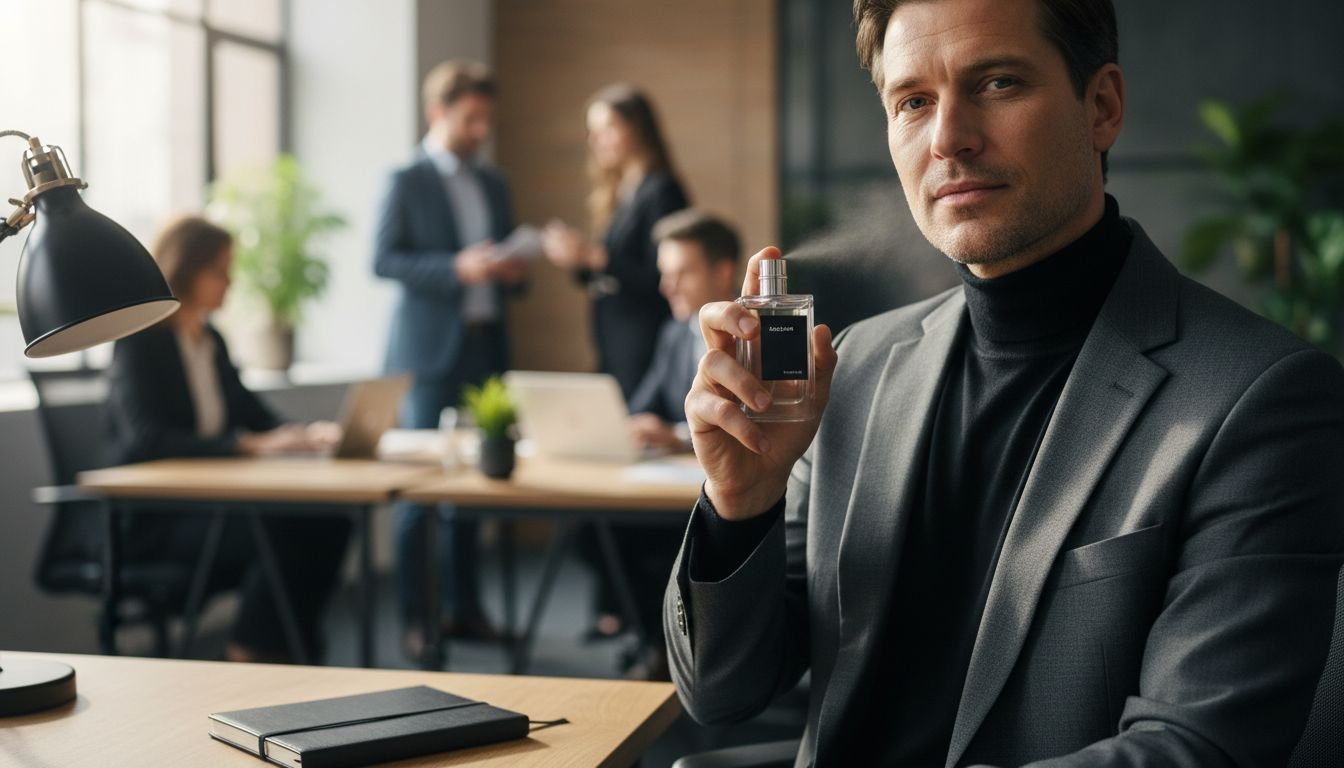
Eau de toilette gets written off as perfume with the volume turned down. That's the wrong way round: it's the concentration built for the hours you actually spend near other people, which is why it's become the British default for everyday wear. Loud and good aren't the same thing.
An eau de toilette is defined by one number: how much perfume oil is actually in the bottle. Wikipedia describes it as a lightly scented perfume traditionally applied directly to the skin after bathing or shaving, typically holding between 5-15% aromatic compounds. Everything you notice about it follows from that figure.
Concentration levels do the real work here. With aromatic compounds ranging from 7-12%, it sits between eau de cologne and eau de parfum, and that's the useful middle: enough material to smell like something, not so much that you announce yourself before you've said hello. Wikipedia notes that true perfumes run far higher, at 20-40%. That gap is the whole point of the category.
The honest counter-argument: if you want a scent to hold through a long evening without thinking about it, an eau de toilette will keep asking you for a top-up. Buy it knowing that, and it stops being a flaw. It's a trade you make on purpose, and it's why the format works in offices, on commutes and in weather that turns anything heavier into a headache.
Key characteristics of eau de toilette include:
The differences aren't mysterious. They're arithmetic. Bespoke Unit sets the categories out by aromatic compound percentage, and that percentage predicts nearly everything you'll notice on the day.
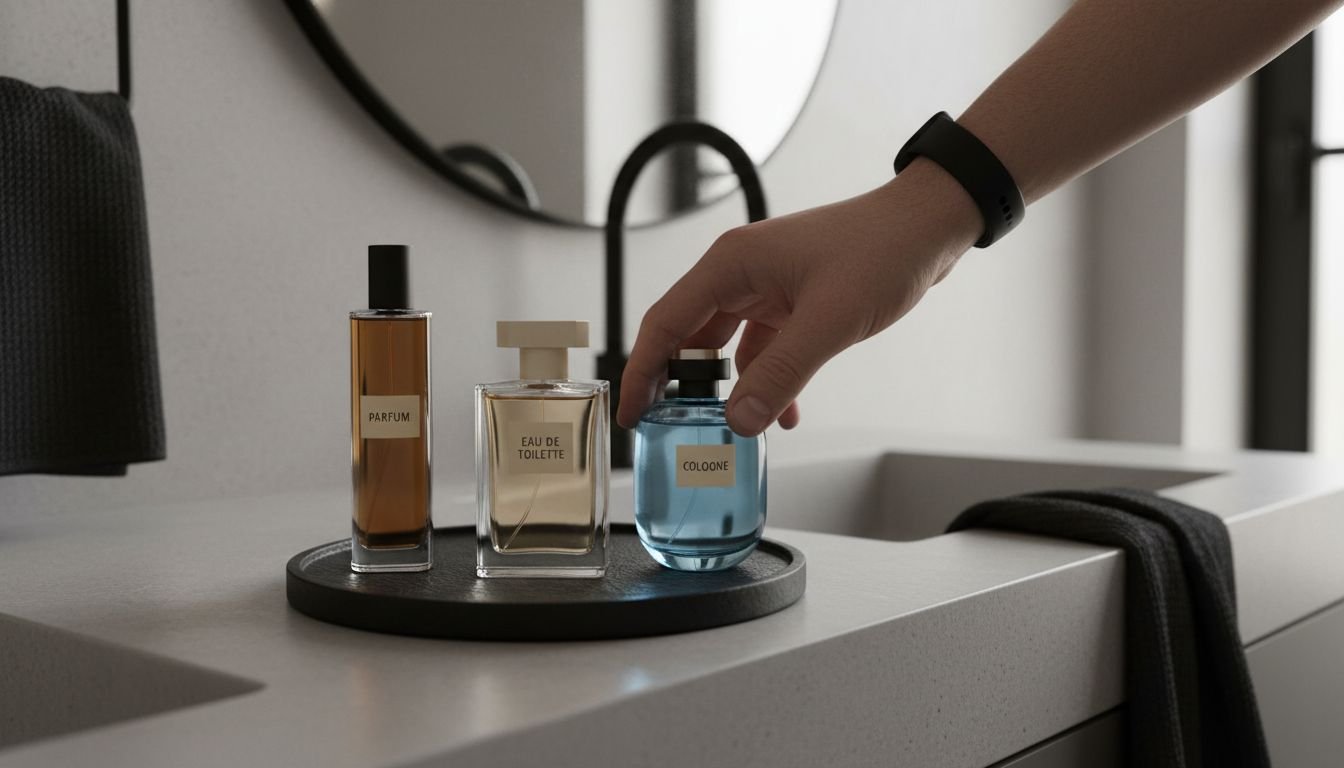
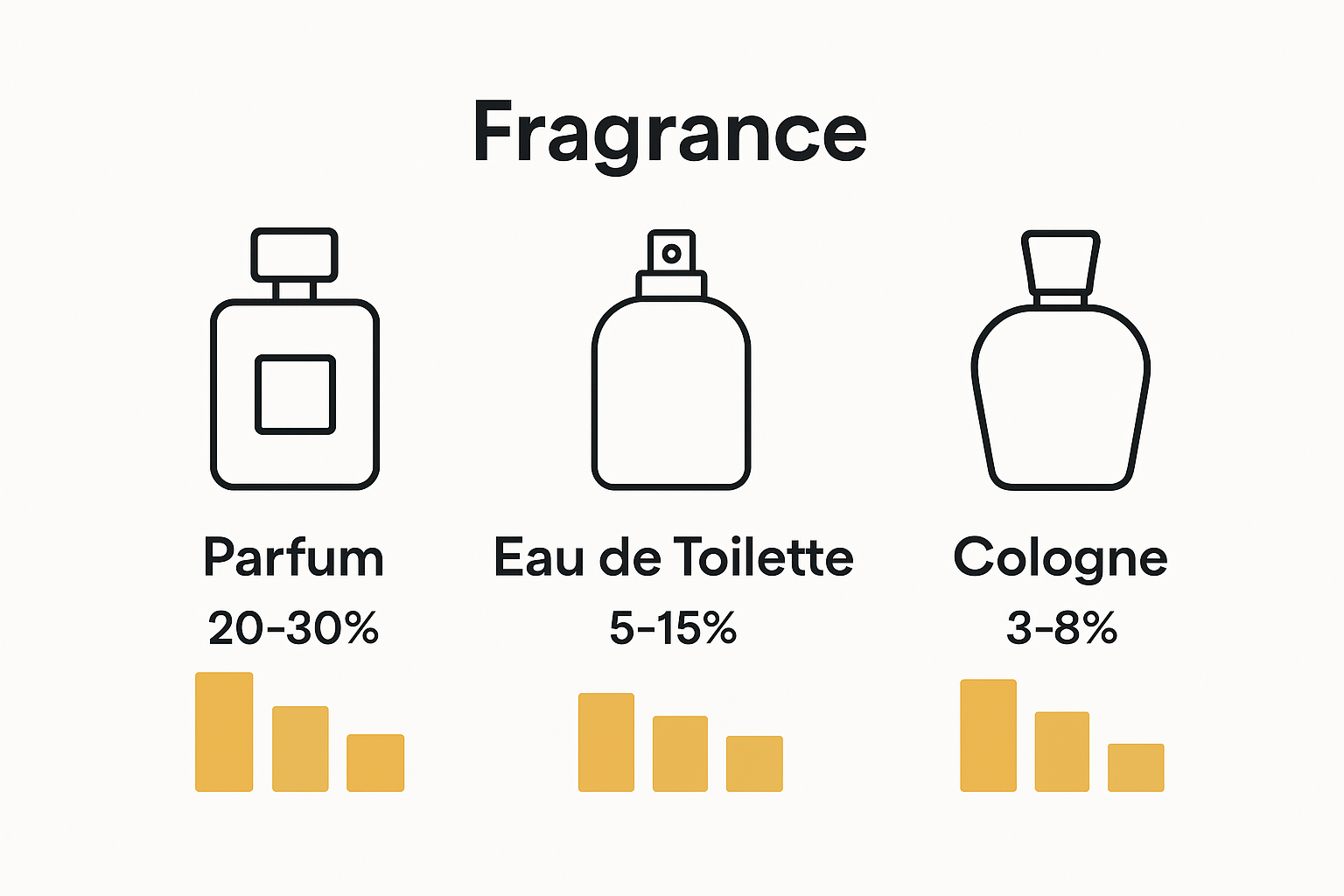
Parfum is the heavyweight at 20-30% aromatic compounds: the most intense, the longest-lasting, and the easiest to overdo before noon. Eau de toilette sits in the middle at 5-15%, which Diffen frames as the more temporary option next to parfum. That's accurate, and it isn't the insult it sounds like. Eau de cologne is the lightest at 3-8%, a quick burst that's gone about as fast as you clock it.
Match the concentration to the day and you rarely get it wrong. Parfum for evening events where the scent should outlast the conversation. Eau de toilette for daytime and professional settings. Eau de cologne for hot weather and a fast refresh, when anything denser turns cloying.
Key comparative characteristics include:
For those wanting to explore fragrance layers in more depth, our guide on understanding fragrance types approaches the same question from the other end of the scale.
Fragrance concentration is the best single predictor of how long a scent stays with you. The Perfume Stash breaks down how aromatic oil percentages map onto performance, and the ladder is consistent all the way up.
Parfum, the most potent variant, contains 20-30% fragrance oils and can persist for 8-12 hours. Eau de parfum follows with 15-20% concentration, offering 6-10 hours. Eau de toilette, in the middle range at 5-15%, typically gives 3-6 hours. Flavor365 makes the general point that higher concentrations last longer, which is true and also the least interesting thing about them.
Duration isn't the only variable that moves. Concentration shifts intensity and projection too, and a lighter build often reads brighter up top because there's less weight pinning the composition down. Two versions of the same formula at different strengths can smell like different fragrances. So choose for the effect you want, not for the endurance record. If you need a scent to survive a fourteen-hour day untouched, an eau de toilette is the wrong tool and no amount of spraying fixes it.
Practical considerations for selecting fragrances based on concentration:
Eau de toilette earns its keep in daylight. Masari Shop points to offices and warm weather as its natural territory, and that's fair — heat amplifies everything, so the lighter concentration is what stops a summer commute becoming everyone else's problem.
Bespoke Unit recommends the pulse points: inner wrists, neck, behind the ears, inside the elbows, where body heat pushes the scent outward. The lighter concentration buys you room to be generous, which counts for more in an open-plan office than anywhere else.
Technique matters more than people think. Apply straight after showering, on clean, slightly damp skin, so the scent has something to hold onto. Spray from about 15 centimetres so it lands evenly rather than pooling in one saturated patch. And don't rub it in — that breaks down the molecular structure and flattens the complexity you paid for.
Key application best practices include:
Most myths about eau de toilette cost people money, which is reason enough to kill them.
The oldest, which The Perfume Stash takes apart, is that eau de toilette is a feminine category. It isn't. Concentration is a measure of strength, not gender, and anyone who wants a lighter wear can reach for it.
The second, per Flavor365, is that higher concentration means better quality. It doesn't. Parfum lasts longer — that's the entire claim. The right fragrance depends on preference, occasion and your own body chemistry, and a moderate concentration is what lets one bottle work across a whole week.
The third is the sneakiest: that a lighter profile signals lesser craftsmanship. Perfumers balance aromatic compounds deliberately at every strength, and a well-built eau de toilette can be more legible than a dense parfum precisely because nothing is elbowing for room. If modern releases mostly read too heavy to you, this is the format that fixes it. Reapplying isn't a compromise. It's the design.
Key myths definitively debunked:
For fragrance enthusiasts eager to explore more nuanced perspectives, our fragrance discussions go further into the arguments worth having.
If you're buying one bottle to wear most days, buy the eau de toilette. At 3-6 hours a go you can wear it properly, without rationing sprays, and a lunchtime top-up costs you far less than overspraying something at 20-30% in a meeting room. Keep the heavier concentrations for evenings and cold weather, where the extra material has somewhere to go.
Join Fragplace to read what real wearers say about the bottles you're weighing up. Then take your own verdict to our fragrance discussions and see who disagrees.
A fragrance holding between 5-15% aromatic compounds, which makes it lighter and quieter than the stronger concentrations and easier to wear without thinking about it.
Concentration, mostly. Eau de toilette contains 5-15% aromatic compounds, less than parfum's 20-30% and more than eau de cologne's 3-8%, giving it a balanced intensity that suits everyday wear.
Pulse points — inner wrists, neck, behind the ears — sprayed from about 15 cm onto clean, slightly damp skin. Body heat does the rest of the work for you.
Expect roughly 3-6 hours, against 8-12 hours for parfum and around 6-10 for eau de parfum. Plan on a reapplication and it stops being a drawback.
| Point | Details |
|---|
| Eau de Toilette Characteristics | Contains 5-15% aromatic compounds, offering a subtle, lighter fragrance ideal for daily wear. |
| Comparison with Other Fragrances | Sits between parfum (20-30%) and eau de cologne (3-8%) in terms of concentration and longevity. |
| Optimal Application | Best applied to pulse points on clean skin for enhanced projection and longevity without overpowering. |
| Myths Clarified | Eau de toilette is not gender-specific, and higher concentration does not always signify better quality; personal preference plays a key role. |