Articles
Get the Fragletter
New fragrance stories and picks in your inbox. Unsubscribe anytime.
New fragrance stories and picks in your inbox. Unsubscribe anytime.
New fragrance stories and picks in your inbox. Unsubscribe anytime.
New fragrance stories and picks in your inbox. Unsubscribe anytime.
Feeling lost when trying to understand what makes a great perfumer and how their creative process shapes the fragrances you love? With hundreds of scents and countless big names in the industry, finding clarity can be overwhelming. The world of professional perfumery is much more than mixing pleasant ingredients—it’s a complex blend of artistry, science, and personal vision.
This guide breaks down how top perfumers shape the fragrances that inspire loyalty and spark memories. You’ll discover how artistic styles, technical skills, and innovative thinking lead to unforgettable scents. Each point offers practical insights you can use to deepen your appreciation and make smarter fragrance choices.
If you want to get closer to the creative heart of perfumery—and learn what sets the best apart—you’re about to see how the world’s most respected fragrance artists craft their signature work.
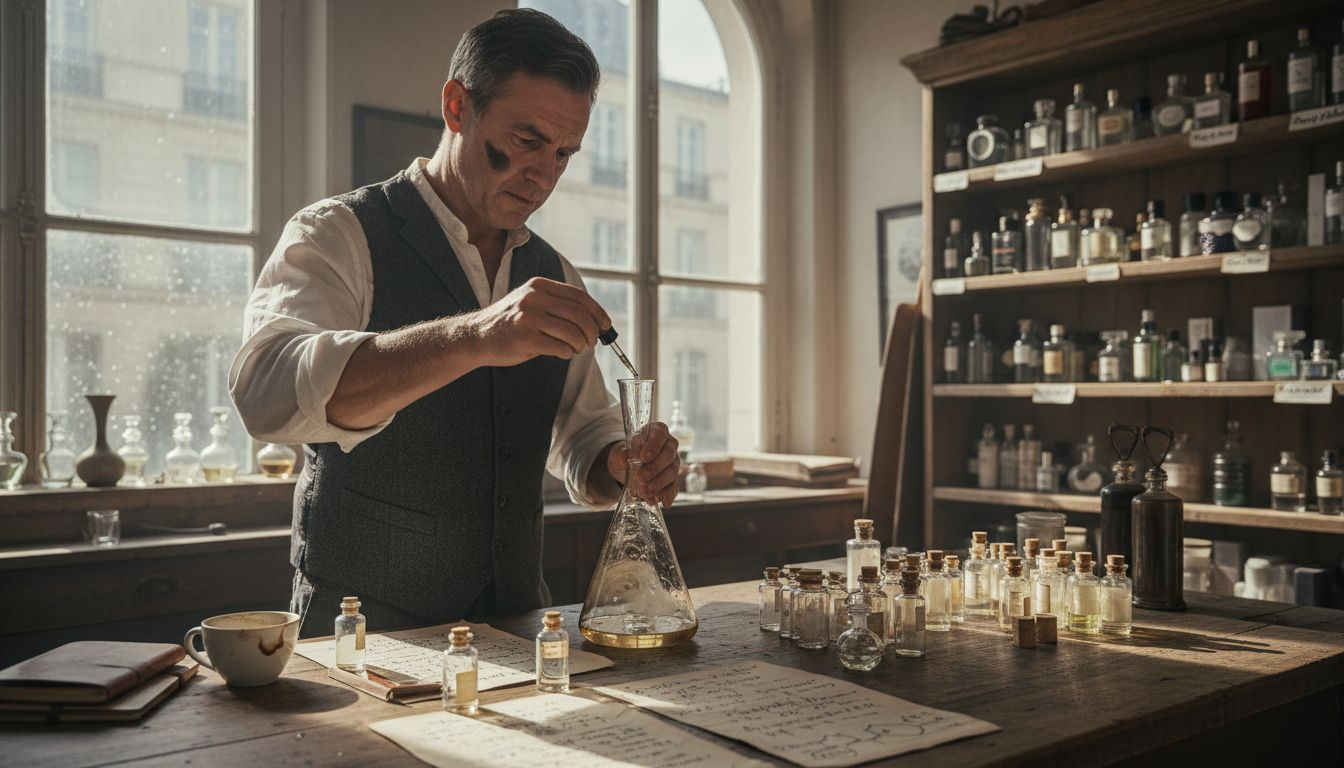
A perfumer is far more than someone who combines pleasant-smelling ingredients together. These skilled artisans blend chemistry, art, and deep olfactory knowledge to craft fragrances that resonate emotionally with wearers worldwide.
Perfumers are the creative minds behind every scent you've ever loved. They spend years mastering their craft, studying how different aromatic materials interact with one another. Their work involves extensive knowledge of raw materials, olfactory training, and the intricate science of how scents evolve on skin.
Successful perfumers combine two distinct skill sets:
This combination of art and science is what separates memorable fragrances from forgettable ones.
Your perception of a fragrance is shaped entirely by the perfumer's decisions throughout these stages:
Perfumers work with hundreds of natural and synthetic aromatic compounds, each with unique characteristics. They understand how olfactory families and aroma chemistry influence the final composition and how a fragrance will unfold over hours on your skin.
Whether creating niche masterpieces or mass-market bestsellers, perfumers are tasked with achieving olfactory harmony while maintaining product stability across diverse markets and climates. This responsibility ensures that the fragrance in your bottle remains consistent whether you're in humid Singapore or dry Montreal.
Perfumers transform raw materials into emotional experiences through the intersection of chemistry and creativity.
The perfumer's role extends beyond creating pleasant smells. They craft olfactory stories that trigger memories, enhance confidence, and connect deeply with consumers. Understanding this role helps you appreciate the complexity of every bottle you encounter on fragrance counters or in your own collection.
Pro tip: When evaluating fragrances, consider researching the perfumer behind the scent. Recognising patterns in their work across different brands helps you discover new fragrances aligned with your preferences.
Jean-Claude Ellena stands as one of the most influential perfumers of our time, renowned for his minimalist approach to fragrance creation. His work represents a philosophical shift in how perfumes are composed and experienced by wearers.
Ellena's signature style prioritises clarity and subtlety over complexity. Rather than layering numerous aromatic materials, he selects raw materials that serve as symbolic signifiers, each carrying specific olfactory meaning. This approach treats fragrance composition like poetic expression, where every element serves a distinct purpose.
Understanding Ellena's method reveals why his fragrances feel so distinctly different:
His tenure at Hermès solidified his reputation for creating fragrances that whisper rather than shout. Ellena champions the philosophy of a "soft caress", where perfumes envelop the wearer in subtle sophistication.
What makes Ellena's work revolutionary is his ability to create minimalist transparent compositions that feel complete despite their simplicity. Many perfumers believe more ingredients equal better results. Ellena proves otherwise through his elegant restraint.
When evaluating fragrances created by Ellena, you'll notice distinct characteristics:
Elena's fragrances create narrative experiences by blending transparency with emotion. A fragrance like Hermès Eau de Gentillesse doesn't announce itself. Instead, it unfolds as an intimate conversation between wearer and scent.
Ellena's minimalism teaches us that elegance lies in what you leave out, not what you add in.
This philosophy influences how collectors and fragrance enthusiasts approach their own taste development. By studying his work, you learn to appreciate subtlety over bombast and meaning over marketing.
Pro tip: When sampling Ellena fragrances, apply them to clean skin and wait at least 15 minutes before deciding. His compositions reveal their true character slowly, and patience rewards you with deeper appreciation.
Francis Kurkdjian represents a new generation of perfumers who view fragrance creation as multi-sensory art rather than simple scent composition. His approach challenges traditional perfumery boundaries and offers valuable lessons for fragrance enthusiasts.
Kurkdjian's background combines artistic sensibility with scientific rigour. Educated at ISIPCA and trained in luxury marketing, he possesses the rare skill set needed to transform fragrance into high art. His creations like Le Male and Baccarat Rouge 540 have become iconic benchmarks in modern perfumery.
What sets Kurkdjian apart from conventional perfumers is his willingness to experiment beyond scent alone:
His work transcends the notion that perfume simply smells good. Instead, Kurkdjian creates multi-sensory olfactory experiences that challenge how we perceive fragrance altogether.
Understanding Kurkdjian's philosophy helps you approach fragrance evaluation differently. Rather than judging fragrances solely on longevity or sillage, consider the emotional narrative they create.
His innovative approach demonstrates that exceptional fragrances provoke thought and conversation. When experiencing Kurkdjian creations, notice how they engage your senses beyond olfaction. Does the scent evoke visual imagery? Does it trigger specific memories or emotional responses?
Kurkdjian's success with Maison Francis Kurkdjian showcases how independent perfumers can achieve global recognition through uncompromising artistic vision. He collaborates with prestigious brands whilst maintaining creative autonomy, proving that innovation and commercial success aren't mutually exclusive.
Kurkdjian teaches us that the greatest fragrances transcend scent to become complete sensory narratives.
His 30 years of creative work show that perfumery continues evolving. The most influential perfumers are those willing to question conventions and explore uncharted olfactory territory. This mindset influences how contemporary fragrance enthusiasts appreciate and evaluate modern compositions.
When evaluating fragrances, you can employ fragrance assessment techniques that consider the emotional and artistic dimensions Kurkdjian exemplifies, moving beyond purely technical evaluation.
Pro tip: When sampling Kurkdjian fragrances, explore them in different environments and times of day. His creations often reveal distinct personalities depending on context, rewarding patient, intentional exploration.
Dominique Ropion stands as one of the most prolific and respected perfumers in the industry, renowned for his architectural approach to fragrance composition. His work demonstrates how meticulous craftsmanship creates fragrances that endure as timeless masterpieces.
Ropion's distinctive method balances powerful, high-dosage ingredients with delicate supporting notes to achieve harmonic complexity. His creations for prestigious brands including Dior, Thierry Mugler, and Lancôme showcase his ability to craft fragrances that feel both luxurious and wearable across diverse consumer preferences.
Understanding Ropion's approach reveals why his fragrances command such respect among collectors:
Ropion treats fragrance composition like an architect designs buildings. Each element supports the overall structure, creating stability and beauty simultaneously. His meticulous method ensures that potent ingredients don't overwhelm but instead contribute to sophisticated harmony.
When you experience a Ropion composition, you're witnessing decades of technical mastery combined with artistic sensibility. His masterpiece "Portrait of a Lady" exemplifies how high dosage of potent ingredients balanced carefully with delicate notes creates floral-rich complexity.
What distinguishes Ropion's work is his willingness to use bold, sometimes challenging ingredients. Rather than playing it safe, he embraces the full spectrum of olfactory possibilities. This confidence allows him to create fragrances that provoke thought and conversation.
Ropion's prolific career demonstrates consistent excellence across multiple fragrance houses. He doesn't follow trends but rather sets them, influencing how contemporary perfumery evolves. His influence extends beyond individual fragrances to shape industry standards for quality and sophistication.
Ropion teaches us that true mastery comes from understanding how to balance boldness with refinement.
For collectors, studying Ropion's work reveals how exceptional fragrances achieve longevity and presence through intelligent composition. His fragrances prove that complexity need not equal confusion, and power need not mean projection.
Pro tip: Allow Ropion fragrances at least 30 minutes of wear time before forming complete judgements. His compositions unfold gradually, revealing hidden dimensions that reward patience and attentive appreciation.
Christine Nagel represents a new breed of perfumers who blend scientific precision with artistic innovation. Her background in organic chemistry uniquely informs her creative process, resulting in fragrances that feel both intellectual and deeply emotional.
Nagel serves as Hermès' in-house perfumer, where she brings a distinctly modern vision to luxury fragrance creation. Rather than relying solely on traditional techniques, she translates textural and visual concepts into olfactory experiences. Her approach prioritises authenticity and artistic freedom whilst maintaining rigorous technical mastery.
Nagel's distinctive methodology combines two seemingly opposing forces:
Her scientific background empowers rather than constrains her creativity. Understanding fragrance chemistry allows Nagel to break rules deliberately and purposefully. She doesn't follow formulas but instead crafts each composition as a unique olfactory narrative.
Unlike perfumers who chase market cycles, Nagel values technical mastery as foundation for creative freedom and seeks timelessness over fleeting appeal. This philosophy means her fragrances often feel ahead of their time because they're not designed for immediate popularity.
Her modern approach challenges conventional wisdom about what commercial fragrances should be. Nagel prioritises complexity and depth, trusting that sophisticated collectors will appreciate the rewards of patient exploration. This confidence separates her work from trend-driven compositions.
When evaluating Nagel's creations, consider how they engage multiple sensory dimensions simultaneously. Her fragrances aren't simply pleasant to smell; they create physical sensations and emotional responses that linger long after the initial spray.
Nagel demonstrates that scientific understanding amplifies rather than limits artistic expression in perfumery.
For fragrance enthusiasts, studying Nagel's work reveals how modern perfumers can honour tradition whilst pushing boundaries. Her creations prove that intellectual rigour and emotional resonance aren't contradictory but complementary forces in fragrance composition.
Pro tip: Apply Nagel fragrances to pulse points and revisit them throughout the day. Her compositions reveal remarkable evolution, with different facets emerging as they interact with your skin chemistry and temperature.
Online fragrance communities have become the beating heart of modern perfume culture. These digital spaces connect passionate enthusiasts worldwide, enabling collective learning and direct engagement with the perfumers whose work they admire.
These communities transcend geographical boundaries, bringing together collectors, connoisseurs, and curious newcomers. Whether through forums, social media groups, or specialised platforms, these spaces foster meaningful dialogue about fragrance discovery and appreciation. Members share reviews, compare experiences, and collectively shape how the fragrance industry evolves.
Perfume communities provide far more than casual conversation:
These communities bridge the gap between personal scent identities and commercial products. Members discover fragrances aligned with their values, preferences, and sensibilities. This collective curation influences consumer behaviour globally and empowers independent voices previously overshadowed by commercial marketing.
Digital perfume communities help foster a culture of appreciation whilst enabling collective learning across borders. Joining these spaces allows you to participate in passionate exchanges about fragrance knowledge and industry developments.
Start by exploring what's available in your preferred platforms. Reddit hosts active fragrance subreddits where members discuss specific perfumers, scent families, and recommendations. Dedicated fragrance forums maintain archives of detailed discussions spanning decades. Social media groups connect collectors with shared interests in particular brands or aesthetic philosophies.
When engaging online, contribute thoughtfully to discussions about the perfumers you admire. Share your experiences with specific compositions, ask questions about creative processes, and help newcomers develop their appreciation for fragrance artistry.
Online communities transform fragrance from solitary pleasure into shared cultural experience.
These spaces empower you to influence fragrance culture whilst deepening your own knowledge. Your voice matters in these communities, and your contributions help shape industry awareness and demand for quality, artisanal scents.
Pro tip: Engage authentically with community members by writing honest, detailed reviews that explain your reasoning. Thoughtful contributions establish your credibility and attract like-minded fragrance enthusiasts who value your perspective.
Below is a comprehensive table summarising the key roles, characteristics, and methodologies of influential perfumers as discussed throughout the article.
Mastering the world of perfumers like Jean-Claude Ellena, Francis Kurkdjian, Dominique Ropion, or Christine Nagel requires more than just knowledge; it demands connection, exploration and shared passion. This article highlights your challenge as a fragrance enthusiast to understand complex artistic and scientific craft behind iconic scents while navigating personal preferences and evolving trends.
At Fragplace, you gain access to a vibrant community devoted to celebrating these perfumers' unique styles and philosophies. Explore detailed fragrance notes, read expert and user reviews, and engage in meaningful discussions that deepen your appreciation of olfactory art. Whether you desire to uncover minimalist elegance or innovative multi-sensory creations, Fragplace offers tools that support your scent journey with precision and emotional insight.
Join thousands of fragrance lovers who already rely on Fragplace for up-to-date reviews, scent of the day reminders, and inspiring articles. Start your exploration now and connect directly with a network that values perfume mastery and personal scent stories. Elevate your fragrance experience by visiting Fragplace and discover how to truly appreciate the craftsmanship of perfumers you admire.
Explore more on perfumers and their creations at Fragplace Articles and deepen your knowledge through community reviews at Fragplace Community. Your next favourite scent is waiting just a click away.
A perfumer is responsible for crafting fragrances by blending chemistry and artistry. To understand their role better, explore the different stages they engage in, such as researching raw materials and testing compositions.
Jean-Claude Ellena’s fragrances often feature a single dominant note and maintain a sense of transparency. To recognise his style, sample his scents and pay attention to the main note that lasts throughout wear time, often feeling soft and airy.
Francis Kurkdjian’s fragrances push the boundaries of traditional perfumery by incorporating multi-sensory elements beyond just scent. To appreciate his innovations, consider how his compositions engage your emotions and provoke thought rather than only judging their longevity.
To evaluate a Ropion fragrance, focus on how the balance of bold ingredients and delicate notes creates complexity. Allow the fragrance at least 30 minutes to develop on your skin, as this extra time reveals more about its character and longevity.
When sampling Christine Nagel's fragrances, observe how they evoke multiple sensory dimensions, not just pleasant scents. Apply her creations to pulse points and revisit them throughout the day to appreciate their evolving facets in different contexts.
To engage effectively with online perfume communities, contribute thoughtful reviews and share your personal fragrance experiences. Start by joining forums or social media groups and be genuine in your interactions, which will help deepen your connections and learning opportunities.
| Takeaway | Explanation |
|---|
| 1. Perfumers blend art and science | Perfumers must master both creative vision and scientific principles to craft memorable fragrances. |
| 2. Explore the philosophy of each perfumer | Understanding a perfumer's unique approach, like minimalism or multi-sensory art, enhances fragrance appreciation. |
| 3. Engage with online fragrance communities | Participating in these communities helps share perspectives and deepen knowledge about fragrances. |
| 4. Evaluate fragrances thoughtfully | Take time to assess how scents evolve over time on your skin; this reveals their true character. |
| 5. Research the perfumer behind scents | Knowing the background of a perfumer aids in discovering fragrances that align with personal preferences. |
| Perfumer | Signature Approach | Key Characteristics |
|---|
| Jean-Claude Ellena | Minimalist and poetic composition methodology | Single dominant notes, transparency, emotional narrative |
| Francis Kurkdjian | Multi-sensory art and boundary-pushing creativity | Integration of technology, spatial design, sensory engagement |
| Dominique Ropion | Architectural precision and harmonic complexity | Bold ingredient choices, floral richness, sophisticated structure |
| Christine Nagel | Scientific precision combined with artistic innovation | Textural thinking, modern narratives, and rejection of transient trends |
| Perfumer Communities | Platforms for enhancing fragrance appreciation and industry influence | Knowledge sharing, trend shaping, and global collector connectivity |